You Need to Know

General Facts About Georgia
Location: Southwestern Asia, bordering the Black Sea, between Turkey and Russia. 41°43′N 44°47′E
Neighbouring Countries: Russia, Turkey, Armenia & Azerbaijan
Area: 69,700 km2
Administrative Regions: Abkhazia (Sukhumi), Adjara (Batumi), Guria (Ozurgeti), Imereti (Kutaisi), Kakheti (Telavi), Kvemo Kartli (Rustavi), Mtskheta-Mtianeti (Mtskheta), Racha-Lechkhumi and Kvemo Svaneti (Ambrolauri), Samegrelo-Zemo Svaneti (Zugdidi), Samtskhe-Javakheti (Akhaltsikhe), Shida Kartli (Gori), Tbilisi
Capital: Tbilisi
Climate: Warm and pleasant; Mediterranean-like on Black Sea coast
Highest Mountain: Shkhara 5068m
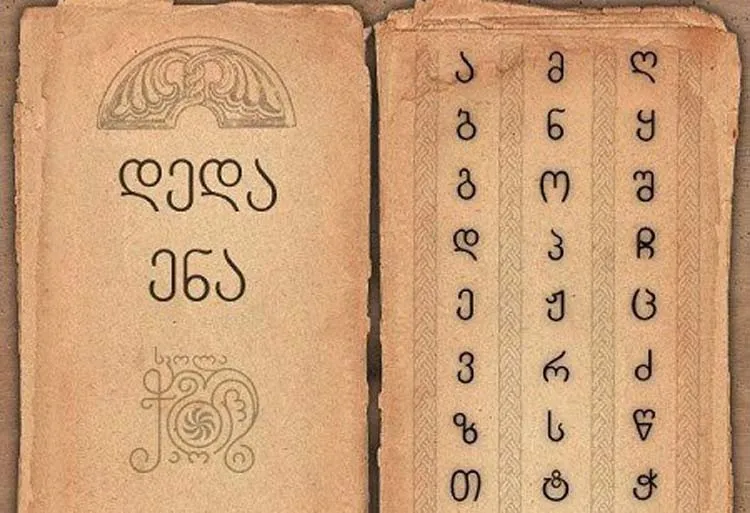
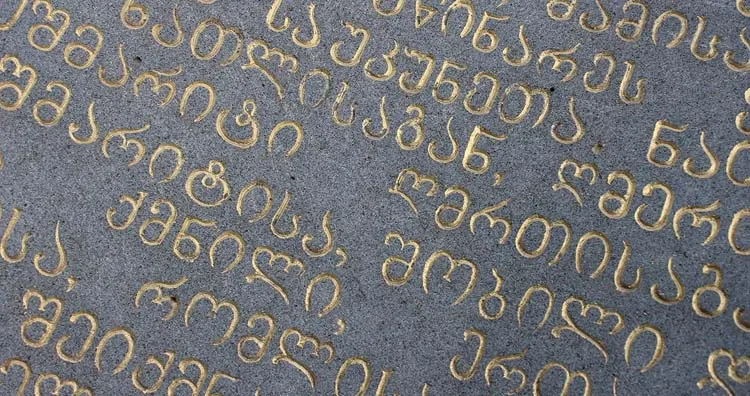
Official Language: Georgian
Population: 3,713,804 (2014 census)
Ethnic Make-up: Georgian 83.8%, Azeri 6.5%, Armenian 5.7%, Russian 1.5%, other 2.5% (2002 census)
Religion: Orthodox Christian 83.9%, Muslim 9.9%, Armenian-Gregorian 3.9%, Catholic 0.8%, other 0.8%, none 0.7% (2002 census)
GDP: Total – 35.6 billion; Per capita 9.500 USD
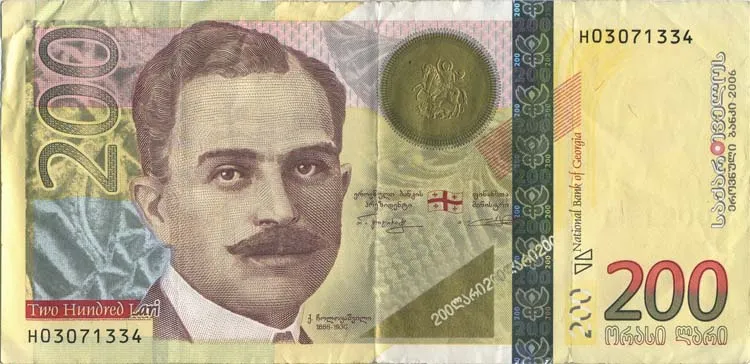
Currency: Georgian lari (₾) (GEL). Lari is subdivided into 100 Tetri. Major hotels accept credit cards, but please check outside the main cities. Cash point machines are available throughout major towns and cities.
Government: Unitary semi-presidential republic
Independence: From Russian Empire – 26 May 1918; From Soviet union – 25 December 1991
Time Zone: GET (UTC+4)
Drives on the: right
Calling Code: +995
Internet TLD: .ge .გე
History & Government
Georgia has the dubious distinction of being one of the most invaded nations on Earth. As a nation at the crossroads of Europe and Asia, it has been marked by war for ages. From the I century BC to the XVIII century AD the Greeks, Romans, Persians, Arabs, Ottomans and Russians have all attempted to possess this beautiful land, but none have ever conquered it completely or permanently.
Recent excavations of Dmanisi (Georgia) have revealed an extraordinary record of the earliest hominid dispersal beyond Africa (1,75 million years ago). Several hominid individuals along with abundant well-preserved remains of fossil animals and stone artefacts have been found. The Dmanisi specimens are the most primitive and small-brained humans found outside of Africa to be attributed to Homo erectus sensu lato, and they are the closest to the presumed Homo habilis-like stream. It is widely recognized that Dmanisi discoveries have changed scientist’s knowledge concerning the migration of homo from Africa to the European continent.
Georgia is a unitary semi-presidential republic.
Geography
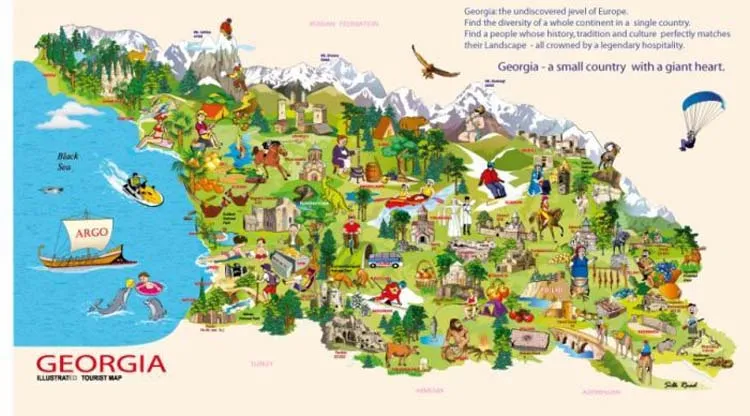
Georgia is located on the crossroad of Europe and Asia. It lays at the eastern end of the Black Sea, with Turkey and Armenia to the south, Azerbaijan to the east, and Russia to the north, over the Caucasus Mountains. Georgia’s total territory covers 69,700 square kilometers. The native name of Georgia is “Sakartvelo”
Largest cities of Georgia are : Tbilisi (Capital); Kutaisi; Batumi; Rustavi; Zugdidi; Gori; Poti; Khashuri; Samtredia.
Georgia is situated in the South Caucasus, between latitudes 41° and 44° N, and longitudes 40° and 47° E, with an area of 67,900 km2. It is a very mountainous country. The Likhi Range divides the country into eastern and western halves. Historically, the western portion of Georgia was known as Colchis while the eastern plateau was called Iberia.
The Greater Caucasus Mountain Range forms the northern border of Georgia. The southern portion of the country is bounded by the Lesser Caucasus Mountains. The Greater Caucasus Mountain Range is much higher in elevation than the Lesser Caucasus Mountains, with the highest peaks rising more than 5,000 meters (16,404 ft) above sea level.
Two major rivers in Georgia are the Rioni and the Mtkvari.
Economy
Archaeological research demonstrates that Georgia has been involved in commerce with many lands and empires since ancient times, largely due its location on the Black Sea and later on the historical Silk Road. Gold, silver, copper and iron have been mined in the Caucasus Mountains.
Georgian wine making is a very old tradition and a key branch of the country’s economy. The country has sizable hydropower resources. Throughout Georgia’s modern history agriculture and tourism have been principal economic sectors, because of the country’s climate and topography.
For much of the 20th century, Georgia’s economy was within the Soviet model of command economy. After the fall of the USSR in 1991, Georgia embarked on a major structural reform designed to transition to a free market economy. As with all other post-Soviet states, Georgia faced a severe economic collapse.
The first financial help from the West came in 1995, when the World Bank and International Monetary Fund granted Georgia a credit of USD 206 million and Germany granted DM 50 million.
Religion
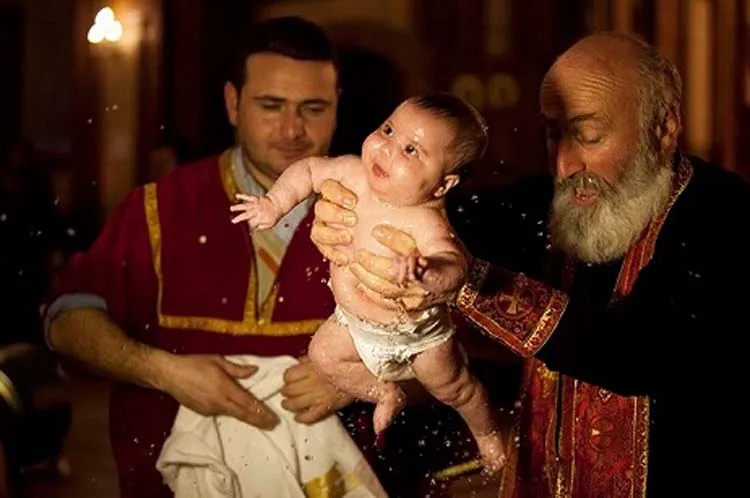
A large majority of Georgia’s population (83.9% in 2002) practices Orthodox Christianity. Christianity has been Georgia’s national religion since the 4th century. The Georgian Orthodox Church is one of the world’s most ancient Christian Churches, and claims apostolic foundation by Saint Andrew. In the first half of the 4th century, Christianity was adopted as the state religion of Iberia, following the missionary work of Saint Nino of Cappadocia.The Church gained autocephaly during the early Middle Ages; it was abolished during the Russian domination of the country, restored in 1917 and fully recognised by theEcumenical Patriarchate of Constantinople in 1990.
Confessional identity is a strong cultural factor that defines the prevailing system of social values. The majority of Georgians in Ajara are Sunni Muslims, as are a few inhabitants of the Meskheti region. There are also Shiite Muslims among the Turkic inhabitants in the southeast (Azeris) and Sunni Muslims among the Abkhaz, Ossetians, and Greeks. Several Protestant churches are active, with the Baptists being the most successful. Most ethnic Armenians belong to the Gregorian Christian Church. There are small groups of Yezid Kurds, Russian Molokans and Dukhobors, and Jews; the population of the latter two groups has diminished because of emigration.
New emerging cults and sects, such as Jehovah’s Witnesses, meet with hostility and aggression from the established churches and the population.
Language & Alphabet
Georgian People
The population in Georgia is almost 4 million.
The likelihood is great that the Georgians have always lived in this region, known to them as Sakartvelo. Ethnically, contemporary Georgia is not homogeneous but reflects the intermixtures and successions of the Caucasus region. About seven-tenths of the people are Georgians; the rest consists of Armenians, Russians, Azerbaijanis, and smaller numbers of Ossets, Greeks, Abkhazians, and other minor groups.
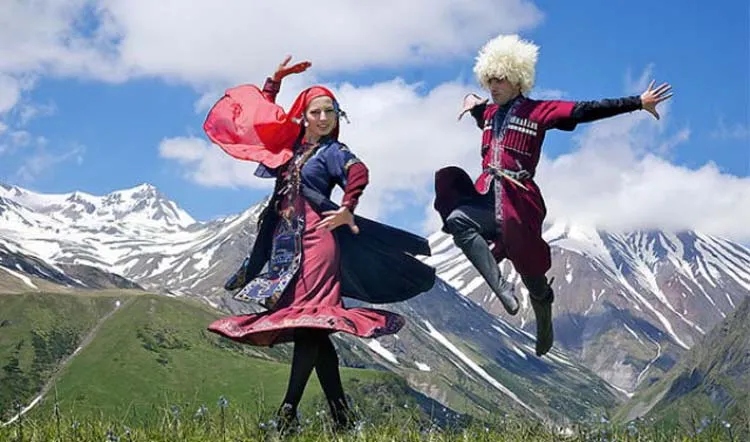
The Georgians are a proud people with an ancient culture. They have through the ages been noted as warriors as well as for their hospitality, love of life, lively intelligence, sense of humor, and reputed longevity (although statistical data do not support this latter assertion).
Climate, Flora & Fauna
Georgia is one of the most ecologically diverse countries in the world, with climatic zones ranging from subtropical to high alpine to semi-desert. The Greater Caucasus Mountain Range influencing Georgia’s climate, it protects the country from cold air masses from North.
The Lesser Caucasus Mountains partially protect the region from the influence of dry and hot air masses from the South as well. An average temperature in summer ranges from 32 °C to 35 °C, and in winter – from 1.5 °C to 3 °C.
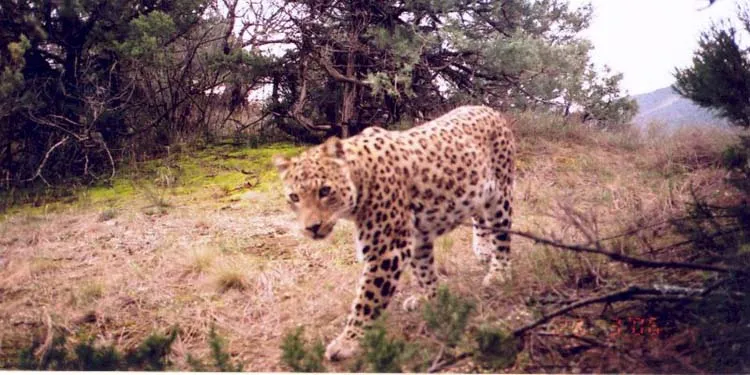
Georgia is also home to vast expanses of completely unspoiled wildernesses, including one of Europe’s largest national parks. Pristine wetlands and mountain aeries make this country a Mecca for bird watchers worldwide. Bears, lynxes and even leopards can be found in Georgia’s dense forests of Caucasian fir-the tallest trees in Europe.
Because of its high landscape diversity and low latitude, Georgia is home to about 5,601 species of animals, including 648 species of vertebrates (more than 1% of the species found worldwide) and many of these species are endemic.
National Holidays
January 1 – New Year
January 2 – Bedoba
January 7 – Christmas (Orthodox)
January 19 – Natlisgheba(Baptism Day of our Lord Jesus Christ)
March 3 – Mother’s Day
March 8 – International Women’s Day
April 9 – Day of National Unity
Movable – Easter
May 9 – Day of Victory over Fascism, Europe Day
May 12 – Saint Andrew the First Called Day
May 26 – Independence Day
August 28 – Saint Mary’s Day
October 14 – Day of SvetitskhoveliCathedral (in Mtskheta)
November 23 – Saint George’s Day
Legend About Georgia
When God set about dividing the Earth among peoples, Georgians were late, as they lingered over their traditional feast. So, by the time they turned up, the whole world had already been distributed. The Lord asked them what they had been drinking for. The Georgians answered, they had been drinking to God their Lord, to themselves and to the whole world.
The Almighty appreciated the response and said that although all the lands had been given out already, he had preserved one piece of land for himself and he would willingly give it to the Georgians.
The beauty of this land, said the God, is incomparable to anything elsewhere and people will admire it for ever and ever.
Story of Tbilisi
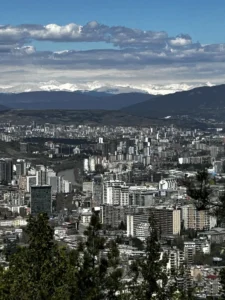
Tbilisi commonly known by its former name Tiflis, and often mispronounced as Tiblisi, is the capital and the largest city of Georgia, lying on the banks of the Mtkvari River at the altitude of 400m above sea level with a population of roughly 1.5 million inhabitants.
Was founded by King Vakhtang Gorgasali in the fifth century, and continues to be the most important political and cultural center of the country.
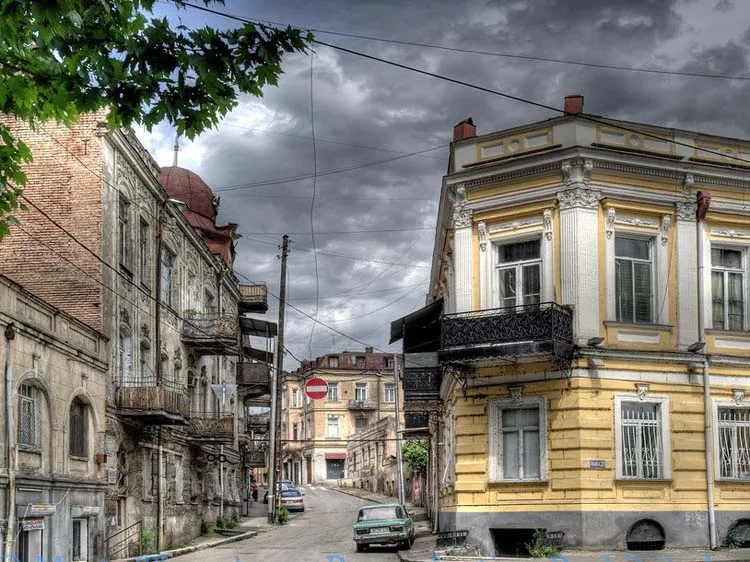
Located on the crossroads of Europe and Asia, Tbilisi’s proximity to lucrative east-west trade routes often made the city a point of contention between various rival empires throughout history and the city’s location to this day ensures its position as an important transit route for global energy and trade projects. Tbilisi’s varied history is reflected in its architecture, which is a mix of medieval, classical, Middle Eastern, Art Nouveau, Stalinist and Modernist structures.
One widely accepted variant of the legend of Tbilisi’s founding states that King Vakhtang I Gorgasali of Georgia went hunting in the heavily wooded region with a falcon. The King’s falcon allegedly caught or injured a pheasant during the hunt, after which both birds fell into a nearby hot spring and died from burns. King Vakhtang became so impressed with the hot springs that he decided to cut down the forest and build a city on the location.
The name Tbilisi derives from Old Georgian T’pilisi, and further from T’pili. The name “T’pili” or “T’pilisi” (literally, “warm location”) was therefore given to the city because of the area’s numerous sulphuric hot springs that came out of the ground.