Shida Kartli Region
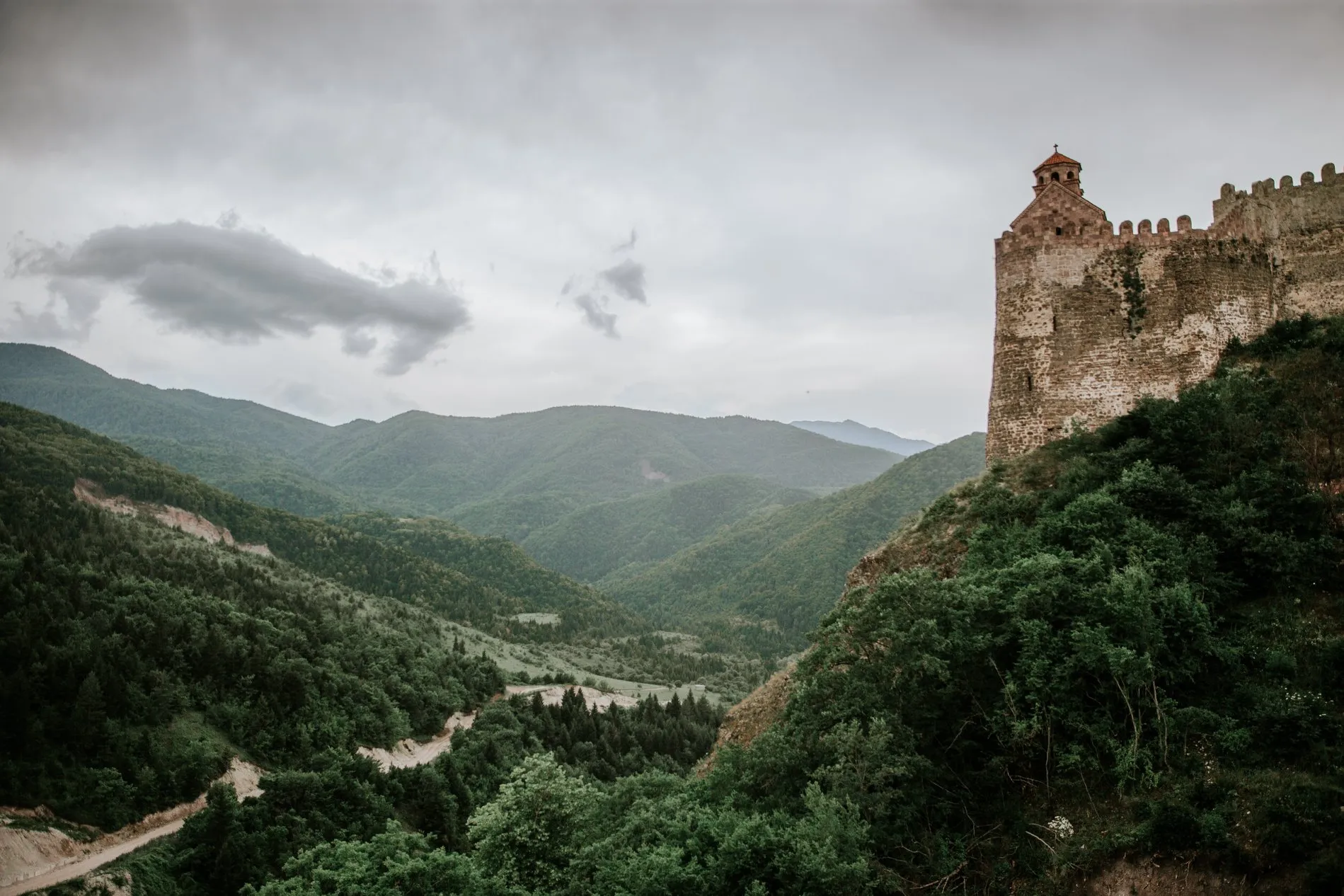
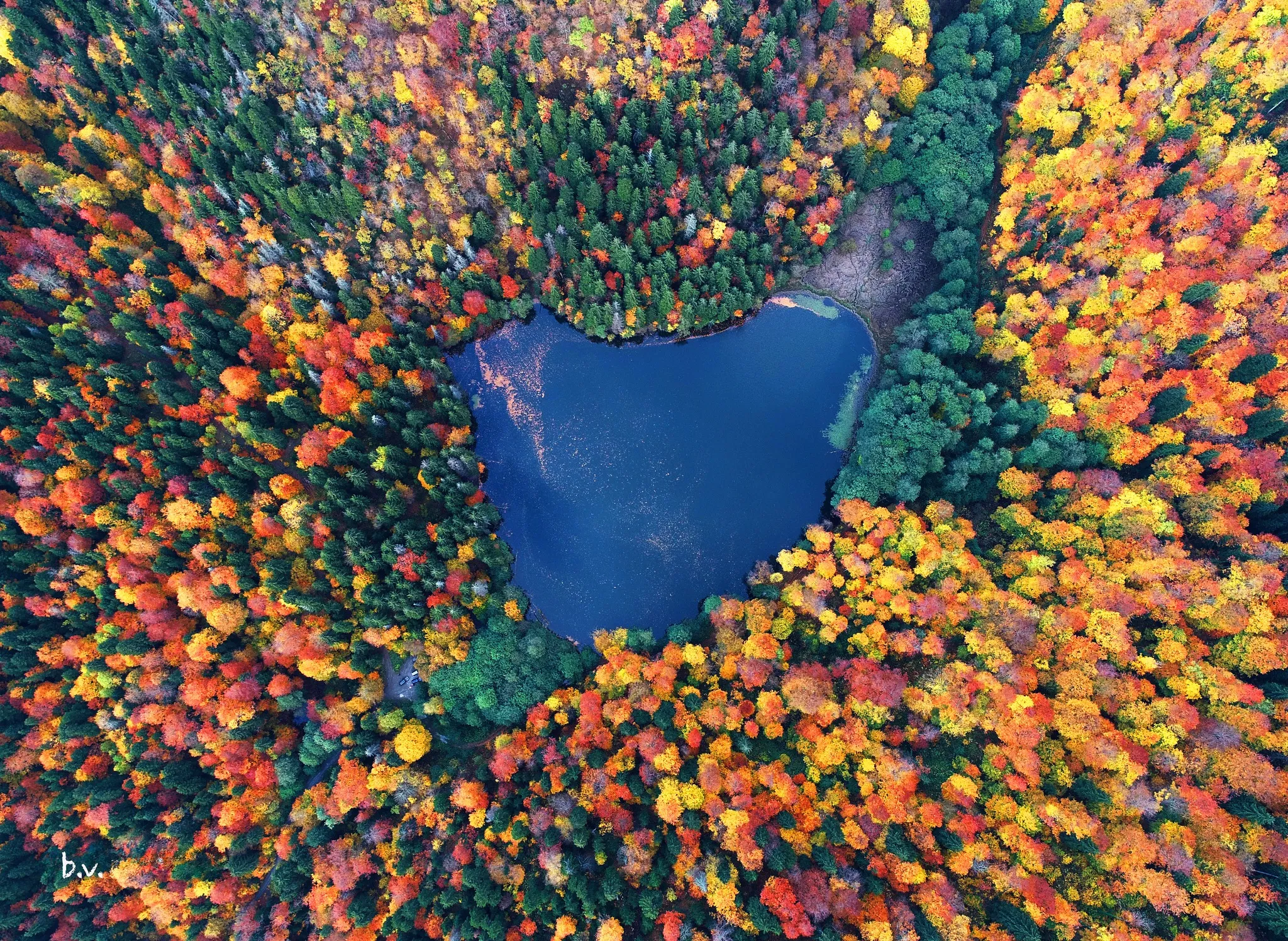

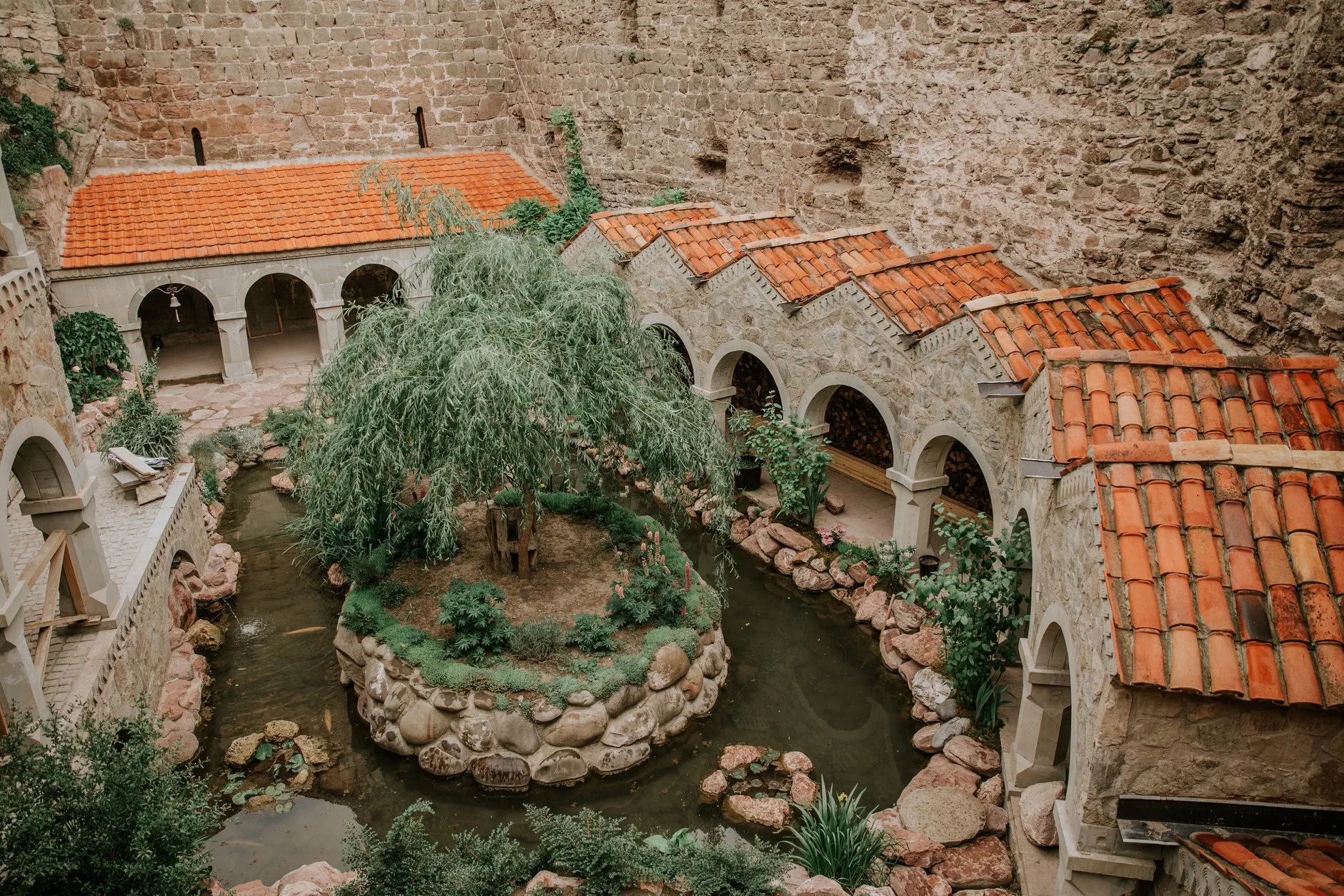
Shida Kartli, in central Georgia, lies between the mountains and fertile plains, often called the country’s heartland. Its center, Gori, is surrounded by ancient fortresses, rock-hewn towns like Uplistsikhe, and peaceful villages rich with orchards and wheat fields. The region carries layers of Georgian history—from prehistoric settlements to medieval churches—offering travelers both quiet landscapes and deep cultural roots.
Kaspi Municipality
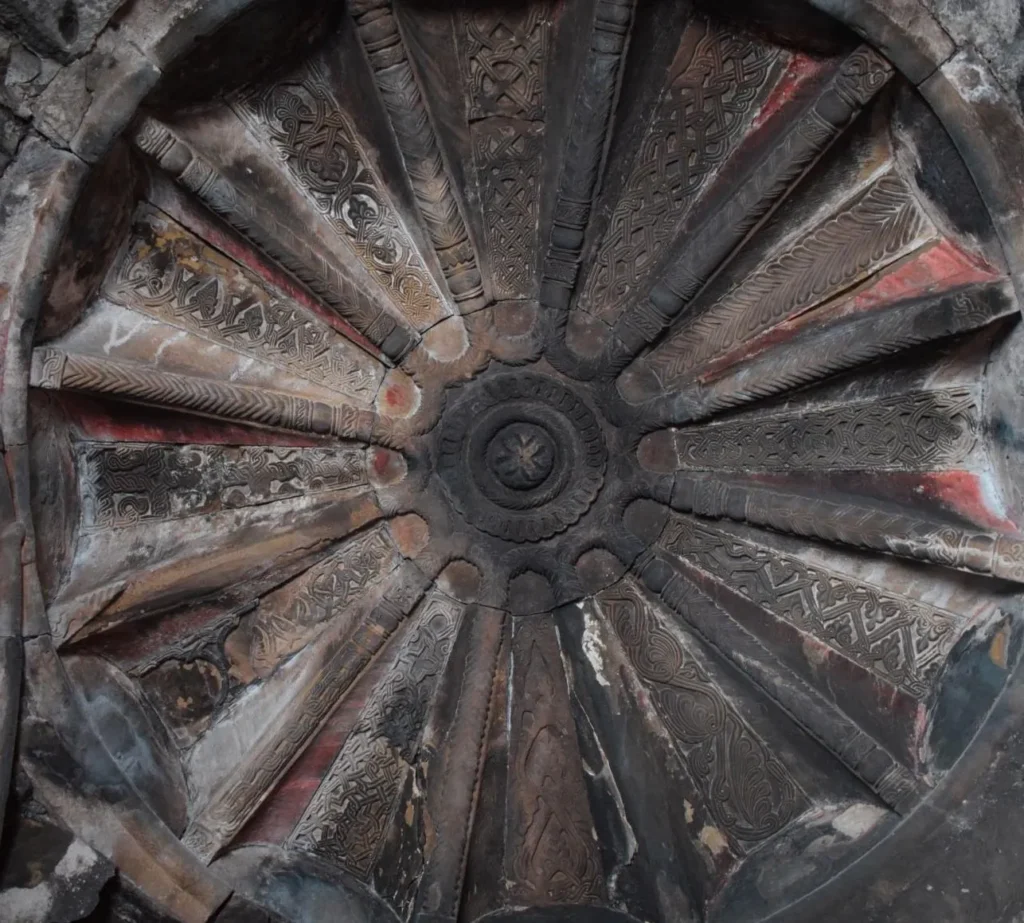
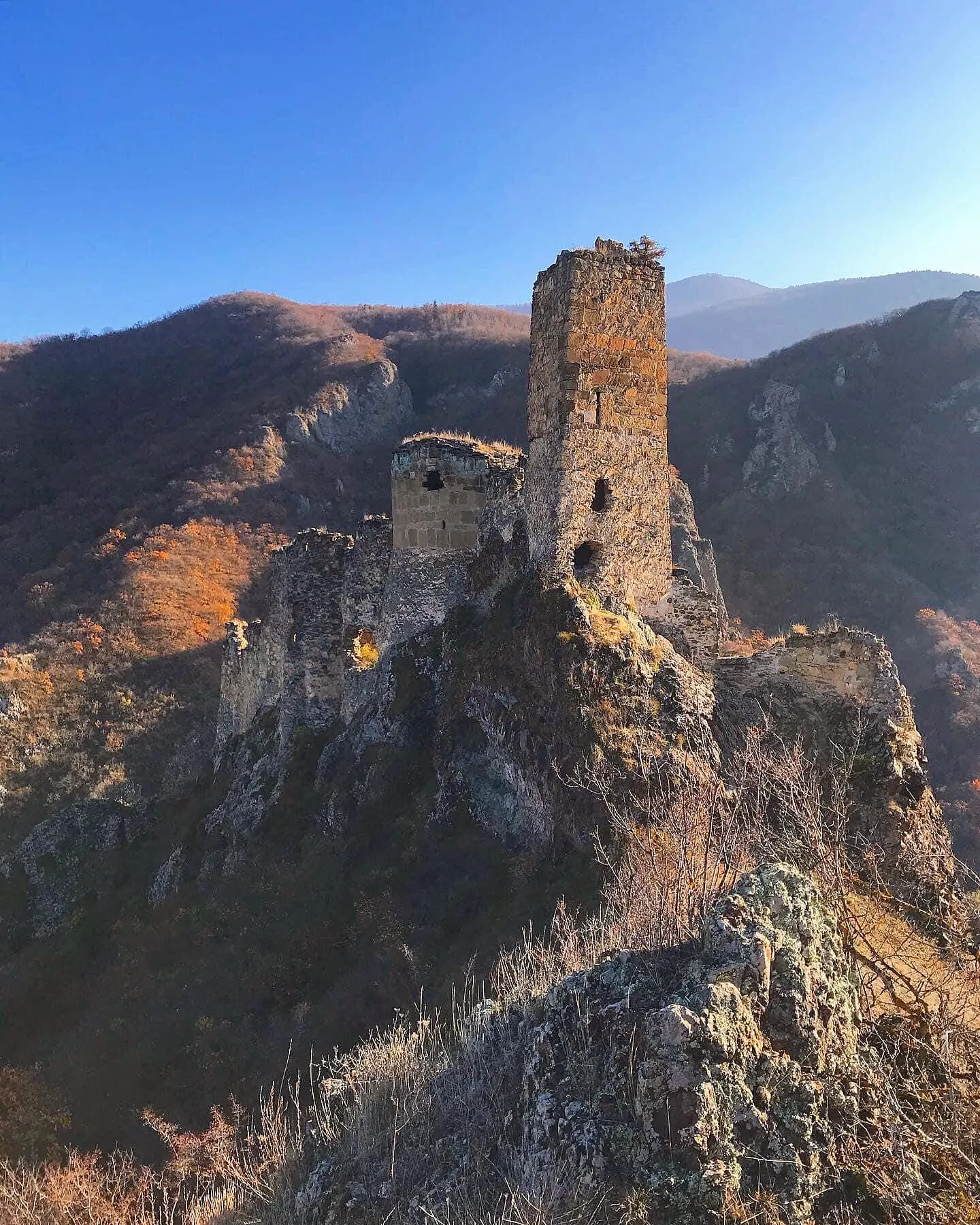
Kaspi Municipality is located in Shida Kartli. Kaspi was prominent from an early period and had significant military and cultural significance due to its geographical and strategic location. It was a fortress-town.. In the V century, during the reign of Vakhtang Gorgasali, Kaspi was at a high stage of development, with a great emphasis on education and upbringing. The chronicler says that the nobles and kings sent their children there for education.Sister of Vakhtang Gorgasali, Mirandukht, grew up in Kaspi. In the VIII century, the Arab commander Marwan the Deaf completely destroyed Kaspi and life stopped there.
Kaspi has been a separate district since 1930. Nowadays, there are educational institutions, museums of local lore, cultural and leisure areas in the region. It is also a building materials production center in Georgia. There are cement, alcohol, canning and confectionery factories on the territory of the municipality. The Central Railway runs through Kaspi territory, which increases its economic potential.
Kaspi Municipality is distinguished by the abundance of cultural monuments and the beauty of nature. The forests, valleys, magnificent views and flowering meadows allow us to plan exciting routes full of adventure.
Samtavisi
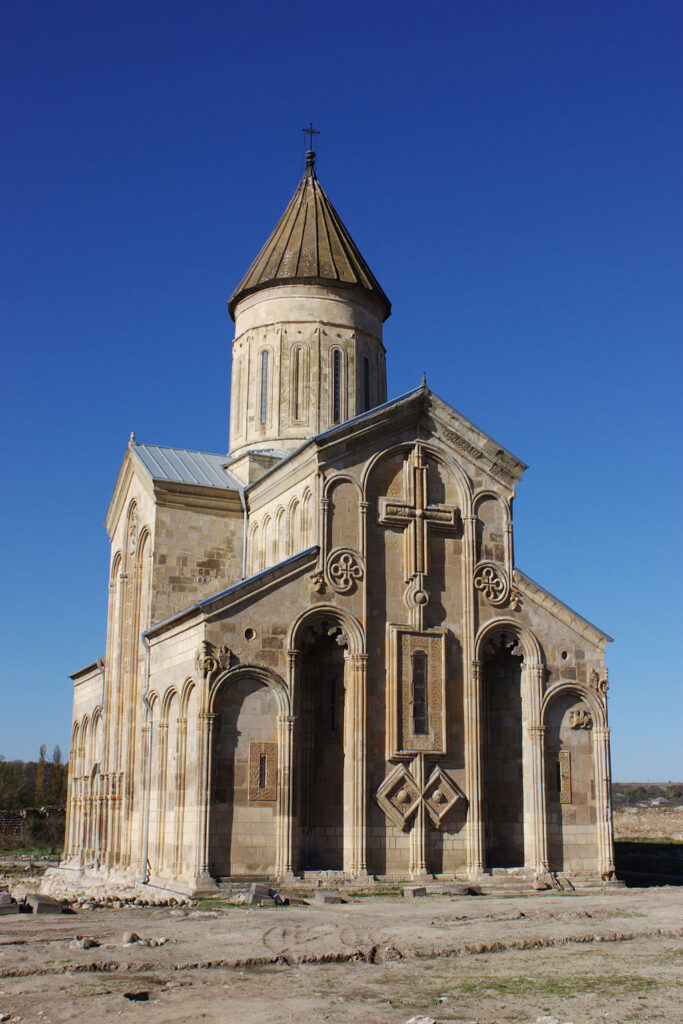
Is an eleventh-century Georgian Orthodox cathedral in eastern Georgia, in the region of Shida Kartli, some 45 km from the nation’s capital Tbilisi, near Igoeti village. The cathedral is now one of the centers of the Eparchy of Samtavisi and Gori of the Georgian Orthodox Church. The church is a typical example and the founder of the Georgian interpretation of the cross-in-square churches. It was built in the period of decorative and artistic bloom in the architecture of Georgia.
The Samtavisi Cathedral is a prolonged rectangular 4-piered cruciform domed church. It illustrates a Georgian interpretation of the cross-in-square form which set an example for many churches built in the heyday of medieval Georgia. It currently has only a southern portal, but presumably also has northern and western ones. The dome rests on the altar projections and two free pillars. In contrast to earlier Georgian churches, the drum of the dome is taller and surmounted by a conical roof. The reconstructed dome tholobate is unproportionally narrow. It has twelve windows, seven of them are real, the other five imitated. Their original ornamentation, found currently on western façade, was richer than subsequently reconstructed. The central altar apse, the prothesis and the sacristy are in the eastern part. The central nave is connected to the lateral naves in the western part through the arcade.
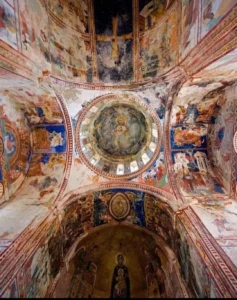
The original frescoes of the 11th century, found under the apse plaster, are rather fragmentary. The 17th century frescoes, less monumental and less detailed than the earlier, remain only in the dome and the apse. The dome fresco depicts the Christ Pantocrator with six-winged seraphs and evangelists. Prophets are found between the tholobates, and Mary with Jesus among them; below the windows the archangels.
Tskhaveri waterfall – In the Shida Kartli region, among the picturesque surroundings of the Kaspi municipality, lies the magnificent Tskhaveri waterfall. Its waters flow solemnly on the Urbehan River, like living silver, creating a unique atmosphere imbued with tranquility and beauty. Rising at an altitude of 1090 meters above sea level, this natural oasis of wonder invites you to plunge into its charming abode.
Forgotten in the greenery, Tskhaveri Waterfall is an ideal place for a secluded picnic or a short trip. Surrounded by majestic nature, you can enjoy the majestic sights and sounds of nature here. Within 1.5 kilometers you will find several waterfalls that add charm and mysticism to this place.
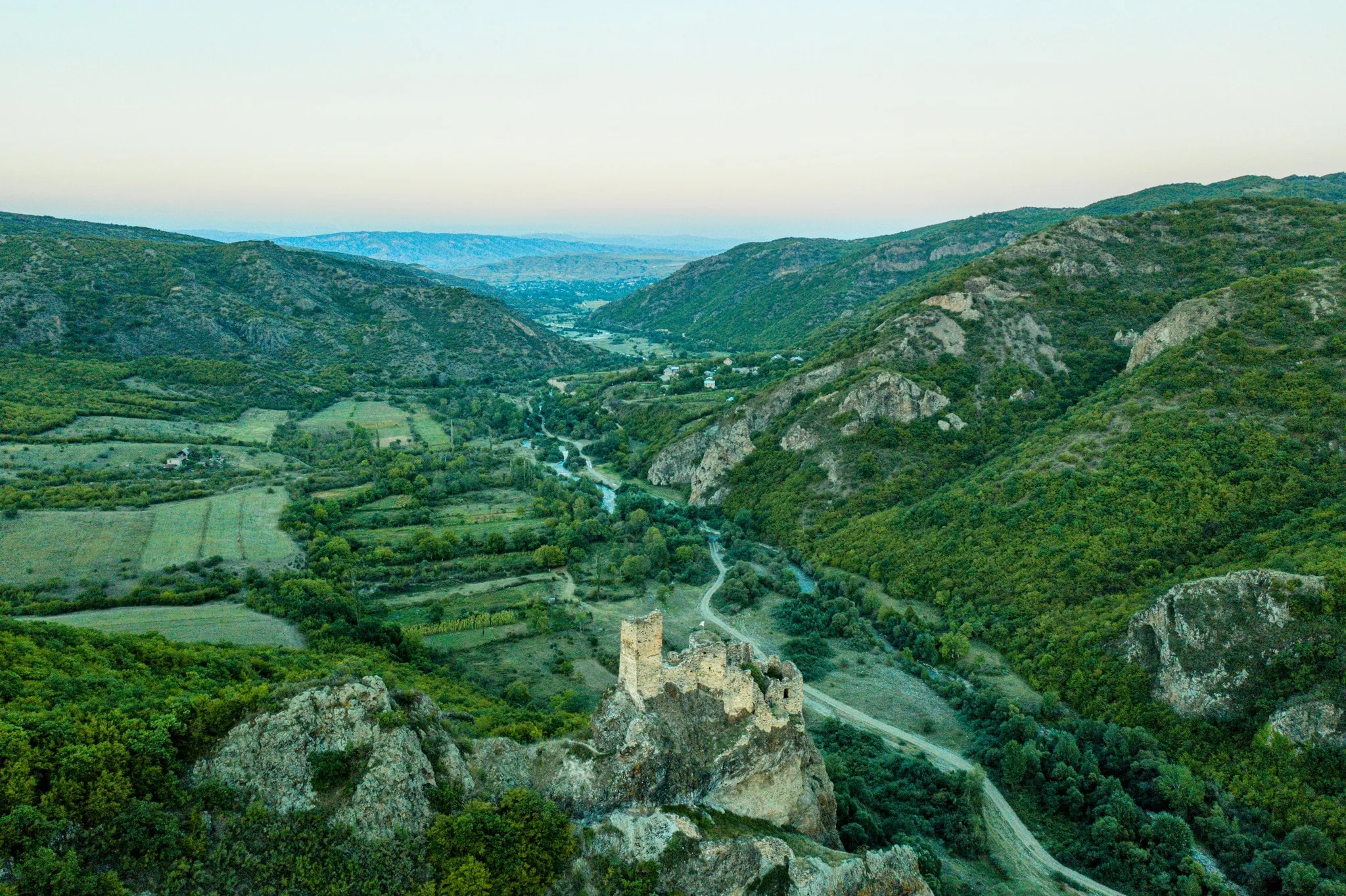
Tskhireti Castle – a medieval fortress in eastern Georgia, in Shida Kartli, in the Tedzmi Gorge, 3 km southwest of the present-day village of Ertatsminda (Kaspi Municipality). It stands on Tskhireti Hill.
Tskhireti Castle is considered a 10th-century structure. It was first mentioned in sources in 1170. Tskhireti Castle was known as the summer residence of the kings of Kartli. In 1454, King Giorgi VIII of Kartli gave the castle to the feudal lord Gamrekel Javakhishvili. In 1609, the Ottomans tried to approach Tskhireti Castle and capture King Luarsab II of Kartli who was there, but the priest Tevdore gave the enemy the wrong directions and took them on other trails and the Tskhireti Castle survived the Ottoman attack. During this period, the castle was under the control of Giorgi Saakadze.
The Tskhireti Fortress was rebuilt later. It covers a large area, and has gun emplacements in its high walls. It is inaccessible from the east. Inside the walls are the foundations of residential buildings.

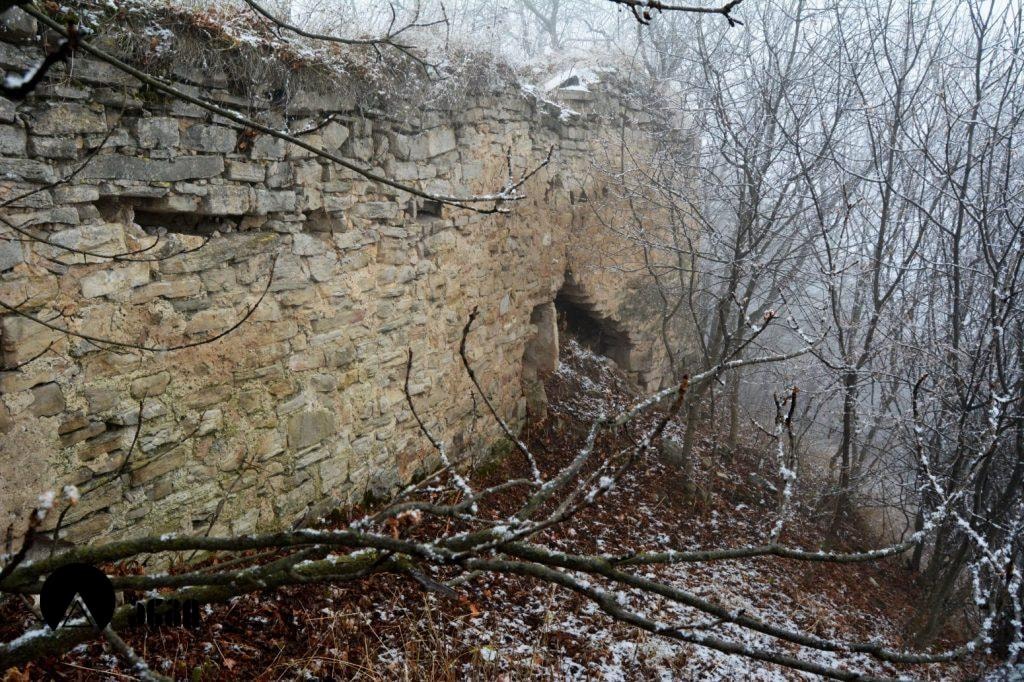
Noste
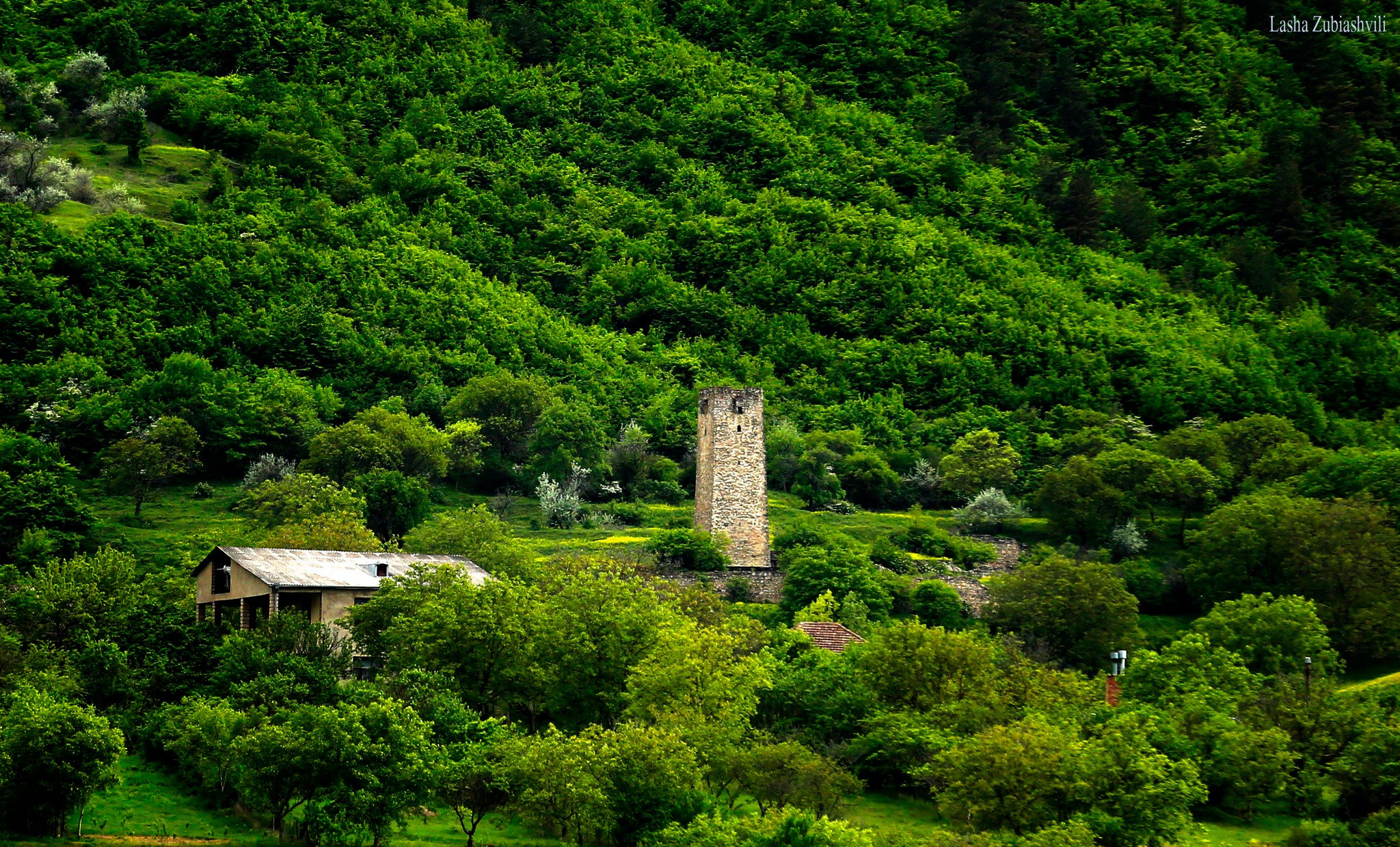
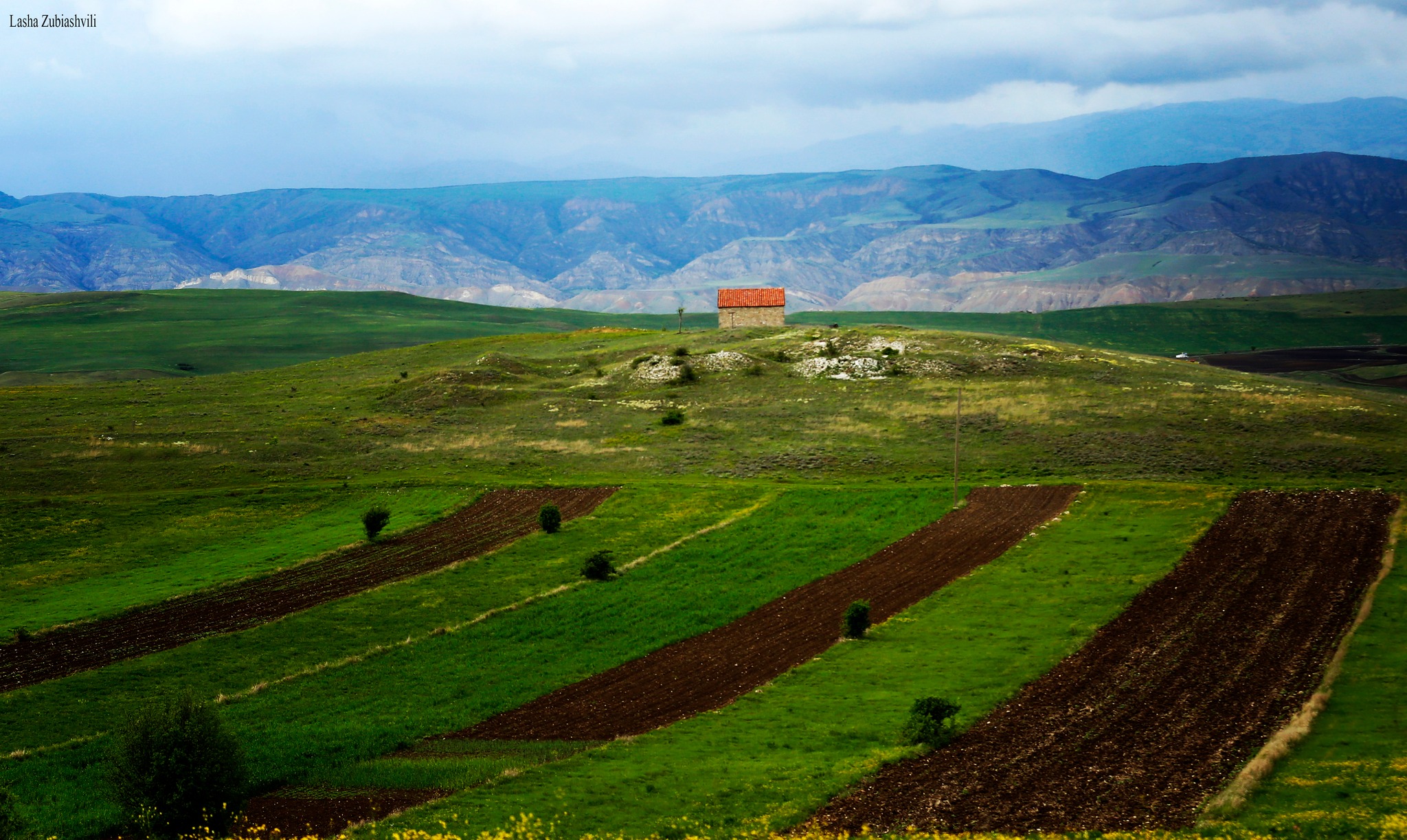
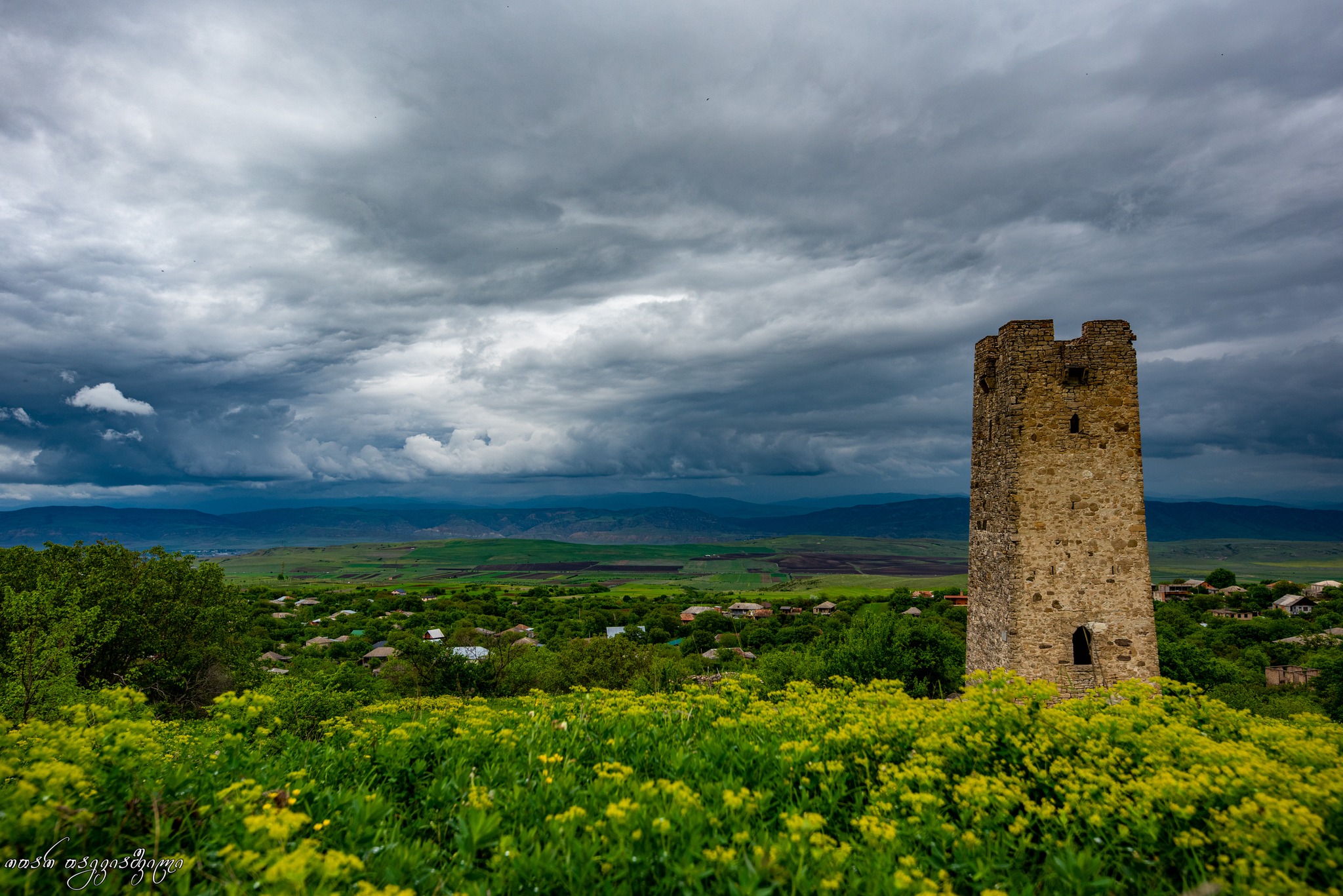
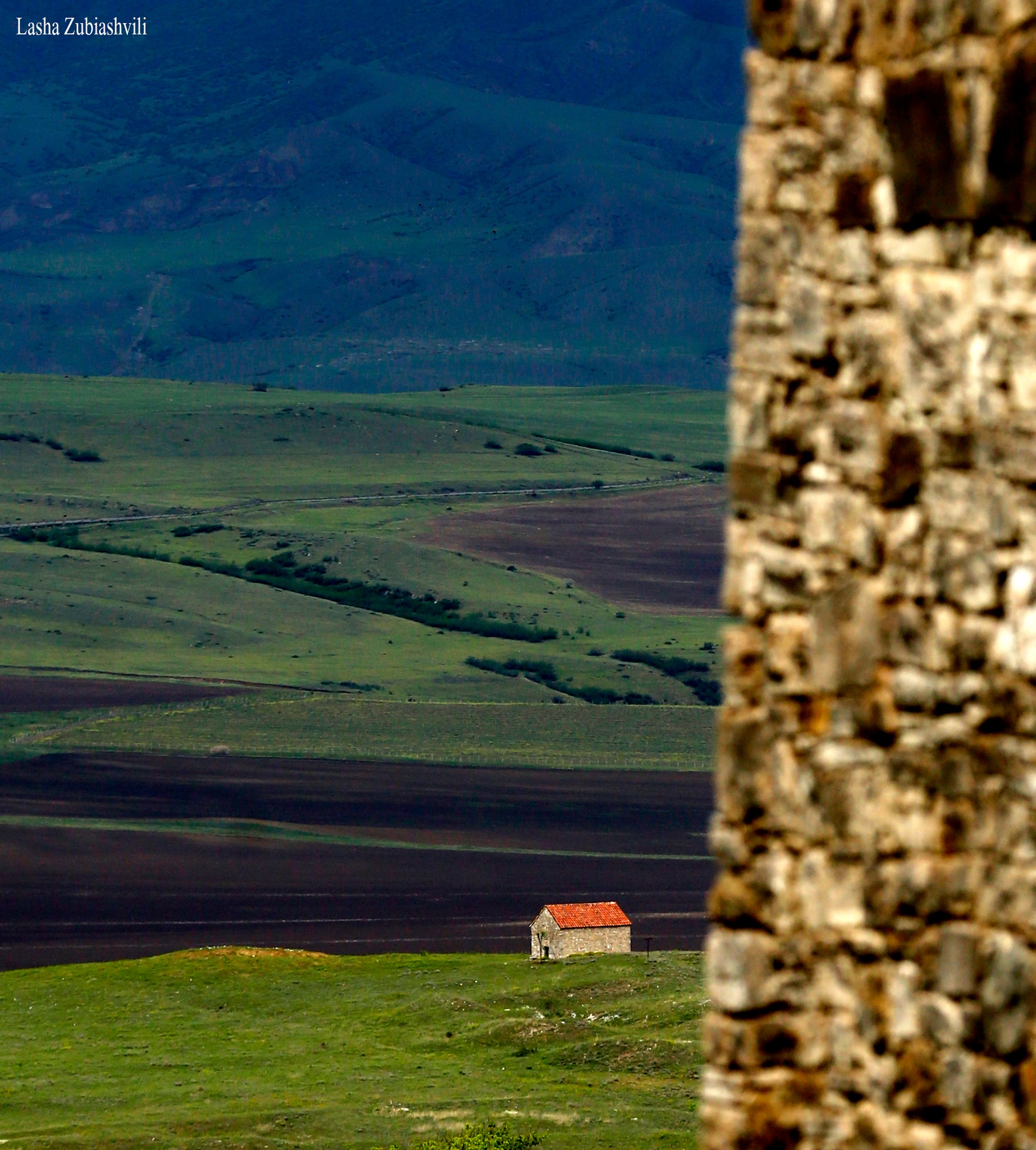
a village in eastern Georgia, in the Kaspi municipality of Shida Kartli region, in the Akhaltsikhe commune. It is located on the northern slope of the Trialeti ridge. It is 920 meters above sea level, 21 kilometers from Kaspi. 13 km from Metekhi (the nearest railway station).
Near the village there is an old settlement — the former fortress-hall of Giorgi Saakadze, and to the southwest of the village there are two churches: the Trinity and the Mother of God.
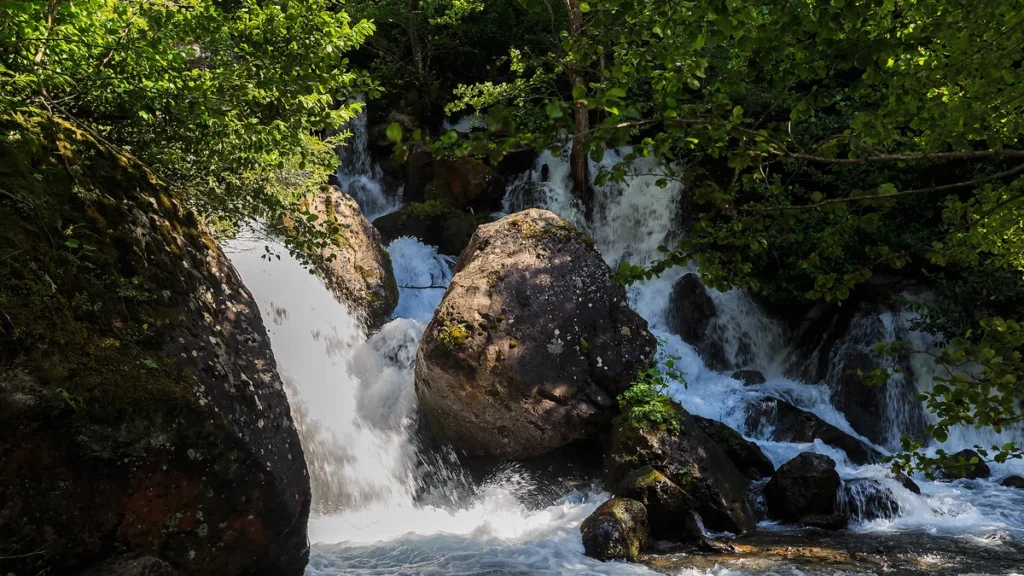
Noste Waterfall
is located in the Shida Kartli region, in the Kaspi Municipality, in the village of Noste, at an altitude of 1,070 meters. The waterfall is nestled in the greenery, creating a beautiful view. This spot is ideal for a picnic or a leisurely day hike. If you’re a nature lover and decide to take a short trip with friends, Noste Waterfall and its surroundings will truly delight you. You can also visit the tower of Saint George Saakadze in the village of Noste, the Saakadze estate, and the churches of Saint George and the Trinity.
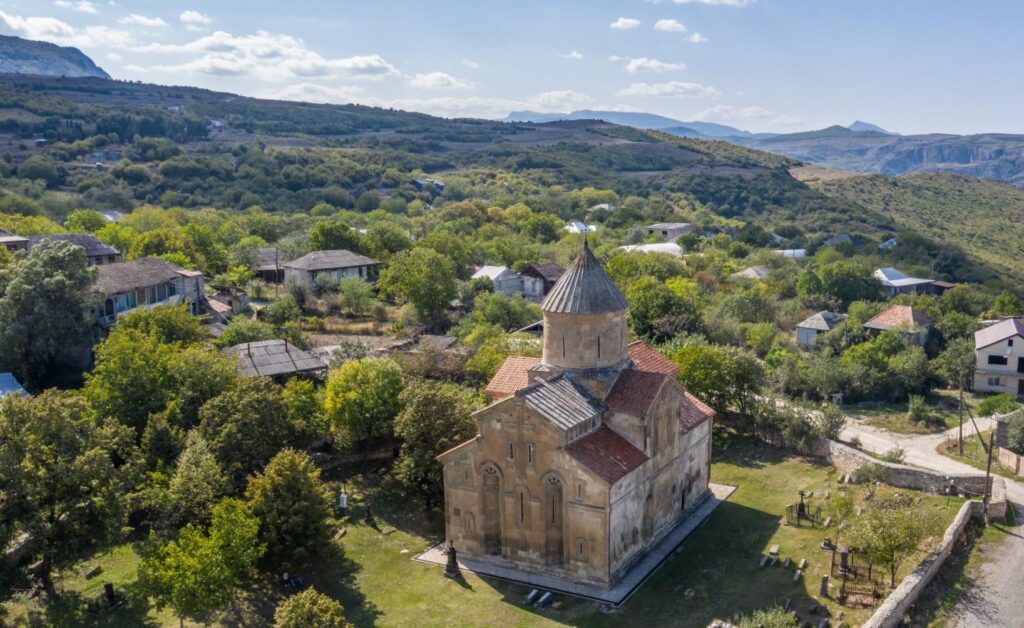
Ertatsminda St. Estate Church
Is located in Shida Kartli region, in the village of Ertatsminda, Kaspi Municipality. It is a XIII century cross-domed church. The name “Ertatsminda”( means word by word “Nations” and “Saint”)
The church was repeatedly damaged during the earthquake or invasion. It has been rebuilt many times. From the beginning of the XVII century, the church of Ertatsminda belonged to the Tarkhnishvili family. In the following periods, it was the ancestral tomb of the Saakadze family. The head of Paata, who was the son of Giorgi Saakadze, is buried here. Paata was a martyr. According to the architectural style, the church is similar to the churches of the XII-XIII centuries.
Ertatsminda complex includes several buildings: St. Estate’s church, the wall, the bell tower and the remains of monastic and agricultural buildings.
Ertatsminda St. Estate Church is a cross-domed building. The dome of the church, which was originally narrow and taller than today, is based on walls and two imposts. The building has two types of covering, a cylindrical chamber and a spherical conch. The sanctuary and the two-story side rooms are long and elevated by one step compared to the main space. The facades are decorated with luxurious ornaments of the first half of the XIII century. The church has three entrances – to the west, south and north. The temple is built of well-hewn yellow colored limestone.
Rkoni Monastery & Queen Tamar’s Bridge
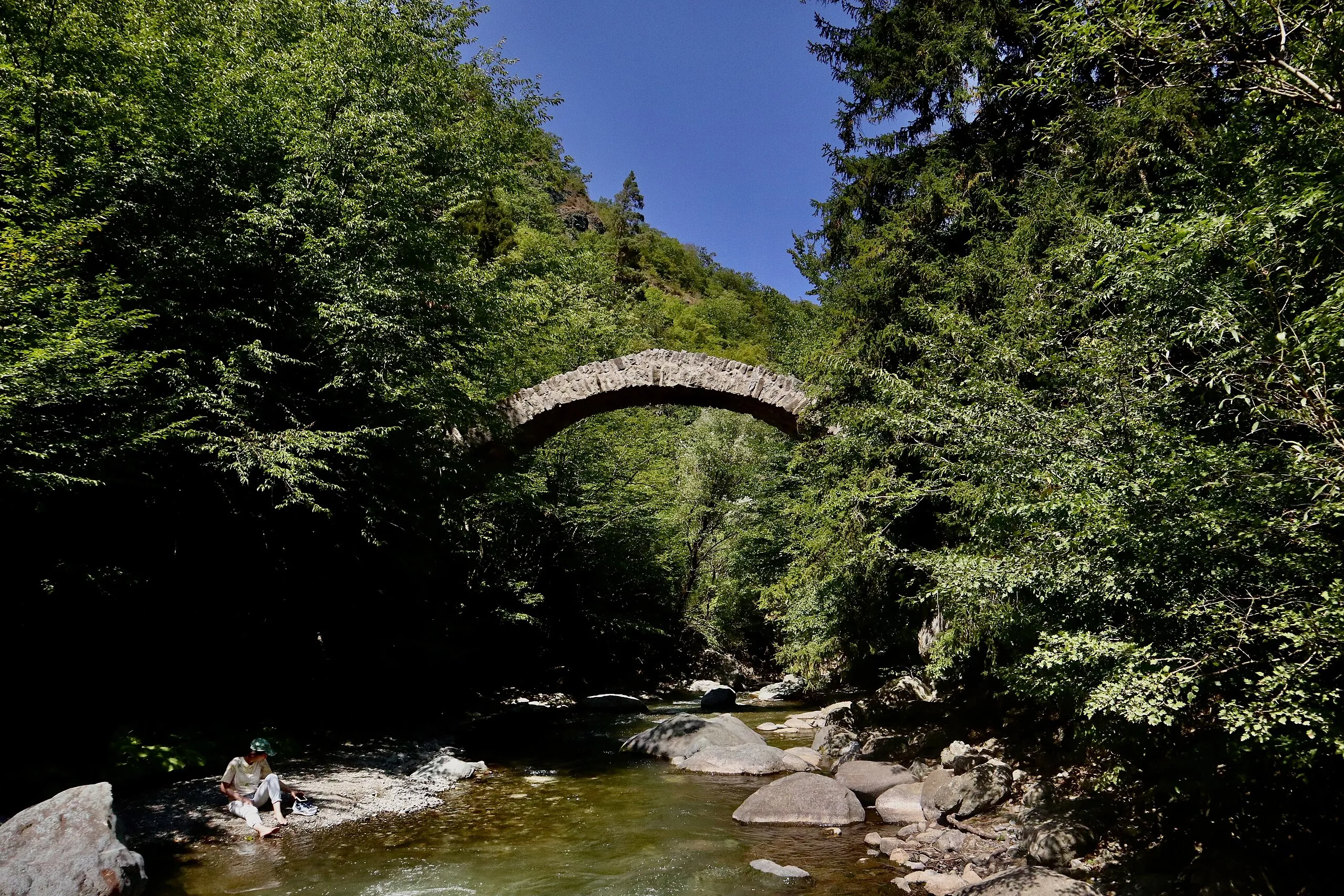
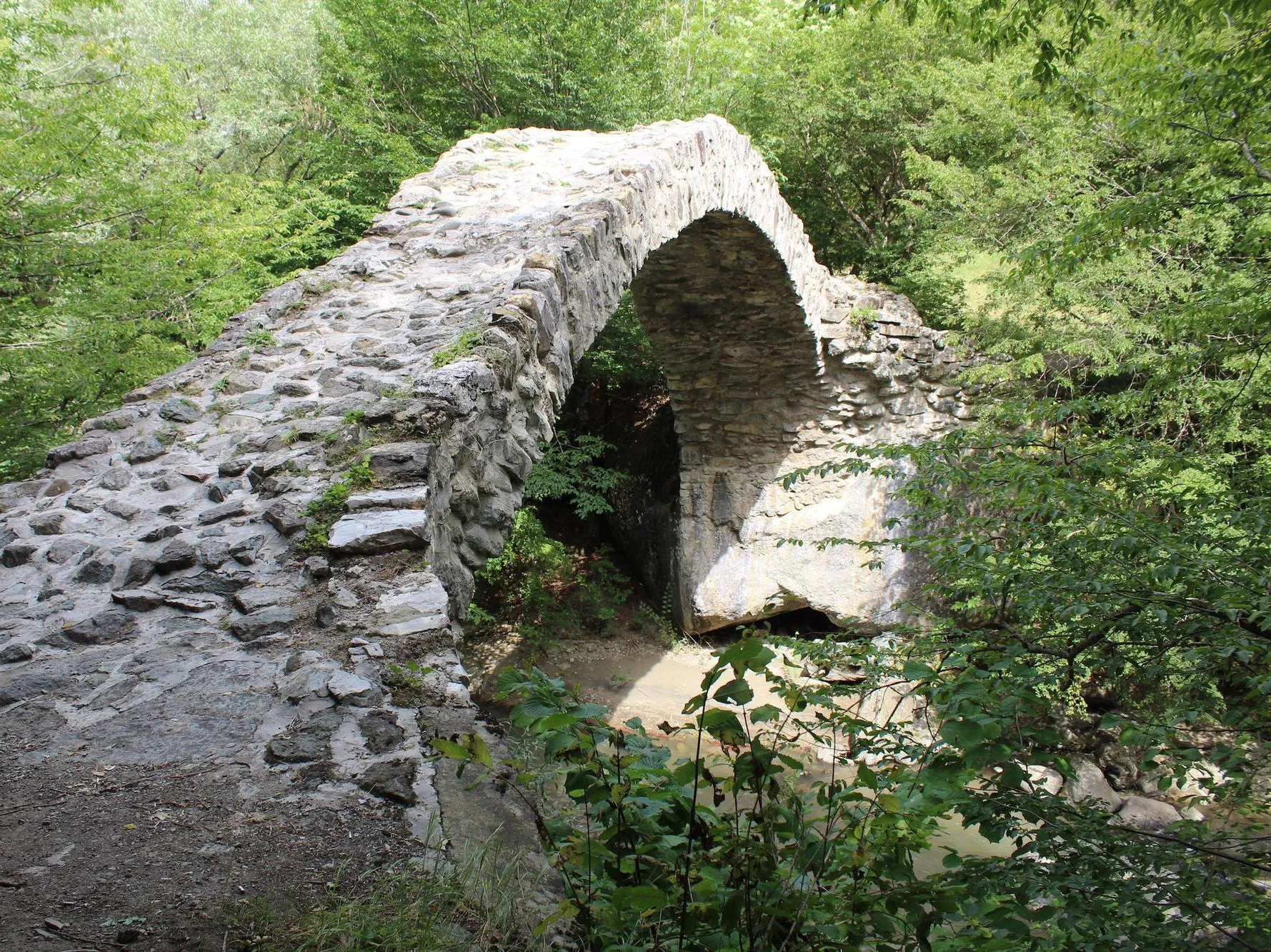
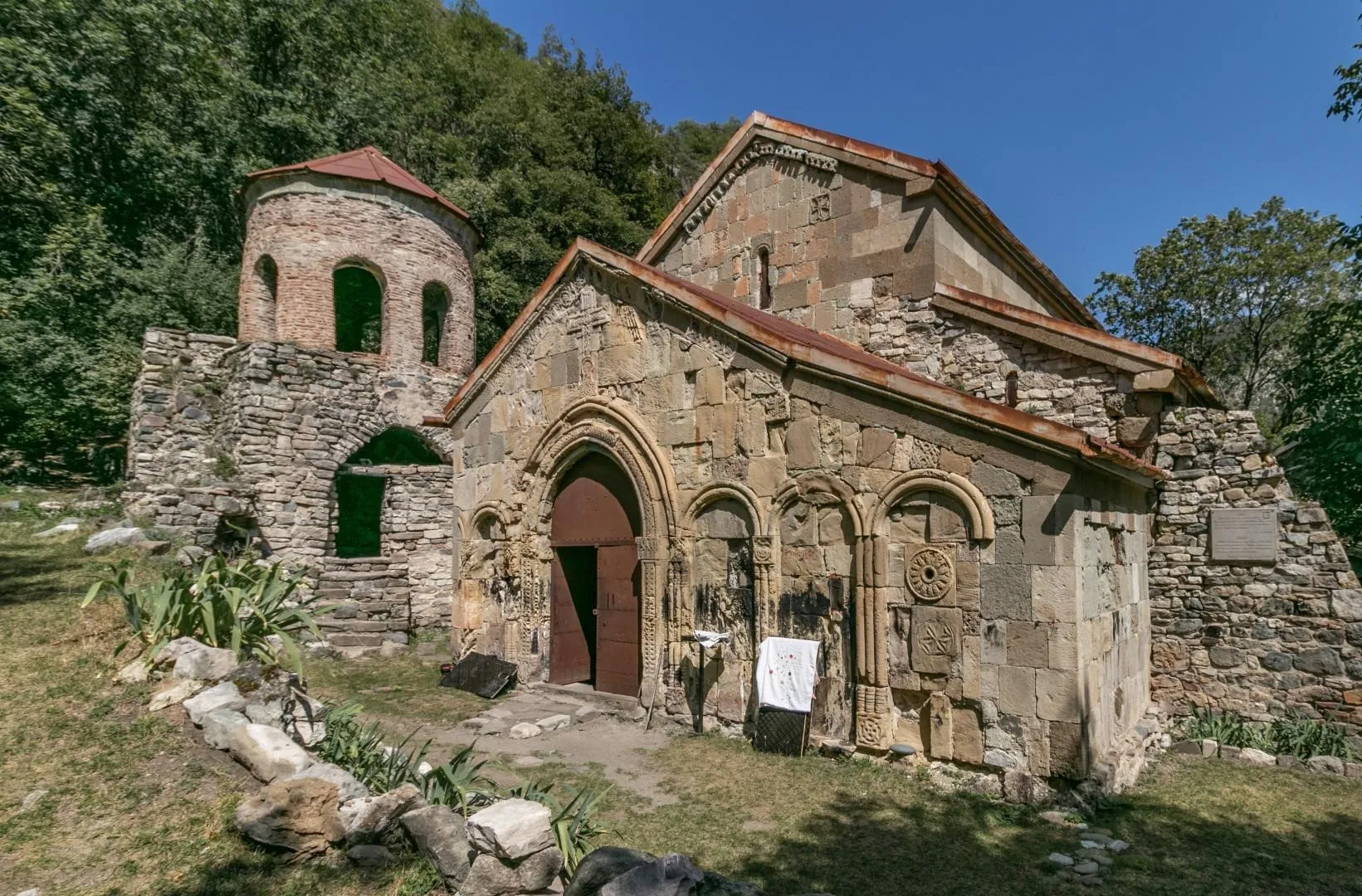
Rkoni is an ancient Georgian Orthodox monastery and church located in the Kaspi Municipality of the Shida Kartli province of Georgia. The monastery was built in the 7th century AD on the side of a mountain, the surrounding area is a valley with mountain chains on both sides covering most of the area which makes it hard to reach and very isolated. In the middle of the valley is the river Tedzami, since the monastery is on the left mountain chain (from a hiker’s perspective) tourists have to cross the river by using the Rkoni bridge, a semicircular bridge made of stone that crosses the river onto the other mountain chain where the monastery is located.
Queen Tamar bridge crossing into the Rkoni monastery, built in the 11th century
Rkoni Fortress, a.k.a Dirsi Fortress
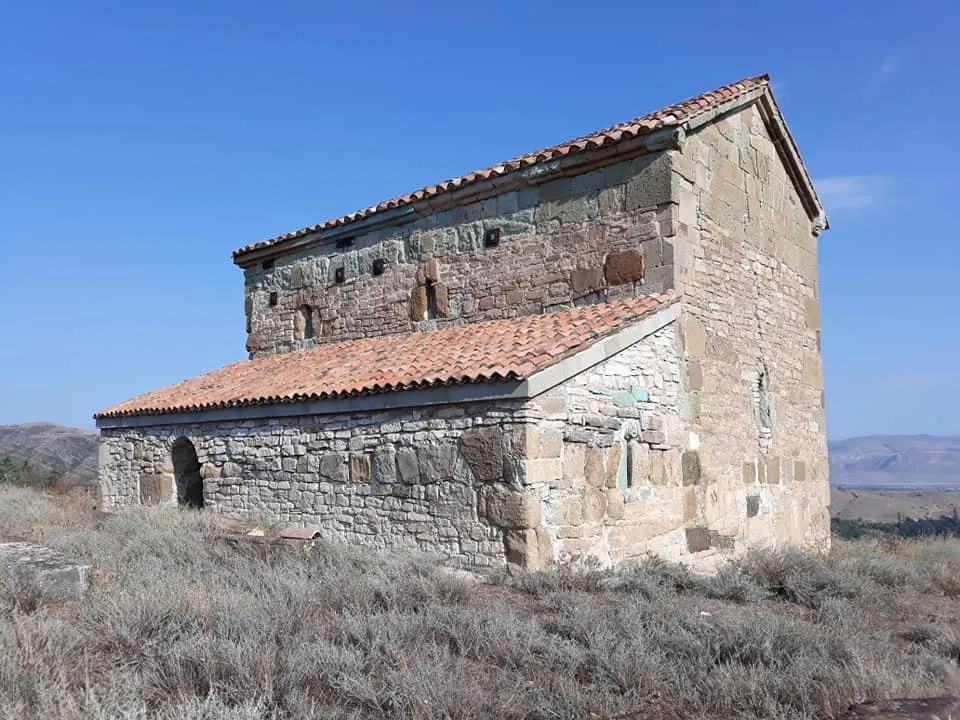
is located in Shida Kartli region, Kaspi municipality, near the Rkoni monastery complex, on a high mountain slope. The monument dates back to the middle of the VIII century and it is built with crushed stone. Rkoni Fortress Complex includes a wall, a church, a tower, a watch tower and a palace. It is built on a mountain, which is difficult to climb up. Only the western part of the fortress is located in a relatively flat place. The wall has two floors and its height is 5 m. The lower floor is simple and the upper one has the holes for the gun shoot. The wall had a wooden battle trail. There are two entrances, north-west and south. The tower of the Rkoni Fortress Complex stands to the south-east of the wall, in the highest point. Its southern and western walls are supported by a rock, while its northern and eastern walls are supported by a massive wall. Fireplaces, niches are built into the walls. The watch tower stands at the top of the castle, on top of a mountain.
Monastery Bridge Fortress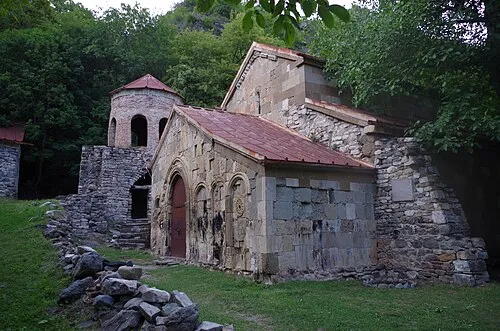



Garikula village & Church of Pavnisi
Garikula village is located in Shida Kartli, Kaspi municipality, at the confluence of Tskhaveristskali river. Garikula is full of history, beginning at the point where Tskhaveristskali river meets the village, where archaeologists discovered a feudal age samarovani (burial ground)…
The ancient St. George Church of Pavnisi is located in Garikula, which dates back to the IX-X centuries AD. The church consists of a central nave with no aisles, where two layers of painting fragments have been preserved, showing how well developed painting was in Georgia. The lower layer, which dates back to when the church was built, on the north wall now consists of coloured stains and the figure of a crowned man with open arms. In the conch of the altar, the second layer of painting, which belongs to the second half of the XII century, depicts a prayer and the figures of the twelve apostles. Below is the image of ten church fathers and two deacons.
Above the altar window, in a panel, is a cross, while the Mandilisai Icon sits below it. The frescoes of the church depict religious holidays and episodes from the life of St. George in a vibrant range of colours.
Garikula Citadel and Castles
Garikula also hosts a four-story watchtower which was built in the second half of the VII century, allowing its occupants to protect the Tshaveritskali gorge from their enemies. The tower has a fireplace, windows and fortifications.
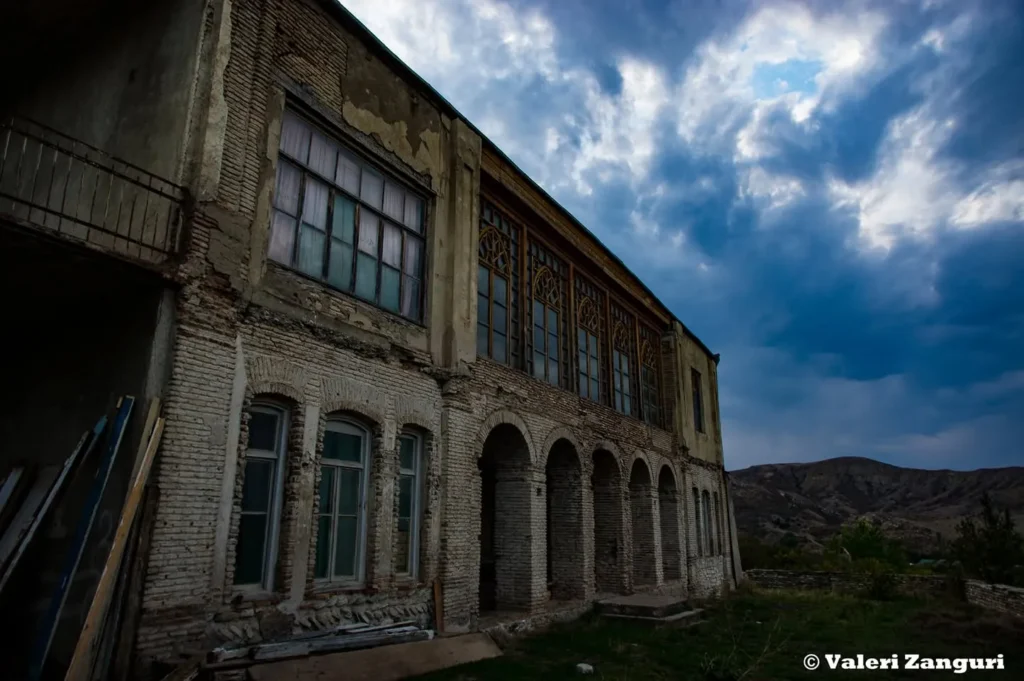
Garikula is also home to the Marshliant Castle of the Tarkhnishvili family, which is a cultural heritage monument. This two-story building was built with cobblestones in the XIX century, and, unusually, includes a double-domed bath.
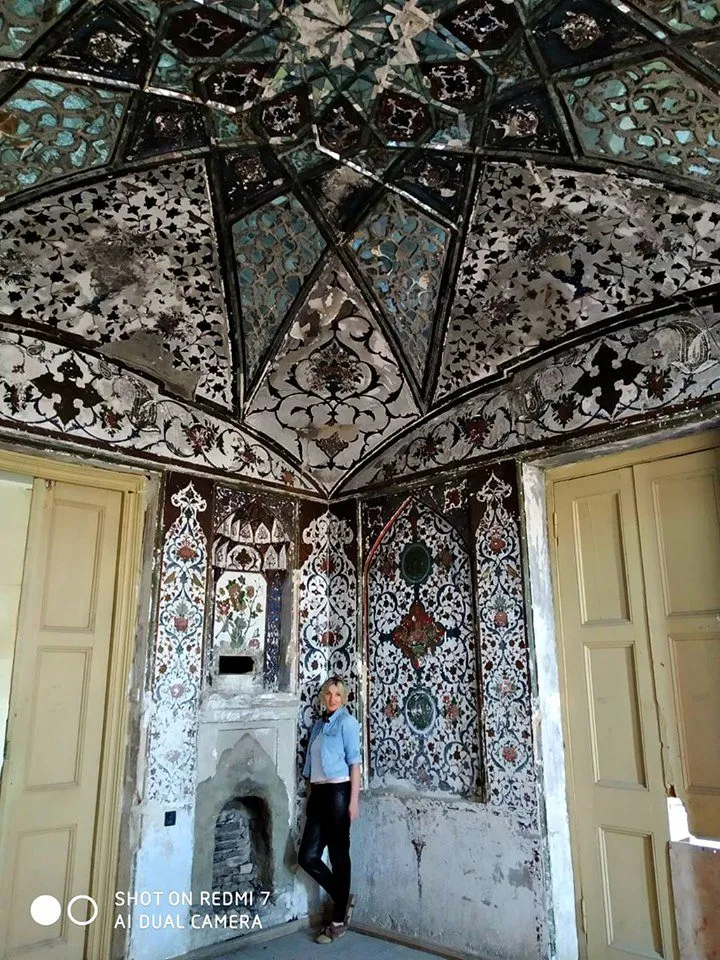
Art lovers should head for Bolgarski’s Castle of the Polish Prince, a monument of national significance built in 1885. Now home to “Art-Villa Garikula”, a regional modern art centre, it hosts international exhibitions and festivals.
Marshaliant Castle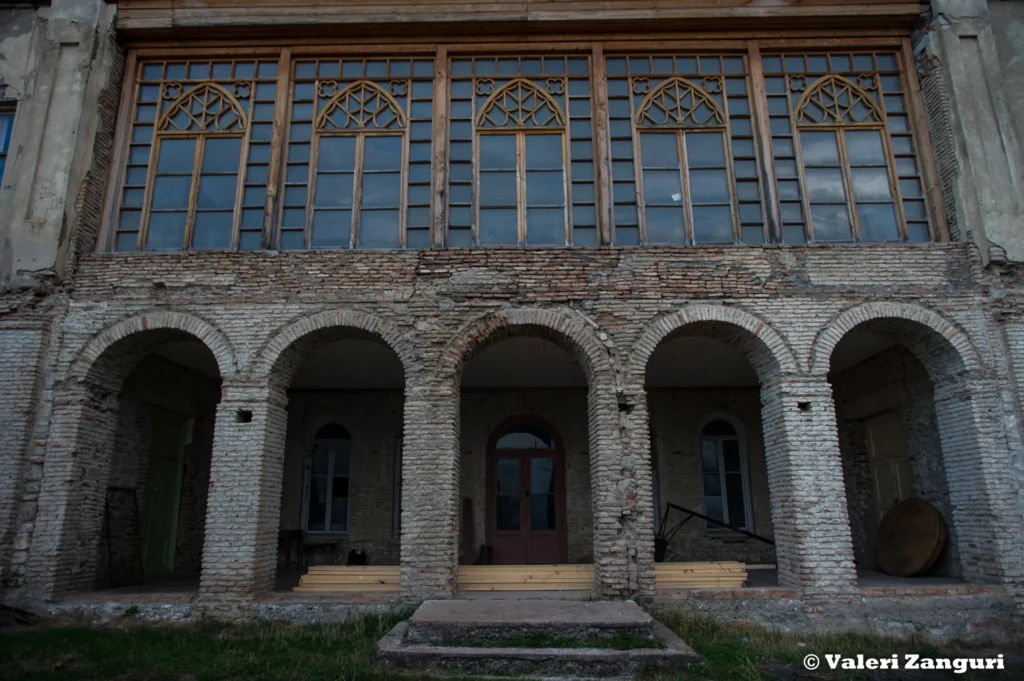
Art villa garikula
Art Villa Garikula is an independent art centre for meetings with local and international artists. It offers residencies, short trips and education, as well as place for symposiums and workshops. A “Cultural crossroads for people of creative interest and different backgrounds in the arts”. Based in a 19th century citadel built by Polish architect near the river in 1855.
Art Villa Garikula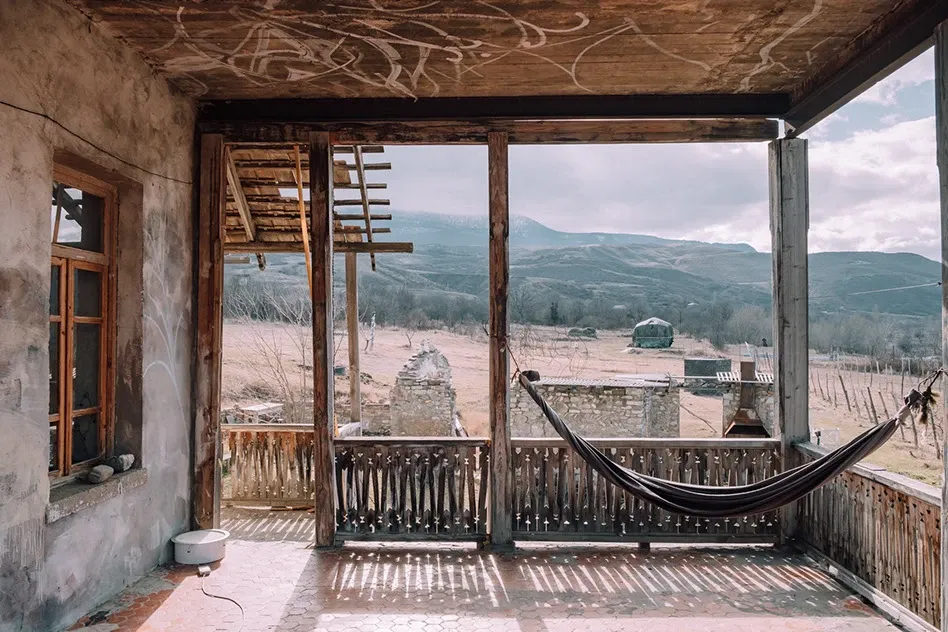


Gori Municipality
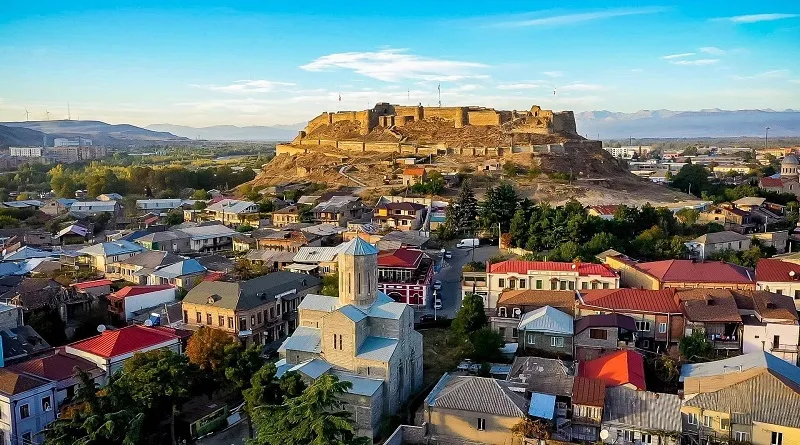
Gori – City in Georgia, Gori Municipality, Shida Kartli Region and Gori Municipality Administrative Center. Located at the mouth of Mtkvari and Didi Liakhvi, 588 m above sea level. Gori is an important railway hub, from which the railway line goes to Tskhinvali. In the city, there are light and food industrial enterprises, health, care, education, and culture institutions. Gori is the residence of Samtavisi and Gori Eparchy. Gori is one of the important transport hubs in Georgia. Two important international highways of Georgia are near Gori: S1, (which coincides with Senaki; crosses European highway E60) and 10s. Besides, there is a railway station in Gori, which is a part of the Central Railway’s main railroad and a bus station from which you can go in different cities of Shida Kartli, capital city Tbilisi and seasonally in Adjara resorts.
Gori is one of the oldest cities in Georgia. Officially, the city was declared in 1801. The name originates from the rocky hill in the city on which the Old Castle is built. In the chronicles, Gori dates back to the VII century, although some historical sources sign the foundation of the city of David the builder (beginning of the XII century). The archaeological materials indicate that in the boundary of the old and new periods of chronology there should have been an urban settlement. The oldest archaeological site in the Gori area is the ancient Bronze Age settlement, on the banks of the Mtkvari River in a place called Ghambareuli..
Gori Cathedral of the Nativity of the Blessed Virgin
According to historical sources, the church was built by Catholic missionaries. In 1628, Padre Ambrosio and his servant Petre came to Gori in order to hand over the holy relics of the martyred Queen Ketevan to King Teimuraz I.
The missionaries received a church from the king as a gift, whose renovation was completed in 1632. It was then renamed to St. Peter’s Church. King Teimuraz’s goodwill toward the missionaries later soured, and the church changed hands numerous times afterward. It was given its current look between 1806 and 1810.
The crossed-dome church is made of bricks. The tholobate of the dome is richly decorated, and the interior was painted in the second half of the 19th century.
A powerful earthquake in 1920 damaged the church, and during the Soviet period it lost its function as many other churches on the territories annexed by the Soviet regime. During the Soviet period, Gori Music School was located there. It was during this period of religious oppression that much of the church’s decorated interior was damaged.
In 1990 the church was transferred to the hands of the Georgian Orthodox Church. In 2003, during the restoration of the church, frescoes that had been whitewashed in 1950 were scraped clean. A three-story bell tower and wall were built in the churchyard.
In 2008, the Gori Cathedral of the Nativity of the Blessed Virgin was granted the status of a Cultural Heritage Monument.
Gori fortress
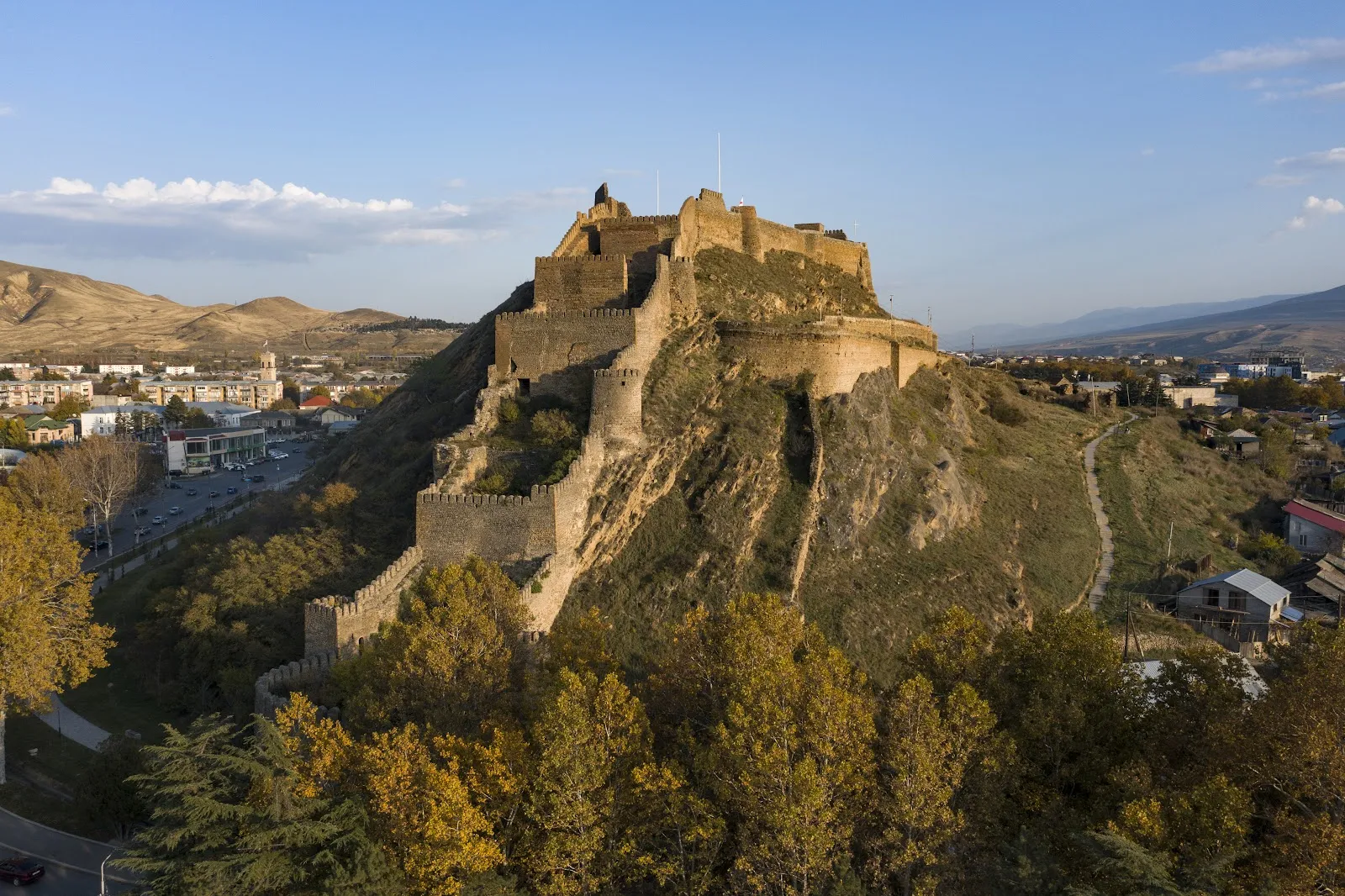
Gori Fortress – a historical fortress in Kartli, in the center of Gori, on a high rocky hill. The ruins and archeological materials on the northern slope confirm that in the last centuries of the 1st millennium BC there was a strong fortress and the population around it. “Gori Fortress” is first mentioned in sources in the XIII century.
Gori Fortress was an important strategic fortress; Its conquest meant political domination over the whole of Shida Kartli. Over the centuries, Gori Fortress has been repeatedly renovated and remade. The main part was restored in the 30s of the XVII century by King Rostom.
The fortress got its current appearance in 1774, when it was thoroughly repaired by King Erekle II. In the first years of Kartli-Kakheti’s unification with Russia (1801), Gori Fortress still performed its strategic function- the Russian Army Grenadier Battalion was stationed here. Subsequently it lost its former meaning.
The fortress is built of cobblestone; The cut stone is used in the earlier layers. The oval citadel has a relatively better preserved part from the west – “Tskhrakara”; There are auxiliary fences to the south and east. The original entrance to the fortress is not visible; In the middle of the south wall is a late vault gate. In the south-eastern section there are the ruins of a small church. The fortress had a tunnel to draw water and a reservoir. Gori Fortress was significantly damaged by the earthquake in 1920.
View on map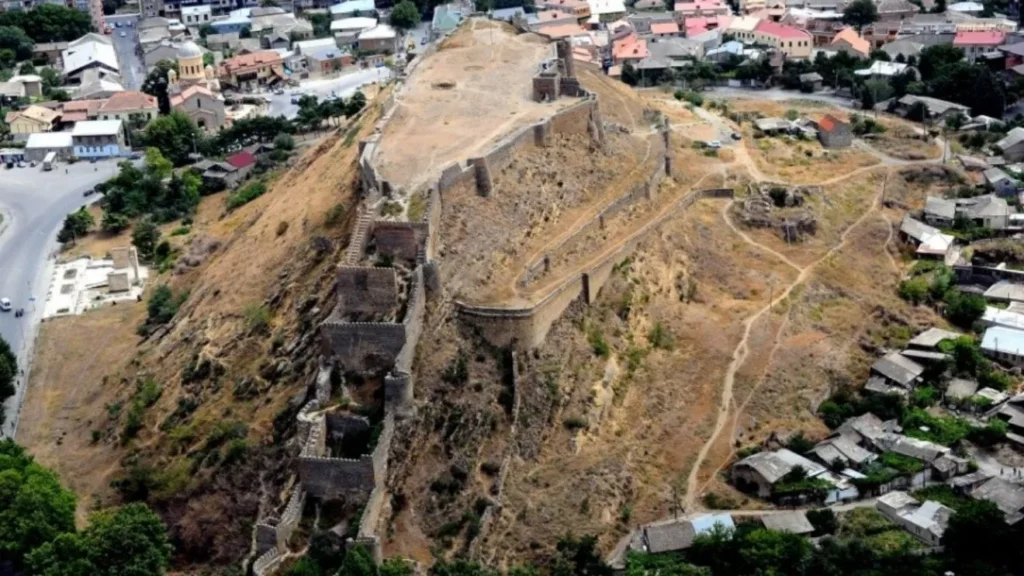
Art House Gori
The Art house opened in 2020 by Gori Photographers Club members. A series of educational projects and exhibitions have been implemented, with the help of different institutions and local governments.
Within this year, Space implemented a number of international and local projects, in the frame of educational and exhibition programs, Permanent exhibitions of local and international artists are held at the Art House
The main aim of the space is to support the development of photography, Contemporary Art and culture in general, within the region and country itself. It conducts the role of the regional platform and supports the professional development of many artists.
The multisector direction is one of the priorities of the Space, thus supporting the engagement of the wider audience and various fields within the process, that helps to reflect the challenges within the global process. 5 Davit Guramishvili St, Gori +995 598 18 36 74
View on map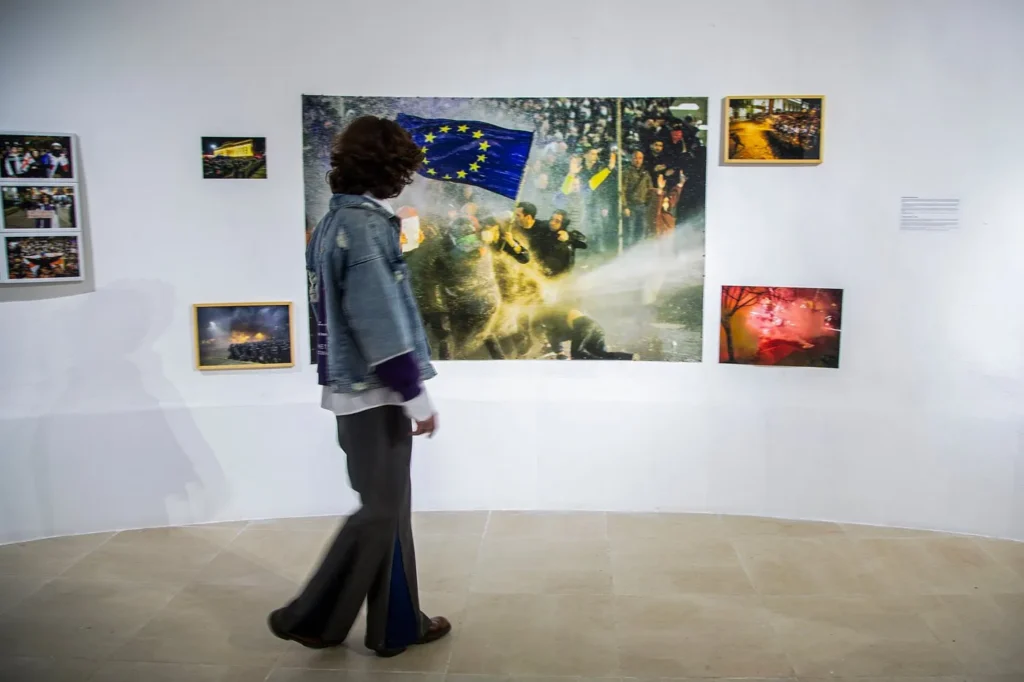
Stalin’s Museum
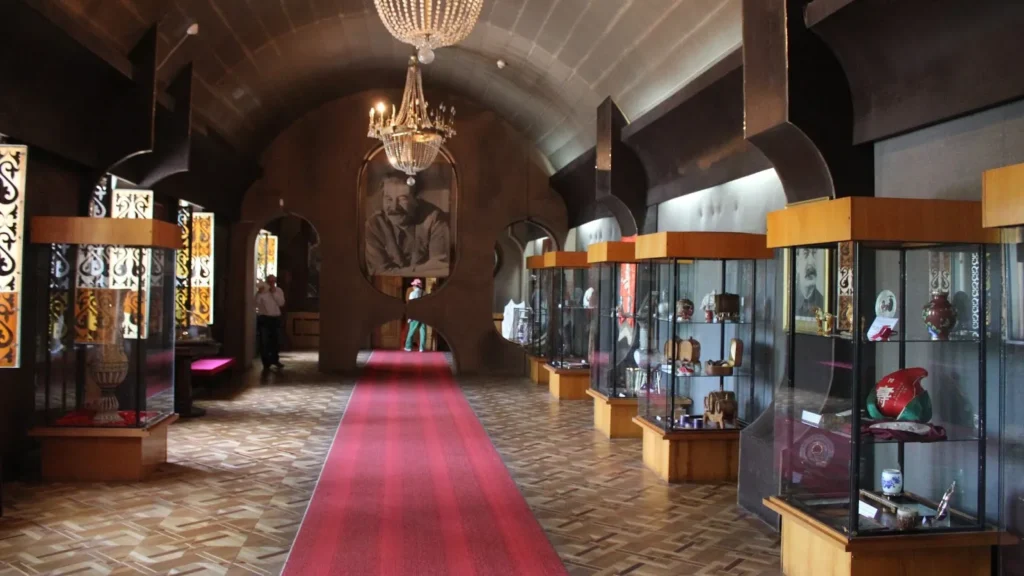
The Stalin Museum in Gori is one of the most unusual historical sites in Georgia. It was established in 1937 in Stalin’s hometown and later expanded into a full museum complex. The grounds include three main parts: the central exhibition building, Stalin’s childhood house preserved under a stone pavilion, and his personal rail carriage, displayed on the side.
Inside the museum, the rooms follow a strict Soviet style, with heavy décor and large portraits. The exhibition presents documents, photographs, personal belongings, gifts, and items connected to Stalin’s political career. Much of the material was curated during the Soviet period and reflects that era’s narrative, which makes the museum feel like a preserved time capsule rather than a modern interpretation of history.
Stalin’s birthplace – a small wooden house – is displayed almost untouched, while his green armored railway carriage gives visitors a look at how he traveled in his later years.
After Georgia’s independence, debates arose about how the museum should present Stalin’s legacy, but the overall structure and many original exhibits remain. Today the museum draws visitors who are curious about Soviet history and the complex, often controversial figure who shaped much of the 20th century.
We feel obliged to note that although still praised by some – majority of Georgians have very negative attitude towards Stalin as he has been the reason of killing and terrorizing many Georgian (an not only) families

St. George’s Church in Gorijvari
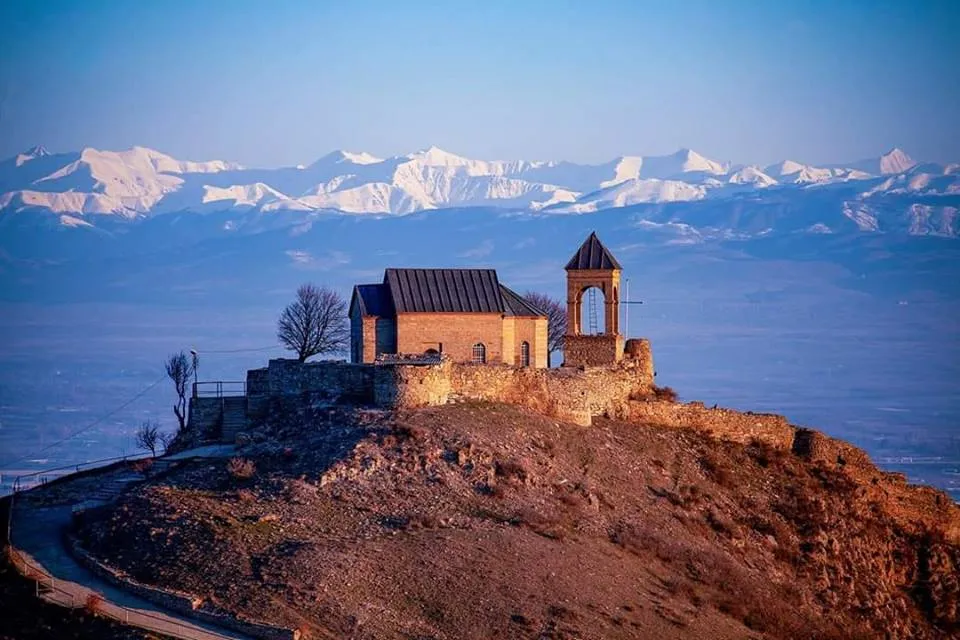
is located in Shida Kartli region, Gori municipality, in the village of Didi Gorijvari, on Gorijvari mountain. It is a monument of the XX century. The temple was built on the site of an early medieval hall church after the Gori earthquake 1920. It is built of brick. The facades are simple. The church has arched doors and windows. Next to the temple is a brick-built bell tower, the second floor of which is arched on all four sides. The church is surrounded by a VII century fence, which is quite damaged. The fence is double, followed by mountainous terrain and reinforced with buttresses. There is a wide and very beautiful view from Gorijvari Church.
Ateni Sioni Church
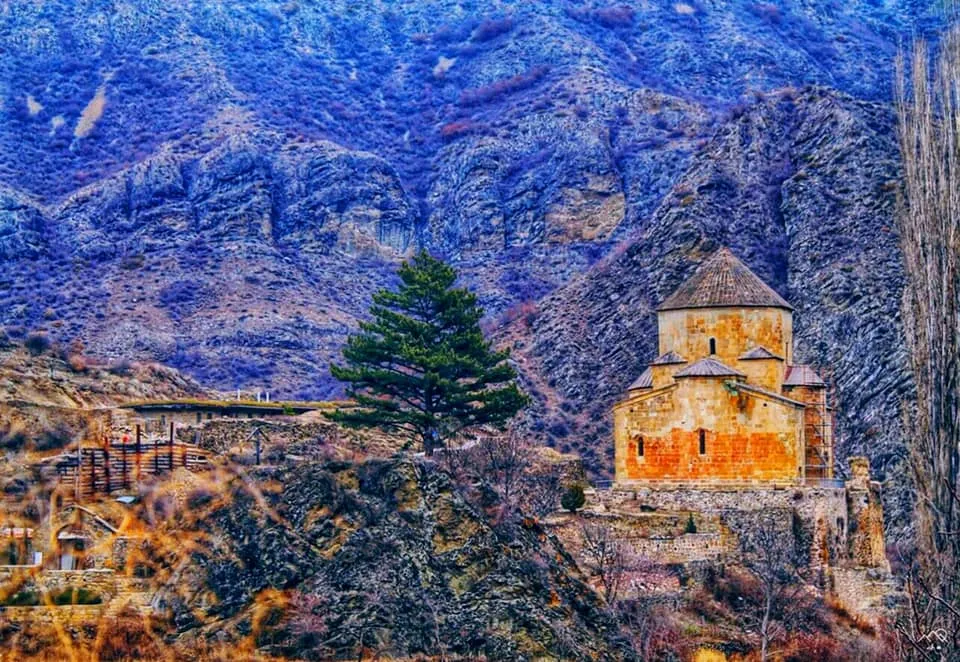
The Ateni Sioni Church is an early 7th-century Georgian Orthodox church in the village of Ateni, some 10 km south of the city of Gori, Georgia. It stands in a setting of Ateni gorge in the Tana River valley known not only for its historical monuments, but also for its picturesque landscapes and wine. The name “Sioni” derives from Mount Zion at Jerusalem. Ateni is the tetraconch church, typical for the period. Its frescoes are one of the best examples of Georgian painting.
Sioni is an early example of a “four-apse church with four niches” domed tetraconch (between the four apses are three-quarter cylindrical niches which are open to the central space), with entrance from the north. The dome tholobate rests on the three rows of tromps, transitioned to the four apses of the tetraconch.
The architects were not originally planning frescoes on the inside walls. They appeared only in the second half of the 11th century. It is believed that the walls were painted by a group of at least four artists, who created a monumental harmonious composition. Each apse contains its own iconographic cycle. Dynamic figures are clearly outlined, painted predominantly in light colors – blue, grey, purple. Every fold of clothes is meant to show movement, like in the figure of the angel. The western apse also contains portraits of the kings and nobility who supported the construction.
Ateni Castle is located in the Shida Kartli region, in the Gori municipality, in the Ateni Gorge, on the left bank of the Tana River, near the village of Ateni, on a high mountain ridge. On one side of the castle is Satsiviskhevi, and on the other – Abanoskhevi. It dates back to the 10th-11th centuries and is built of rubble stone. The building mainly consists of two sections. The northern section is relatively small, the large and main section is located in the south. The wall is reinforced with piers. Inside the wall are the Metzikhovets’ barracks, a reservoir and other buildings. The entrance is from the north. The castle is not large, but it is difficult to access. It protected the road from Shida Kartli to southern Georgia. In 1920, during the earthquake, the monument was badly damaged and its original plan and massing cannot be determined.
Hiking trail in Tana gorge –
The trail starts from the Ateni Sioni church and goes along the river Damchkeri gorge. Deep in the gorge, before you reach the pond, the trail turns to the right to the west and continues in the gorge and ascends the right slope of the mountain and reaches the ridge. The path follows the ridge to the south-east and continues on the left slope of the mountain. From the deep in the gorge trail descends where you will come across the ruins of the church and the pond.
in the Tana Valley, at an altitude of 1080 meters above sea level, is located the magnificent Biisi waterfall. This place, surrounded by greenery, magnetizes travelers with its amazing views and unique atmosphere. Biisi waterfall invites everyone to a small exciting hike, whether for a pleasant picnic or escape from the hot summer weather.
At the base of the waterfall, trickling water gurgles, forming a small pool, ideal for refreshing swims and cooling walks. In winter, this place is transformed into an icy kingdom, where frozen water creates breathtaking beauty. The route to the main Biisi waterfall passes through the famous Biisi “ice waterfall”, which in summer appears only as a wet rock, but in winter turns into a magnificent ice cascade. Every year, ice climbing competitions are held here, adding a new adrenaline rush to the experience.

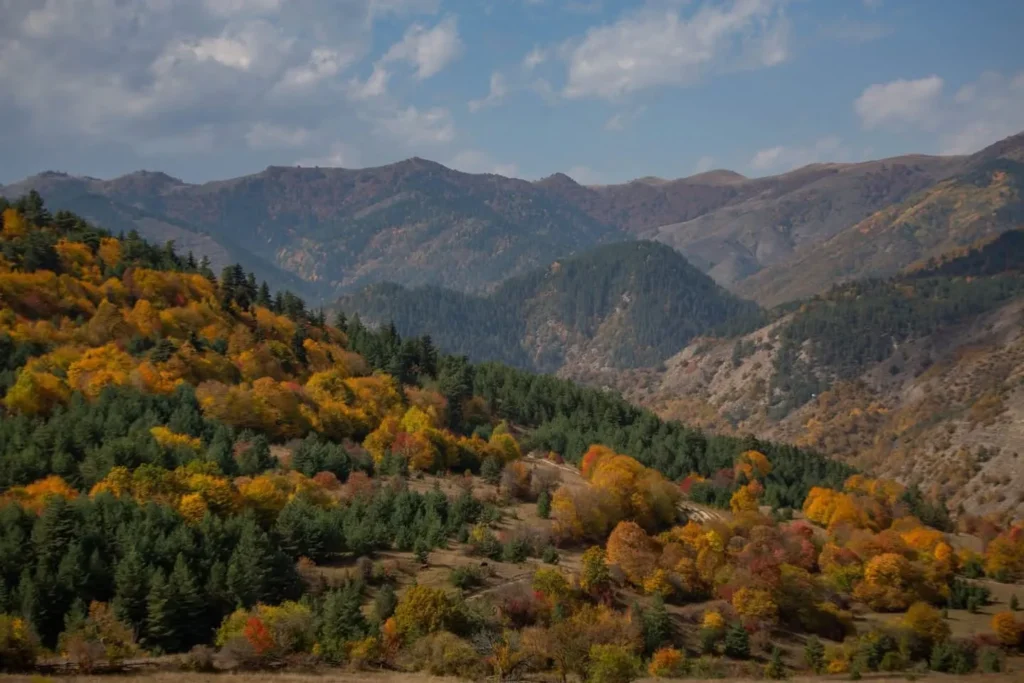
Nadarbazevi lake
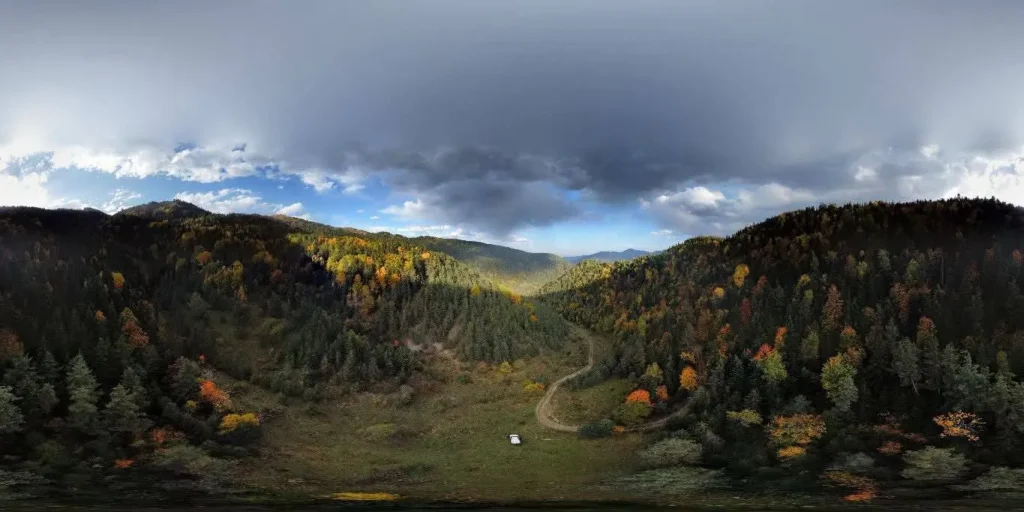
is located in Shida Kartli region, Gori Municipality, on the north slope of the Kvernaki ridge, at 856 meters above sea level. It is an artificially created reservoir on the site of the former Nadarbazevi Lake. The surface area of the water is 1.18 km, the greatest depth is 1.8 m. Spacious spaces, a blue lake, fields and snow-capped mountains create a beautiful view of the horizon. There is also a forest near the lake, where you can arrange a picnic and relax. This place is perfect for nature lovers. You can also go fishing on Nadarbazevi lake. The lake is very popular in terms of amateur and sport fishing.
The cave complex of Kvakhvreli
is located in Shida Kartli region, Gori Municipality, in the east of the village of Kvakhvreli, on the opposite side of the fortress-town Uplistsikhe, on the right bank of the river Mtkvari. The monument dates back to VII-IX centuries. In ancient times, it was the agricultural suburb of Uplistsikhe.
The cave complex of Kvakhvreli carved into the cliff includes: the church curved into the rock, passageways, placements and a bell tower.
The bell tower stands on top of the entrance to the complex. It is later built of crushed stone and has the shape of an irregular rectangle. In the north wall there is an arched entrance to the bell tower, and in the transverse walls there is one rectangular window. The building is completed with a low, circular cylindrical throat dome and a dome with a conical roof. The square under the dome is transferred to the throat of the dome with a construction. Three small Kvevri are embedded in the walls of the arch.The bell tower is connected to a dark corridor. This corridor is the main one and it is possible to get to the Kviratskhoveli Church from the entrance which is cut into the eastern wall. In addition to the main corridor, there are two more corridors in the cave. Kviratskhoveli Church has a semicircular apse to the east. The altar is 1 meter high from the floor of the hall and appears to have been separated by an iconostasis. At the site where the rock mass is opened, in the north part of the vault of the altar, there is a small rectangular window. The walls of the church are divided by arched niches. The temple has two rectangular doors. One, wide door, which is the main source of lighting for the hall, is cut in the middle niche of the north wall. The second door is in the eastern part of the south wall and runs through the second corridor.
The auxiliary stand is rectangular, with a small altar in the center. Directly at the entrance to the church is cut out a placement which has an almost circular drawing and is covered with a domed arch. The arch is complexly drawn and has an oval hole in the tip. In the western part of the placement there is a rectangular door leading to the open corridor.
Seventeen khachkars were later carved on the walls of the cave by the Armenian population (Khachkar is a medieval Armenian monument depicting a large cross embedded in a complex ornamental composition. It is spread throughout Armenia).
View on map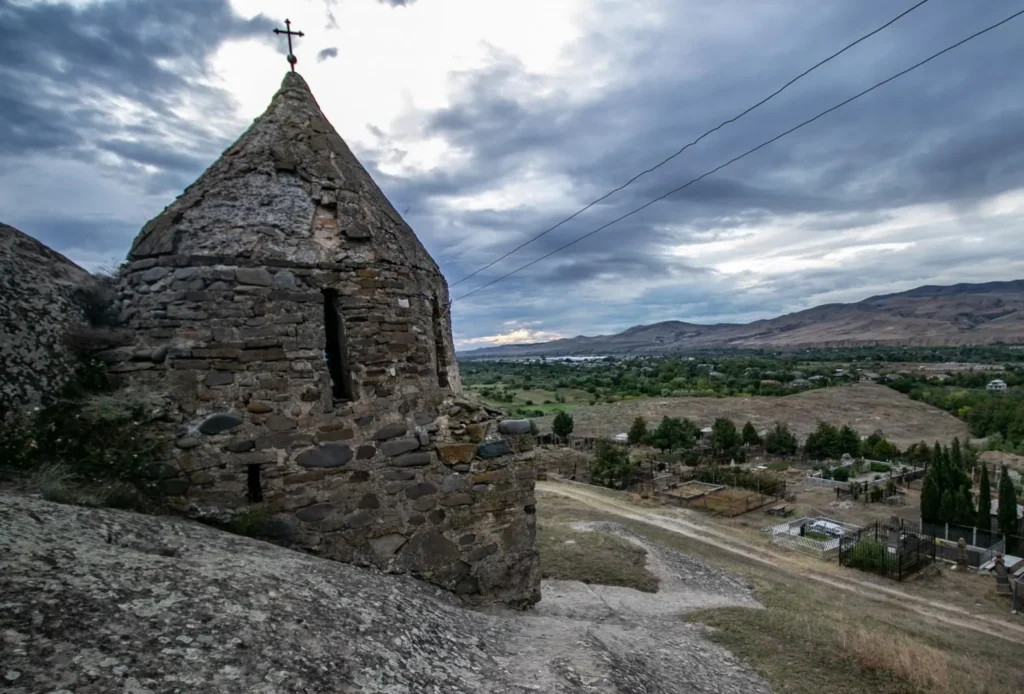
Uplistsikhe Cave Town
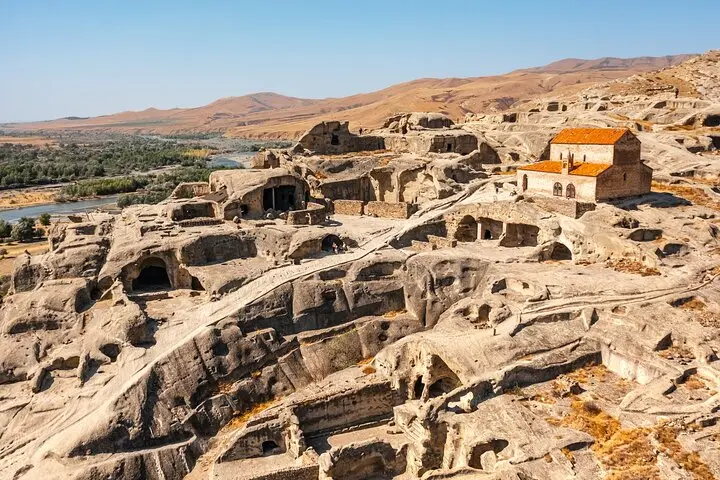
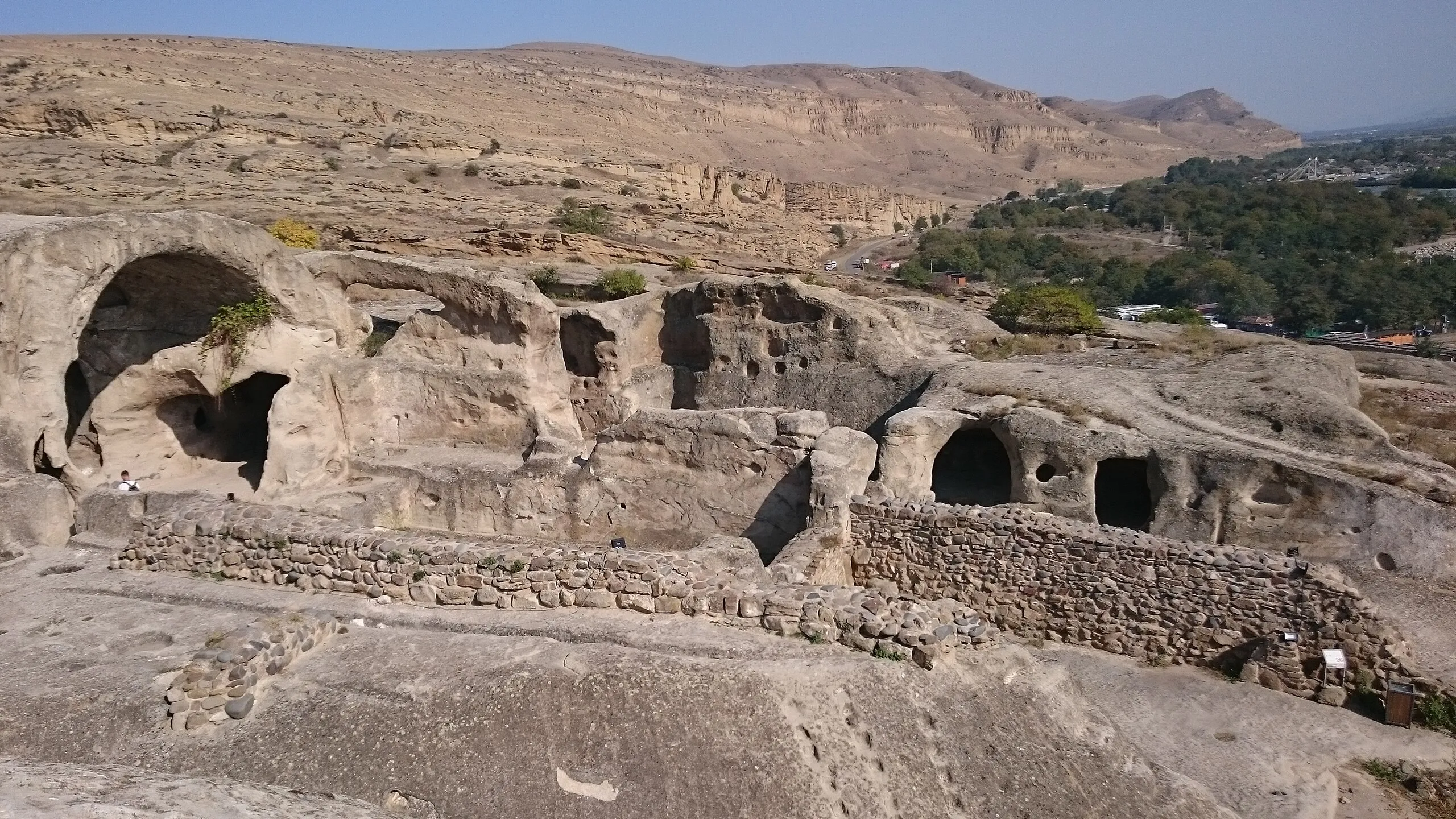
Uplistsikhe is an ancient rock-hewn town in eastern Georgia, some 10 kilometers east of the town of Gori, Shida Kartli. Built on a high rocky left bank of the Mtkvari River, it contains various structures dating from the Early Iron Age to the Late Middle Ages, and is notable for the unique combination of various styles of rock-cut cultures from Anatolia and Iran, as well as the co-existence of pagan and Christian architecture.
Uplistsikhe is identified by archaeologists as one of the oldest urban settlements in Georgia. Strategically located in the heartland of the ancient kingdom of Kartli (Iberia), it emerged as a major political and religious center of the country. The town’s age and importance led medieval Georgian written tradition to ascribe its foundation to the mythical Uplos, son of Mtskhetos, and grandson of Kartlos.
The earliest traces of human presence in Uplistsikhe date back to the end of the 2nd millennium BC. Its earliest remaining structures are from the beginning of the 1st millennium AD. With the Christianization of Kartli early in the 4th century, Uplistsikhe seems to have declined in its importance and lost its position to the new centers of Christian culture – Mtskheta and, later, Tbilisi. Meanwhile, it continued to develop as a town. The first Christian basilica was constructed in the 6th century. However, Uplistsikhe reemerged as a principal Georgian stronghold during the Muslim conquest of Tbilisi in the 8th-10th centuries. Another, three-church basilica was constructed at that time. The Mongol raids in the 14th century marked the ultimate eclipse of the town; it was virtually abandoned, and only occasionally used as a temporary shelter in times of foreign intrusions.
View on map

The Church of the Mother of God of Akhaldaba
The Church of the Mother of God of Akhaldaba is located in Shida Kartli, in the village of Akhaldaba, Gori Municipality, on an elevated site. It dates back to the beginning of the 10th century.
The church is a hall, built of broken stone. The corners of the building are made of tuff stone, the vault, the entablature and the conch are made of brick. It is arched from the inside, and a resonator (qvevri) is inserted in the conch, above the entrances to the rooms. In front of the altar, on the north wall, a base of Budiani stone is attached. Traces of a kankeli are also visible here. There are two arched windows in the south wall of the hall (both have been rebuilt). The entablature arches of the vault rest on the pilasters of the longitudinal walls.
On the east facade, in the area of the pediment, a relief cross with a smooth surface is depicted. The window areas are decorated with stucco, the porch has been renovated with brick. The northeast and northwest corners of the building are reinforced with powerful buttresses in the shape of a truncated cone.
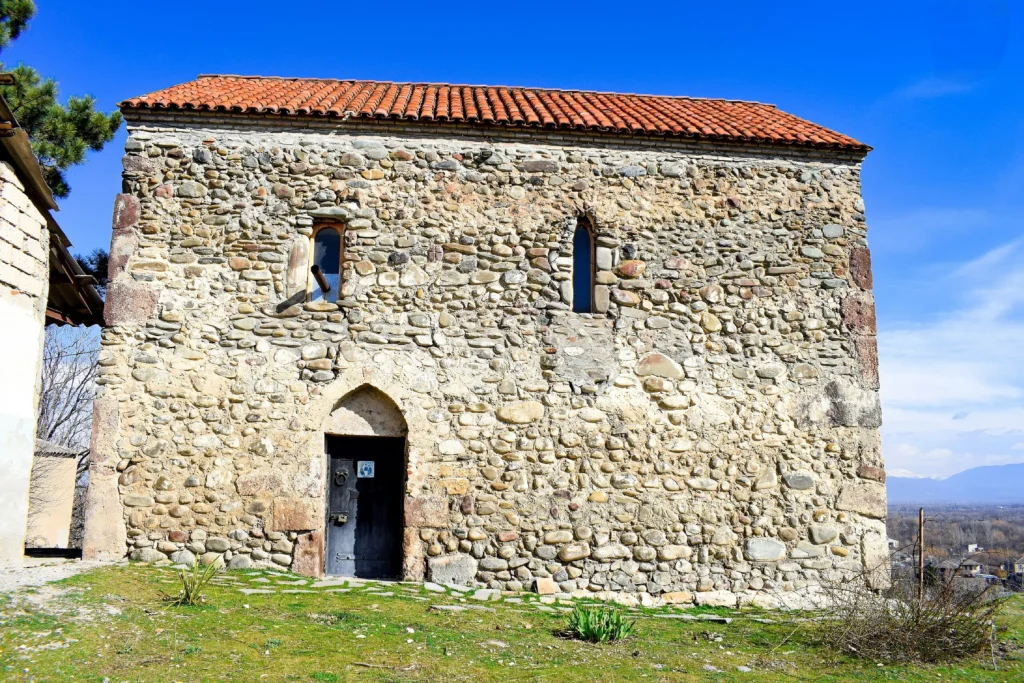
Ruisi Cathedral
Ruisi Cathedral stands in the village of Ruisi, in Georgia’s Shida Kartli region. It’s one of the country’s oldest and most significant Christian monuments, originally built in the 6th century and later reconstructed in the 11th. The cathedral once served as the seat of the Ruisi-Urbnisi diocese, an important religious center during medieval times.
The church’s architecture reflects classic Georgian stone masonry—simple yet monumental—with a cross-in-square layout and modest ornamentation. Inside, fragments of old frescoes and inscriptions can still be seen. Ruisi Cathedral is also known for hosting the historic 1103 Church Council of Ruisi-Urbnisi, convened by King David the Builder to reform the Georgian Church and strengthen royal authority—a key event in Georgia’s unification and golden age.
View on map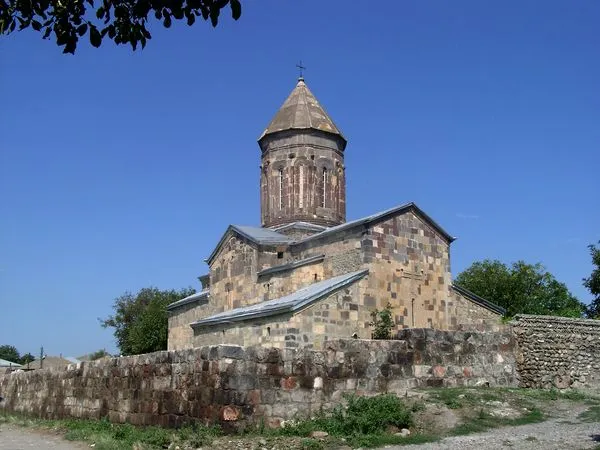
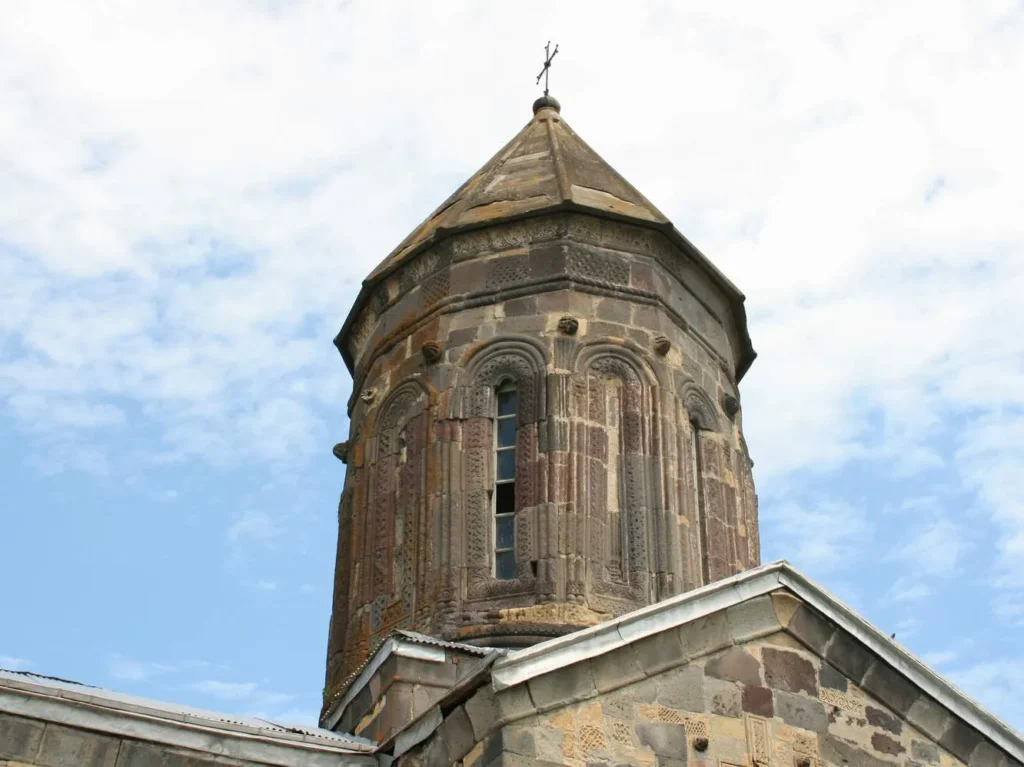
Urbnisi Church
Urbnisi Church, located in the village of Urbnisi in Shida Kartli, is one of Georgia’s earliest Christian monuments and part of a once-flourishing ancient city. The main cathedral, known as the Church of St. Stephen, dates back to the 6th–7th centuries, with later additions from the medieval period. Its simple, austere stone design reflects early Georgian church architecture—rectangular from the outside but cross-shaped inside.
Urbnisi was an important ecclesiastical and cultural center, closely linked with nearby Ruisi. In 1103, the two sites hosted the famous Church Council of Ruisi-Urbnisi under King David the Builder, marking a turning point in the unification and reform of the Georgian Church. Archaeological excavations around Urbnisi have uncovered remains of ancient fortifications, dwellings, and early Christian artifacts, making it a key site for understanding Georgia’s early Christian history.
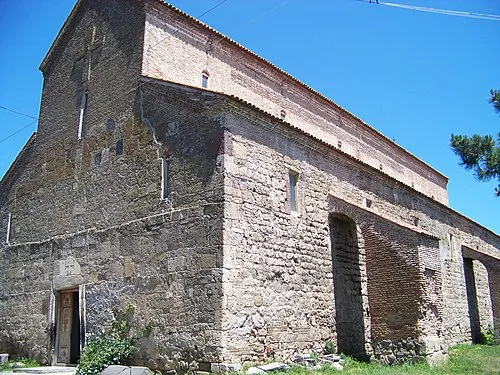
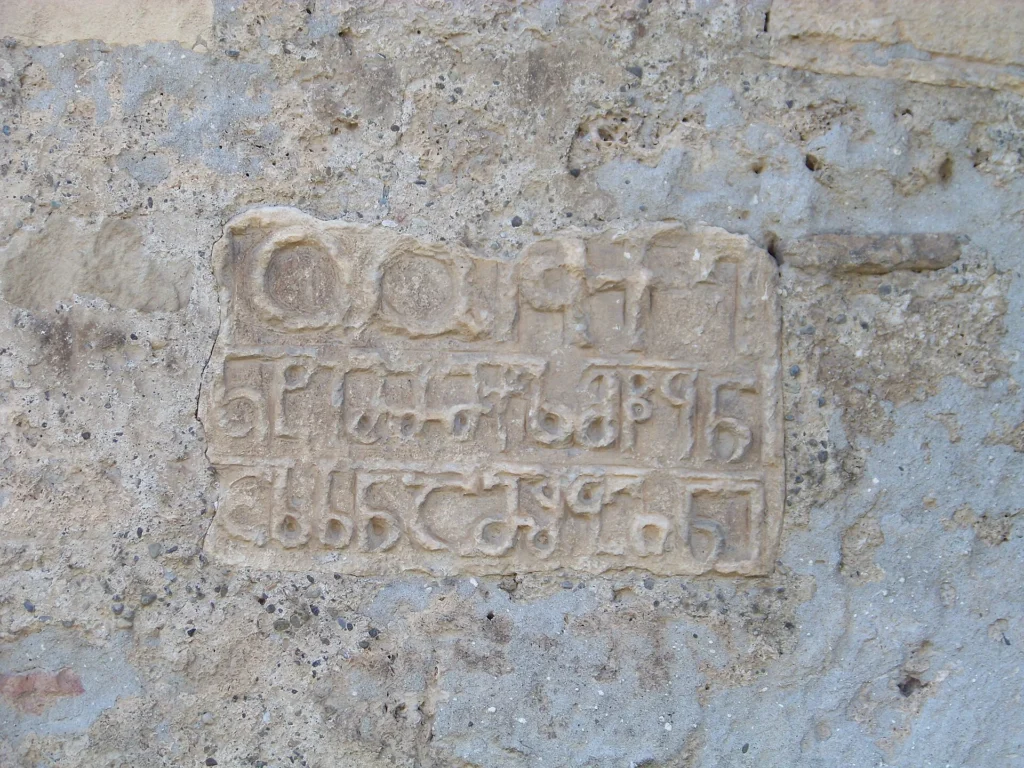
Shindisi Fortress is located in Shida Kartli, in the northern part of the village of Shindisi, Gori Municipality, on a plain. It probably dates back to the second half of the 18th century.
The fortress-wall stands in the northern part of the village, on a plain. The fortress (67.5X49.6 m.) is built of cobblestone. Brick is also used in some places on the inner walls and the vault. In the corners of the fortress – to the northeast, northwest, southeast and southwest – there are cylindrical towers. The building is damaged. The fortress fence is also damaged. It has two tiers. The lower tier is deaf. A wooden battlement runs along the top. The upper line of the fence is equipped with double gun turrets. The fence ends with a semicircular moat.
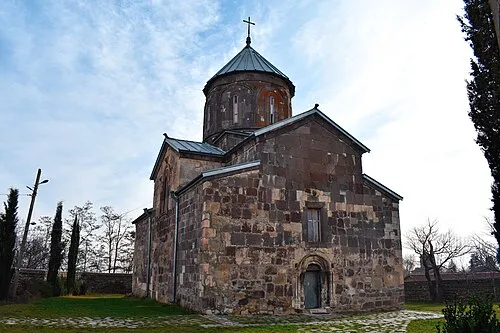
The Zemo Nikozi church of the Deity , also known as Ghvtaeba , is a medieval Georgian Orthodox cathedral in the Gori Municipality, in Georgia’s east-central region of Shida Kartli. It is part of the complex which also includes a bell-tower, an episcopal palace, and a circuit wall. The complex is inscribed on the list of Georgia’s Immovable Cultural Monuments of National Significance.
The complex stands in what is now the village of Zemo Nikozi—an “upper” part of the historical settlement of Nikozi—on the right bank of the Greater Liakhvi River, in the immediate proximity of the South Ossetia conflict zone, some 2 km south of the disputed entity’s capital of Tskhinvali. The episcopal palace was badly damaged in fighting during the August 2008 Russo-Georgian War and subsequently underwent an emergency stabilization program.
The Zemo Nikozi church is the seat of a bishop of the Georgian Orthodox Eparchy of Nikozi and Tskhinvali, responsible for the territory of South Ossetia. Some 100 m south stands the church of the Archangel, a small 10th-century domed structure.
The three-nave basilica, built in the 5th century, was later transformed into a domed church in the 14th – 15th centuries. The interior clearly shows the forms of the old, three-nave basilica, from which the apse, the chancel and the deaconry, and fragments of the horseshoe-shaped Lavgardan (to the east and south) have survived. The current cross-domed church is lined inside and out with cut stone. The entrance is to the west, south and north. There are eight windows in the neck of the dome. The floor is made of broken stone and brick. The church has preserved inscriptions from various periods. Among the oldest is the relief inscription dated to the 5th century on the eastern facade, above the window, which commemorates Bishop Zakaria.
Kareli Municipality
Kareli municipality – Located in the Shida Kartli region. Traces of human life here begin from the early Bronze Age. Confirmation of this is a multilayer historical monument discovered in the village of Doghlauri, where antique, early Iron, late Bronze, and early Bronze Age layers are identified. Kareli as a developed city center, was first mentioned in historical sources, in the XVI-XVII centuries. It is associated with many historical facts, such as: Council of Ruisi-Urbnisi in 1103, The Battle of Aradeti in 1483 and others.
Kareli district with its ancient history and culture is rich in important monuments as well as beautiful nature. The beautiful lakes and waterfalls hidden in the trees are perfect for hiking and picnicking, in the springtime, in the fall or to escape the heat of summer. Especially popular is Bateti Lake, which is located in Dzama Gorge. Beside the beauty of nature, Dzama Gorge is also rich with various and interesting cultural monuments, so it is one of the favorite places for travelers.
Bateti Lake
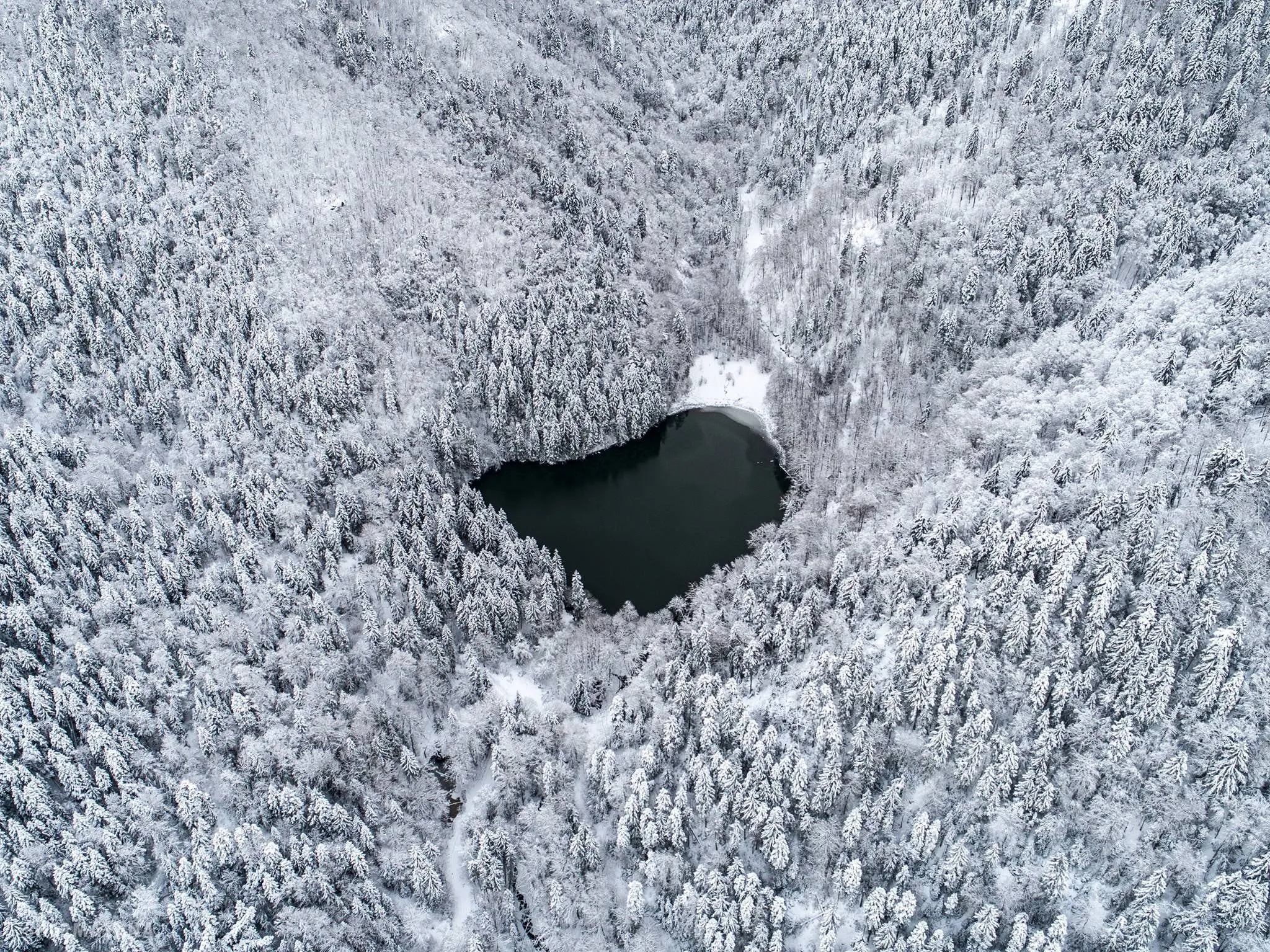
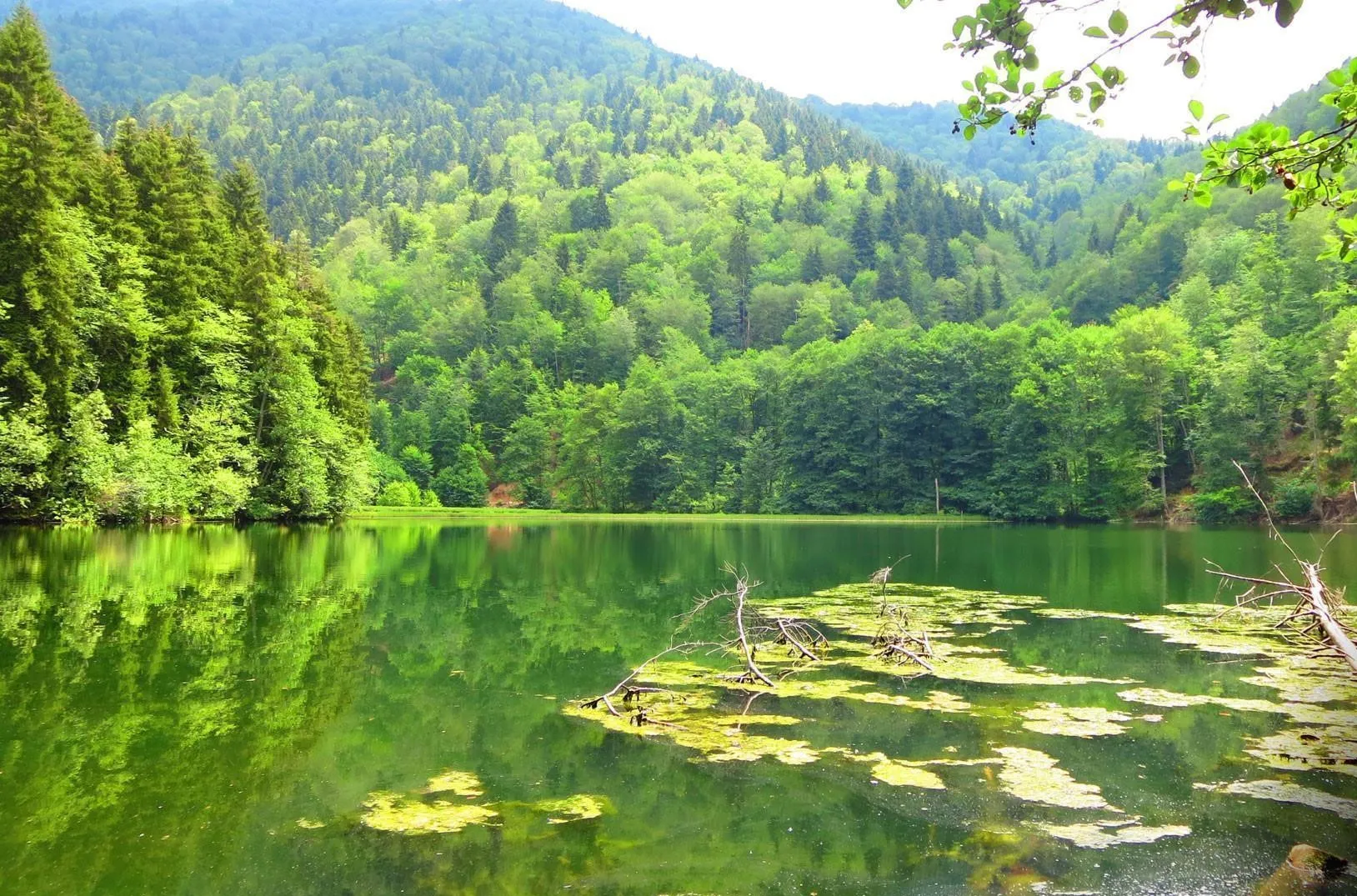
Bateti Lake is located in Shida Kartli region, Kareli municipality, Dzama gorge, at 1313 meters above sea level. There are many lakes in Georgia. Among them, one of the most popular is Bateti Lake. If you have only one day free and you want to arrange a small hike, relax in nature, by the lake, or just have a picnic with friends, this place will live up to your expectations. The valley and the lake are really distinguished by their beauty. You will rarely see a lake hidden in such a green garden, and it is quite easy to reach. All this led to a special interest in Bateti Lake. Lots of people visit the lake in spring greenery, hot summer or colorful autumn. The route is one day trip, however you can arrange a two-day trip if you wish. There is a camping place by the lake, water can be taken from the river or – on the way from a spring located in the monastery area.
Dzama gorge is 23 km away from Kareli. After completing the car road, you will have to walk to the lake, about 3 km. There is a dirt road from Kareli to Dzama gorge, it is possible to move by any type of car, however, the last section of the road is damaged and it is desirable to travel by off-road vehicle. As for the last 3 km of the trail, it leads to a forest road, which can be reached by car and a good driver on a 4×4, although in rainy weather there is mud and it is difficult to move by that car.
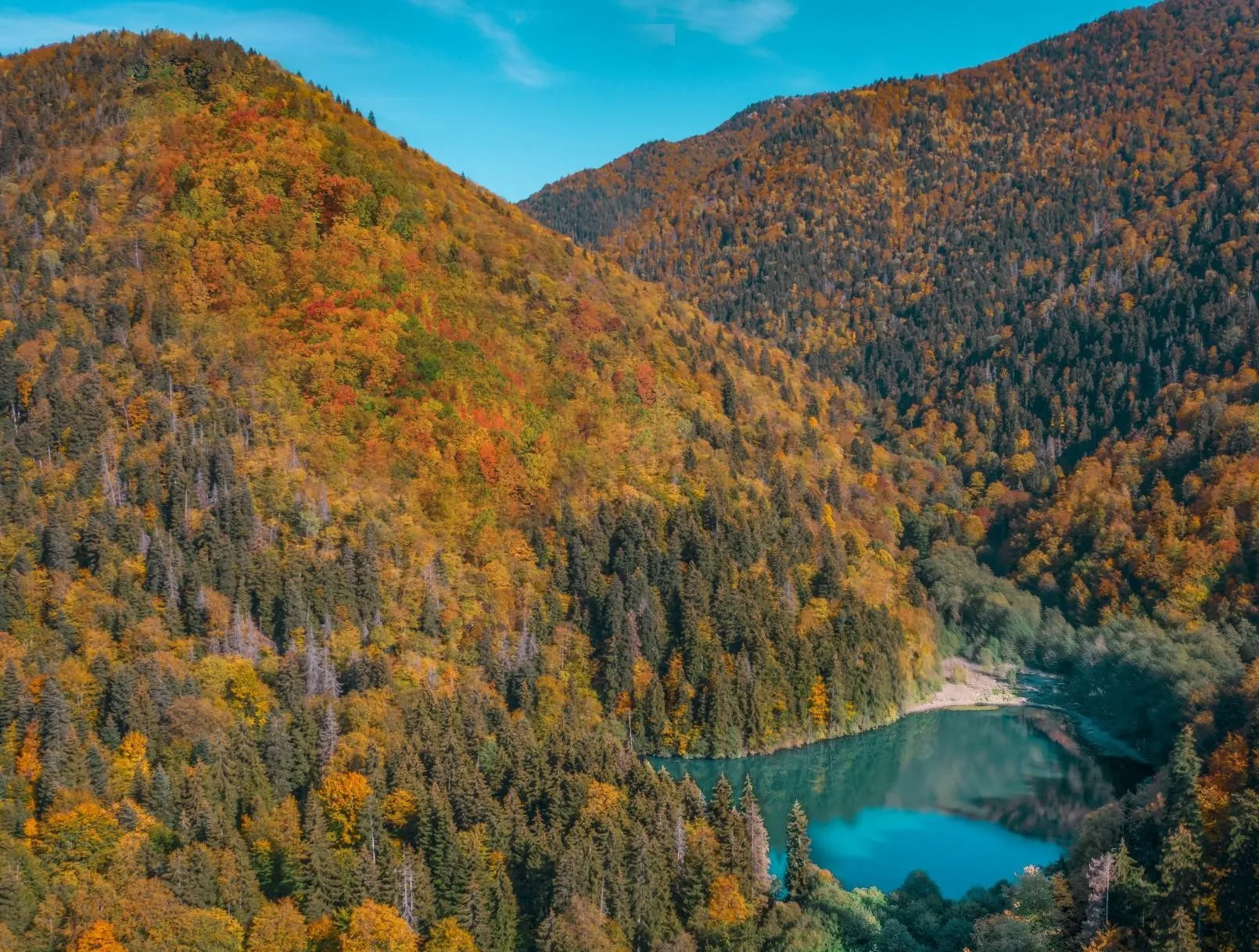
Kintsvisi Monastery
Kintsvisi Monastery is a Georgian Orthodox monastery in the Shida Kartli region, eastern Georgia, 10 kilometers from the town Kareli, on a forested slope of a high mountain of the Dzama valley. Its main church is an exceptional example of a brick church from the Georgian Golden Age period. The monumental mural is one of the largest among the Medieval Georgian artistic ensembles.
The Kintsvisi Monastery complex consists of three churches, of uncertain origin. The central (main) central church dedicated to St Nicholas is thought to date to the early 13th century, in what is generally regarded as the Georgian Golden Age. Its dating was possible due to the presence on the murals of the figures of three Georgian kings of that period. A very small chapel standing next to it is dedicated to St George, and dates from around the same time.
The oldest church, dedicated to St Mary dates from the 10-11th centuries, but is mostly in ruins.
In the 15th century the main church narthex was rebuilt by the local prince Zaza Panaskerteli. Its internal space was divided into three parts and decorated by frescoes. Among them is also the unique depiction of Zaza himself.
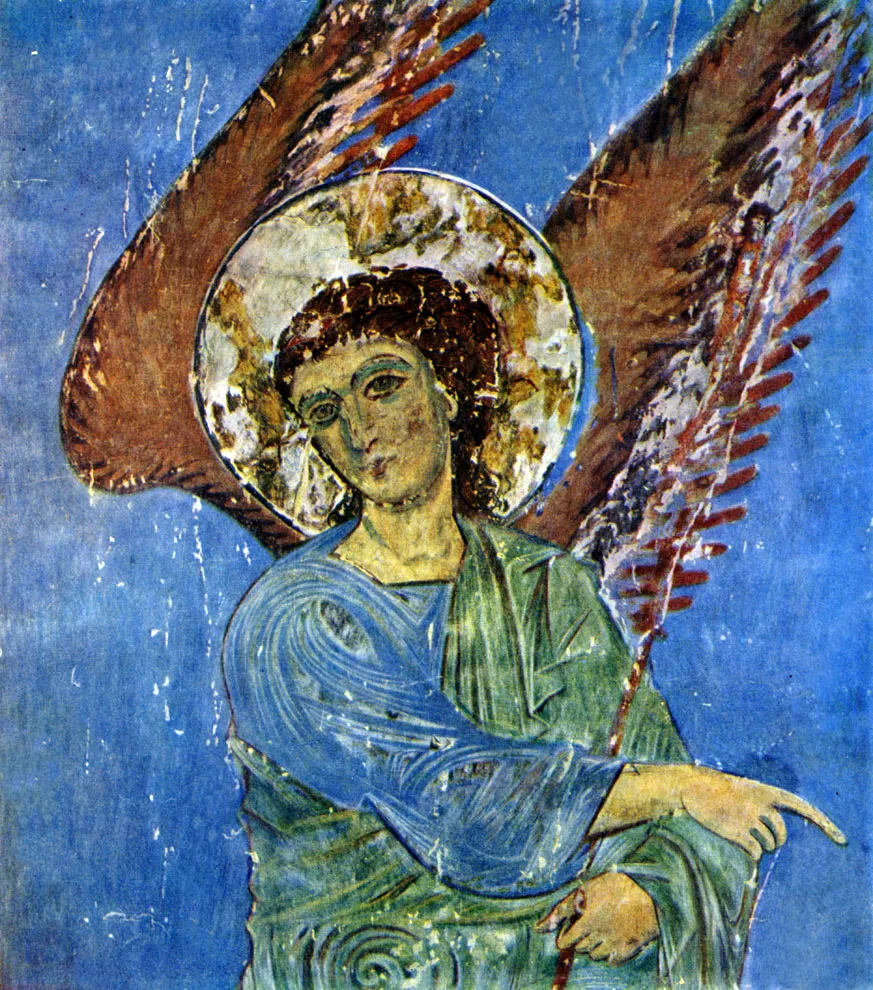
Kintsvisi Monastery is known for its important samples of Georgian monumental paintings, the most remarkable of which is a fresco of an angel.
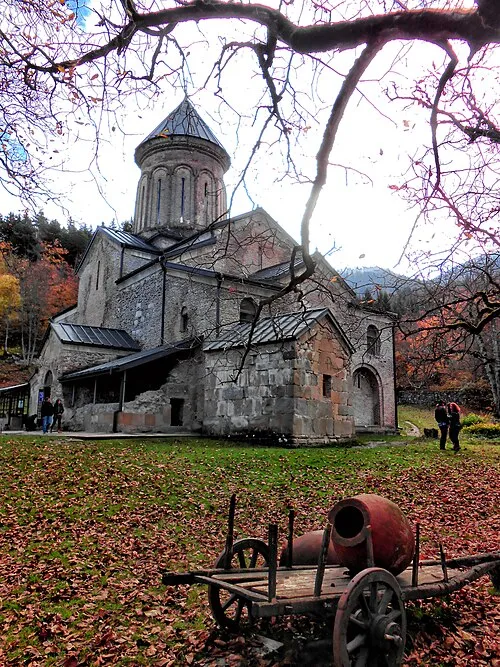
Mzovreti (Mdzovreti)
A castle-hall, town, and monastery complex in Shida Kartli region, Kareli municipality, in the village of Ortubani, in the gorge of the river Dzami, near the Kintsvisi monastery. The complex has been renovated today, there are 3 functioning temples in the area, as well as a monastery sanctified to the Assyrian fathers, a library, and a magnificent orchard built by the fathers working here.
The buildings included in the complex are a church, bell tower, castle-hall. Only traces of the palace (a long rectangular building) and several residential and agricultural buildings are preserved.
The church is a hall, situated inside the fence, to the east. It dates back to the beginning of the XVII century. It is built of broken stone.
A three-story bell tower is built on the west wall of the church. It dates back to the second half of the 18th century. It is mostly built of cobblestone. In the lower part, the cut stone is also used, in the interior – brick. The first floor – the gate is open on three sides with open arches and is covered with a sitting arch. The second floor is the guard’s residence and is equipped with defensive elements. The door is to the south. This floor can be accessed by a wooden staircase. The east wall borders the church. The other three walls have artillery. The third floor also has a vaulted roof. It opens on all four sides with wide semicircular arches and is an arbor for hanging bells. At the level of the arches of the third floor, the square contour of the building narrows slightly, moving to an octagonal and ending in an octagonal pyramid.
The tower is located in the south-western part of the castle-hall. It dates back to the beginning of the XVII century. It is seven-storied, pyramidal, built of cobblestone. Bricks are used in the interior. The entrance is on two sides – from the north (first floor) and from the south (third floor).
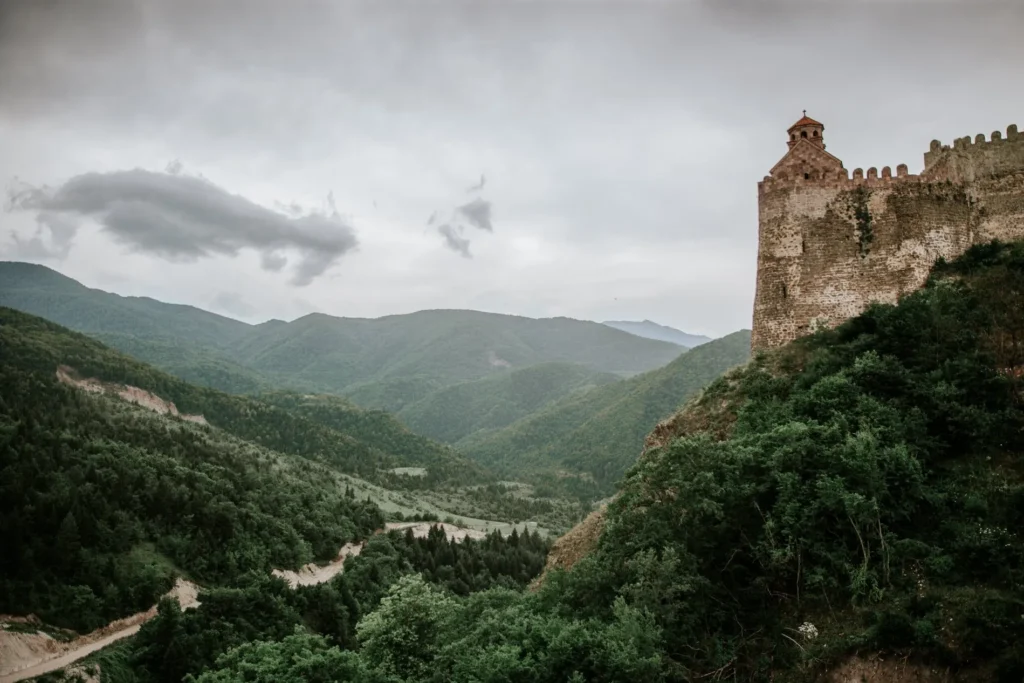

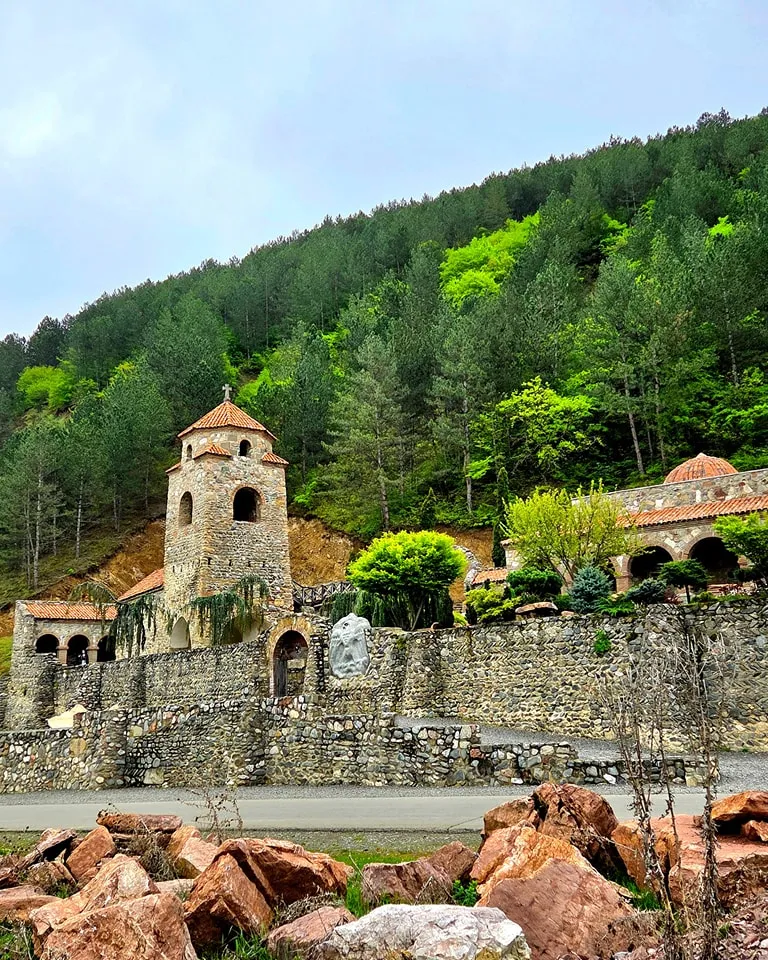
Ortubani Monastery of the Nativity of the Virgin
(Mdzovreti Fortress-Hall Complex) is located in Shida Kartli, in the village of Ortubani, Kareli Municipality. It is a monument of the late feudal era, dating from the XVI-XVII centuries, and includes the church of the Virgin of Ortubani, a bell tower, a tower, a fence, and a house. The construction of the fortress-hall is connected with the relocation of the Tsitsishvili feudal center from the three members to Dzovreti (Zovreti) at the beginning of the 17th century. They turned Mdzovreti into a political center of nobility. In the 19th century, the Tsitsishvili family left this place and the city ceased to exist, and a new village, Ortubani, was built on its ruins.
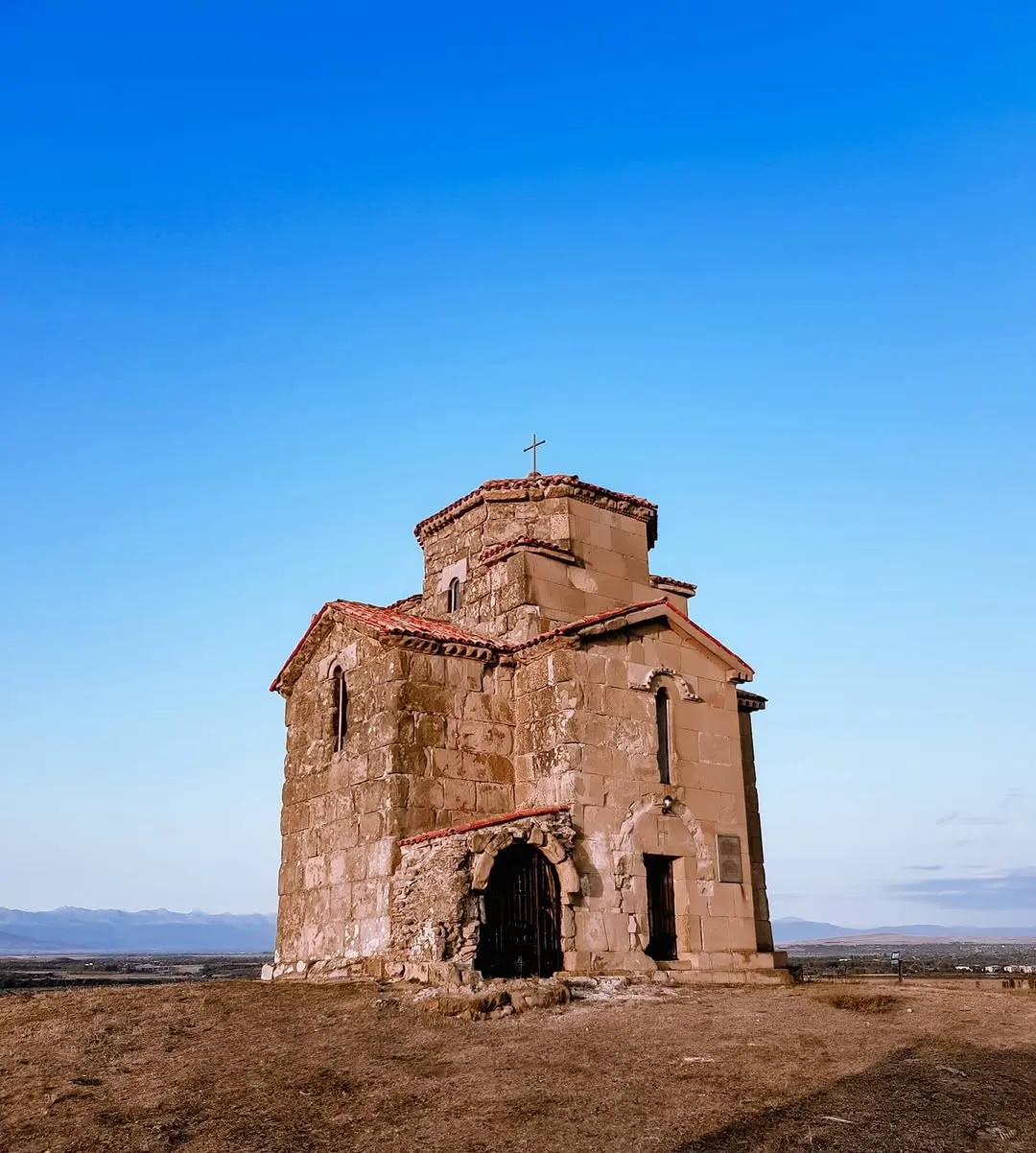
The Samtsevrisi church of Saint George
is an early medieval Georgian Orthodox church in the village of Samtsevrisi, Kareli Municipality, in Georgia’s region of Shida Kartli. It is a “free-cross” plan church and stylistically dated to the first half of the 7th century. The church is inscribed on the list of the Immovable Cultural Monuments of National Significance of Georgia.
The Samtsevrisi church is built on a low hill on the left bank of the Dzama river, at the eastern end of the watershed plateau between the Kura and Dzama valleys. Due to its commanding position, the church is visible from Georgia’s main east–west highway and railway to the north.
It is a small dome church built of hewn grayish-reddish sandstone blocks, with the dimensions of 9.6 × 8.8 m, rising to the height of 10.6 m. The general proportions are harmonious and complete. Its “free-cross” design, with a horseshoe apse in a cross plan, stylistically dates to the early 7th century, with a bit of the 16th-century stonework—a single-nave funeral chapel—to the southwest.
View on mapSamtsevrisi Castle is a large medieval Georgian castle or fortress in the village of Samtsevrisi, Kareli Municipality, in Georgia’s region of Shida Kartli. Its construction time and ownership have been unknown. Presumably, it belonged to noble Panaskerteli-Tsisishvili ancestors, who settled here in the 15th century. One of the castle towers, though, belongs to the early medieval times. Meanwhile, the place was already inhabited by the 2nd millennium B.C. Part of the castle currently serves as the premises of Samtsevrisi Monasteri (since 1997).