Racha-Lechkhumi Region
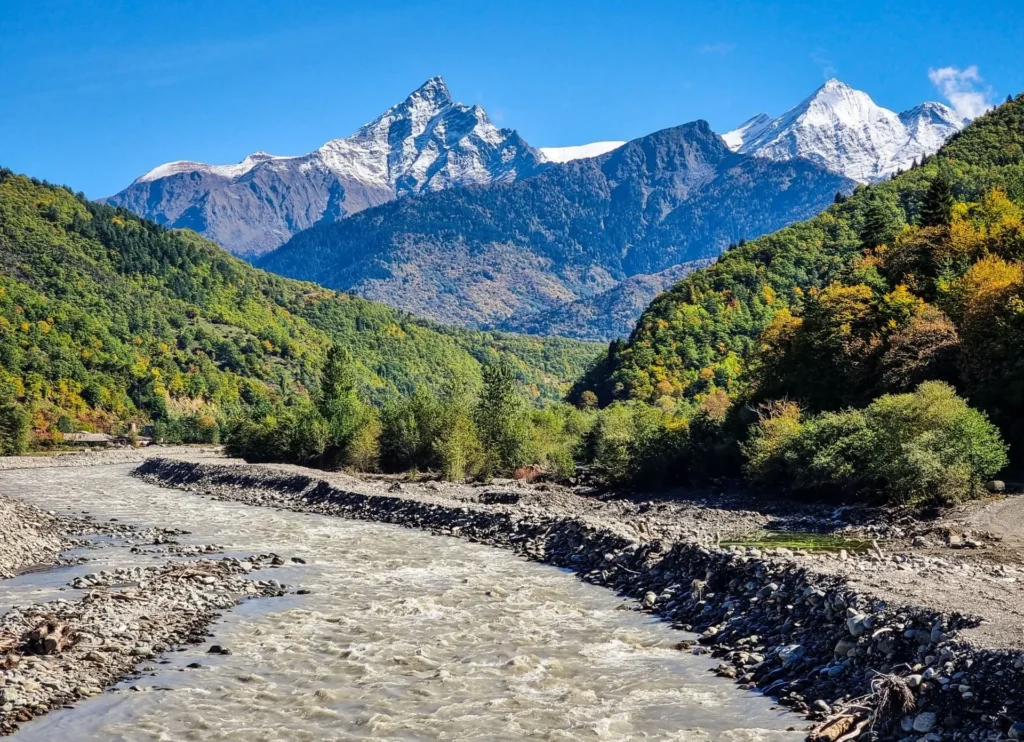
Racha is a quiet, mountainous region in northwestern Georgia, often described as one of the country’s most untouched areas. It feels slower and more remote than places like Svaneti or Kazbegi, with fewer tourists and a very local rhythm of life.
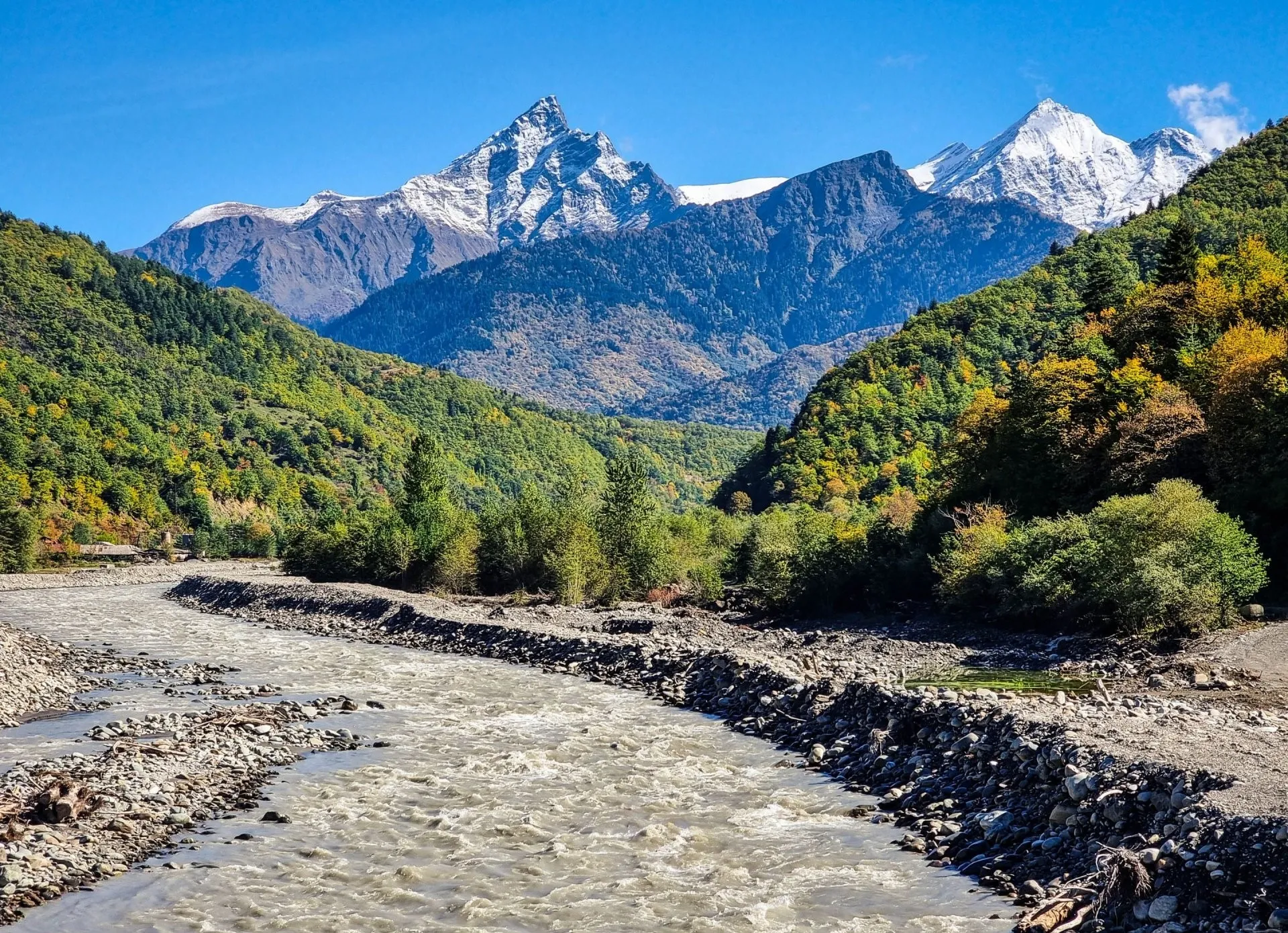
The landscape is dramatic but gentle: forested mountains, deep valleys, rivers, and wide alpine meadows. Autumn is especially beautiful here, with intense colors and misty mornings. Winters are cold and snowy; summers are mild and green.
Racha is famous for Khvanchkara, a naturally semi-sweet red wine made from Aleksandrouli and Mujuretuli grapes. Wine culture here is deeply rooted and still mostly small-scale and family-run. Food is rich and hearty – expect lobio, ham, local cheeses, smoked meats, and very generous portions.
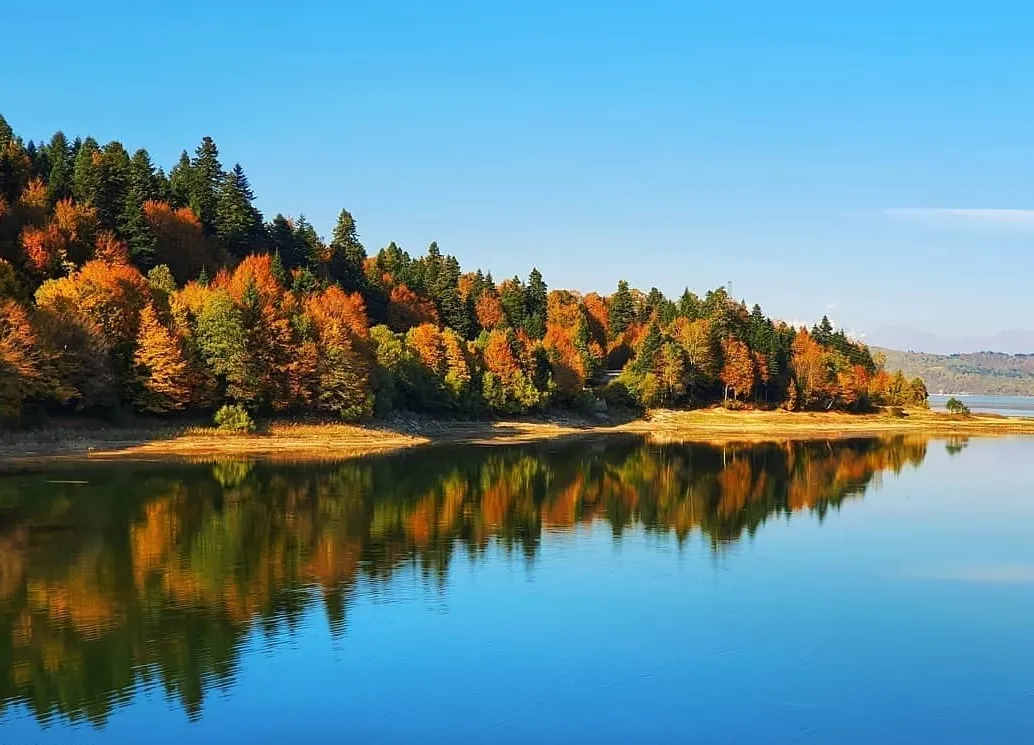
The main town is Ambrolauri, modest and calm. Nearby highlights include Shaori Reservoir, surrounded by forests and mountains, and old stone churches and villages scattered across the region. Architecture is simple, rural, and authentic rather than monumental.
Racha isn’t about big sights or adrenaline. It’s about silence, nature, long meals, and feeling slightly outside of time. Ideal if you want space, quiet, and something real rather than polished.
Tsageri Municipality
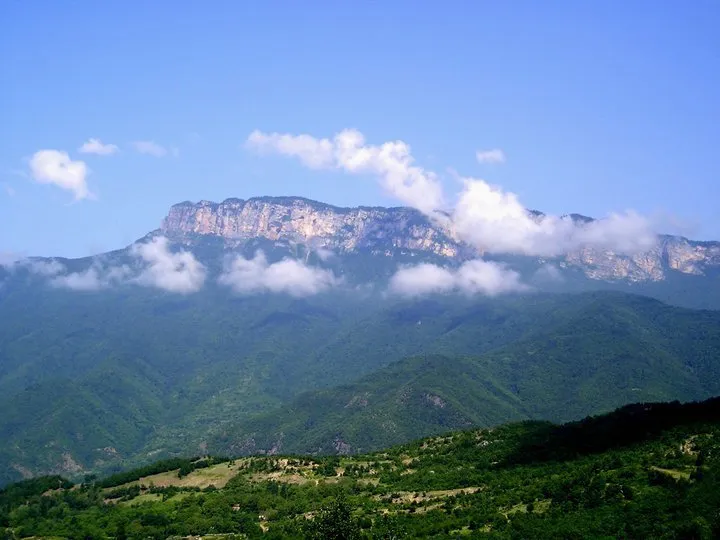
Lechkhumi is a region located in the northern part of Western Georgia, today’s Tsageri Municipality. It is distinguished by its ancient culture and beautiful nature. With forests, gorges, canyons, mineral waters, alpine meadows, lakes and the mystical, great history of Mount Khvamli, Lechkhumi is very interesting and attractive for travel enthusiasts. Mount Khvamli is an important place for the history of all of Georgia, which is visited by many people.
According to historical sources, Khvamli Mountain was the treasury of Georgian kings.
Here, according to myths, Prometheus was chained by order of Zeus, and later freed by Heracles.
Khvamli Massif
Khvamli massif is located in Lechkhumi, on the border of Tsageri and Tskaltubo municipalities. Its height is 2002 meters. It is a double cuesta. The massif reveals a 300-meter-high cliff to the south, where the historical Khvamli Kvab-Sakhizari is located. Khvamli is covered with mixed forest. Of the caves, Tekenteri and the icy cave – Boga are noteworthy. St. George’s Church stands on Khvamli. Every year, the Khvamloba holiday is held, during which many people visit the Khvamli church. An endless open view opens from the mountain, which makes a great impression on the visitor. In one of the Khvamli caves, there are preserved paintings of the developed Middle Ages, made with red paint.
It is mentioned by the French writer Jules Verne in his adventure novel – ‘kéraban the inflexible”, in connection with the famous myth. According to legend, Prometheus was chained to Khvamli.
Khvamli Mountain is one of the special places in Georgia with its beautiful nature, interesting history and mysticism and attracts many travel enthusiasts. Rocks, fields, forests, amazing views and a journey on the border of myths and reality make an indelible impression on any visitor.
View on map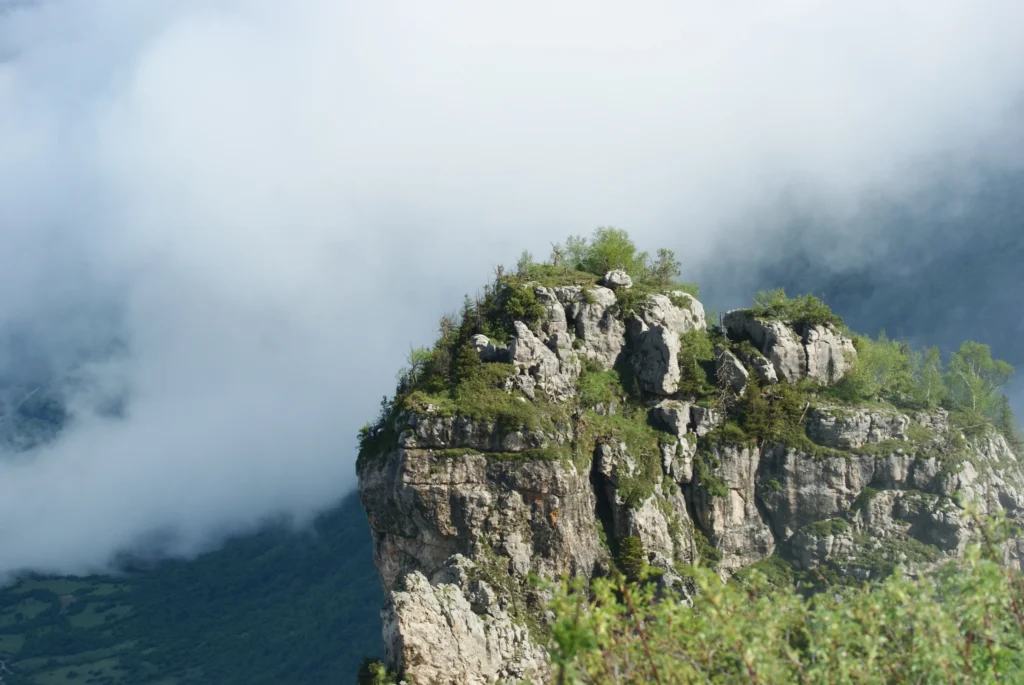
Church of Tskheti
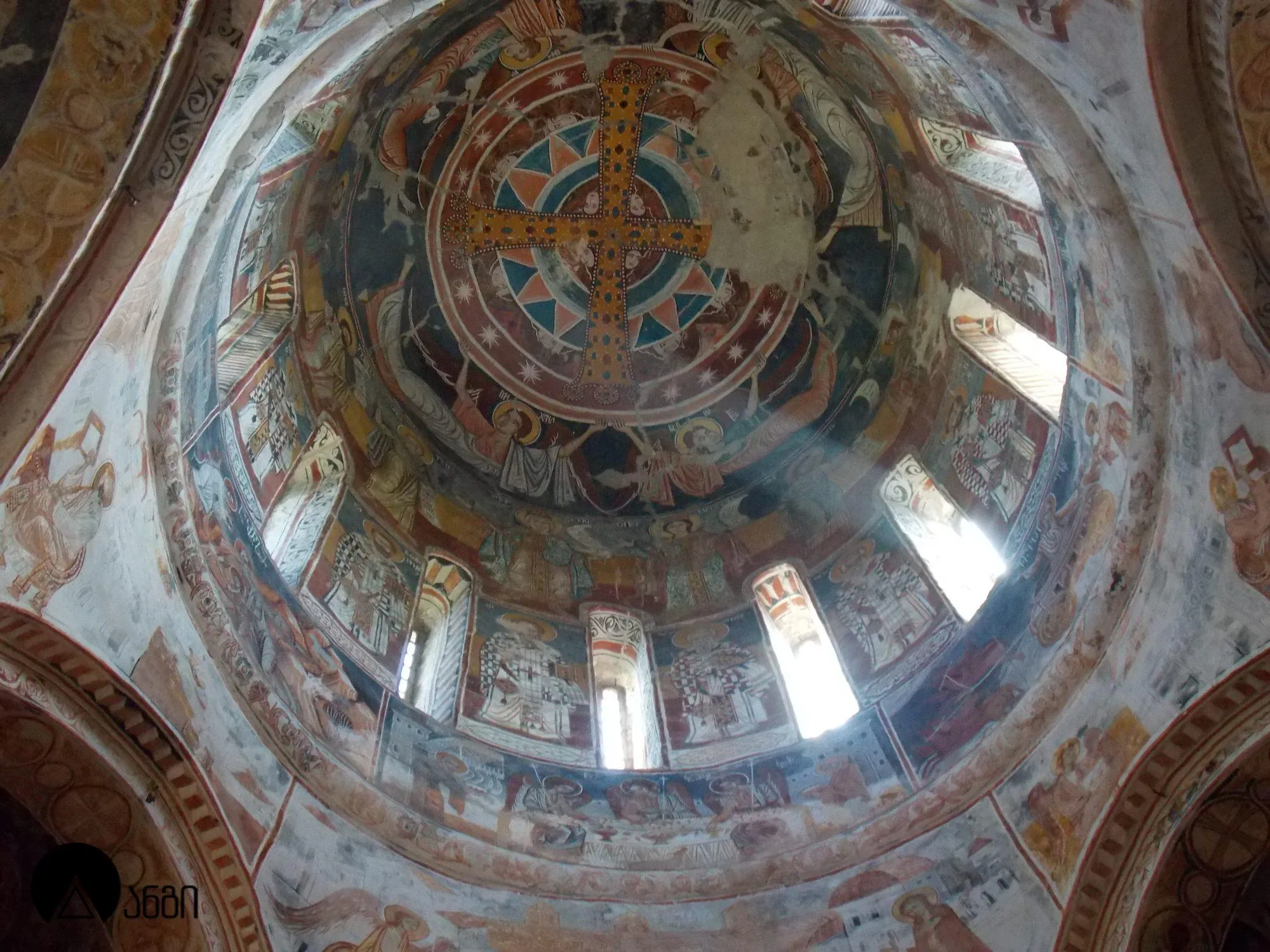
St. George’s Church of Tskheti is located in Lechkhumi, near the village of Tsilamieri. It was built in 1728. The church is a cross-domed structure of the crossed cross type. The temple has an octagonal dome, which rests on the corners of the nave and two round pillars. There are rectangular pastophoria on both sides of the apsidal altar. The arms of the cross are covered with semicircular vaults. There is a window cut in each arm of the church, in the nave, in the deaconry and in each corner of the dome. The east window is decorated with medallions and plant motifs, and the west window is decorated with reliefs of people, animals and birds. The east window has a relief image of the right hand and a military inscription. The building has two rectangular entrances – west and south. In the tympanum of the west entrance there is an image of the Golgotha Cross. In the pediment area of the west facade there is a statue of a ram’s head. The east facade also has the same system of decoration, except for the entrance. The entrance on the south facade has the outline of a cross, and in the tympanum of the entrance there is a relief of a triple cross.
View on map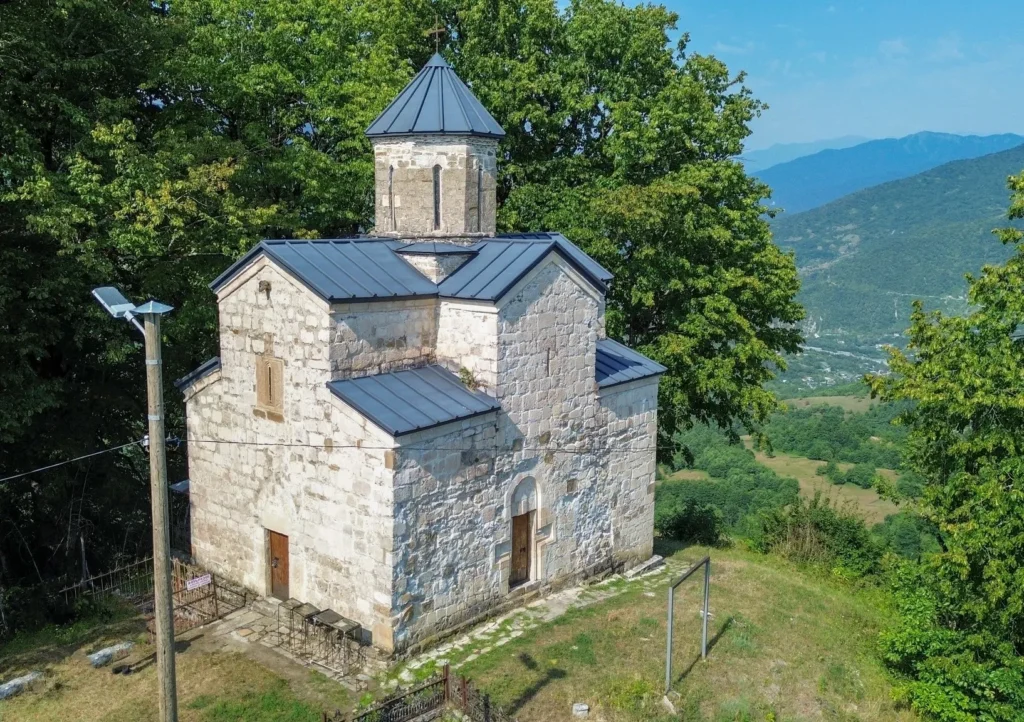
St. George’s Church of Goni
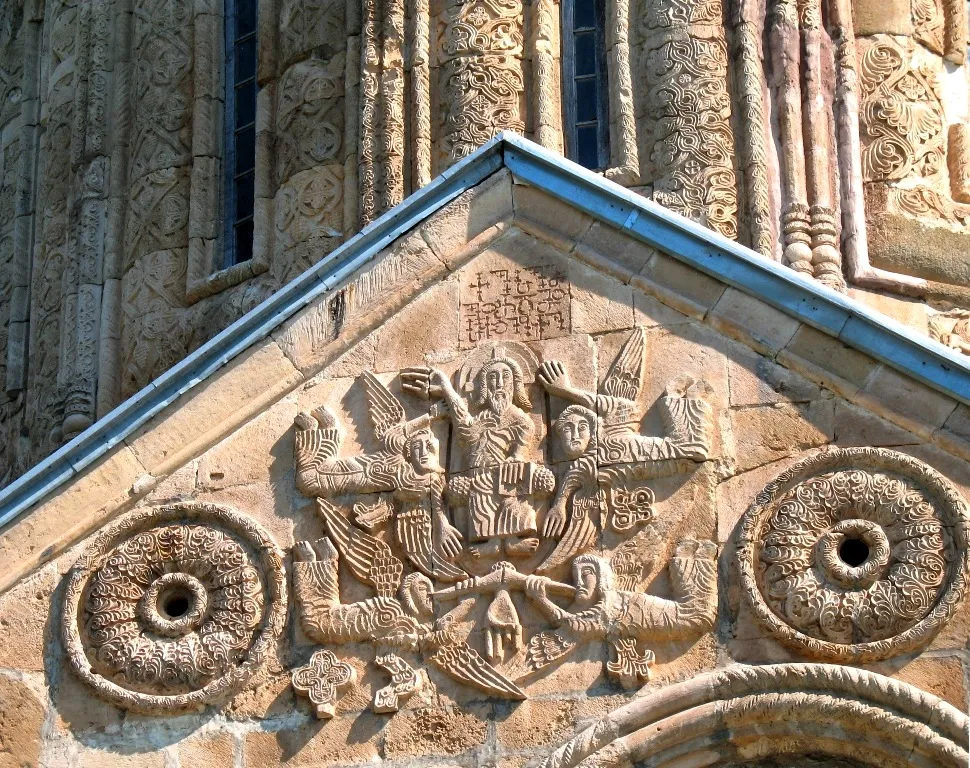
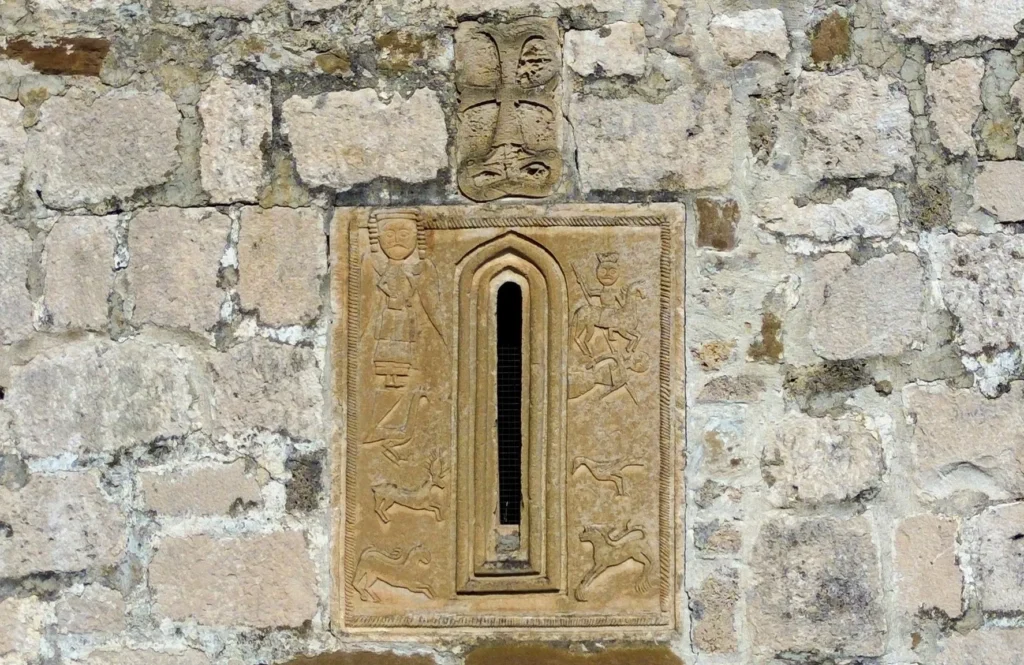
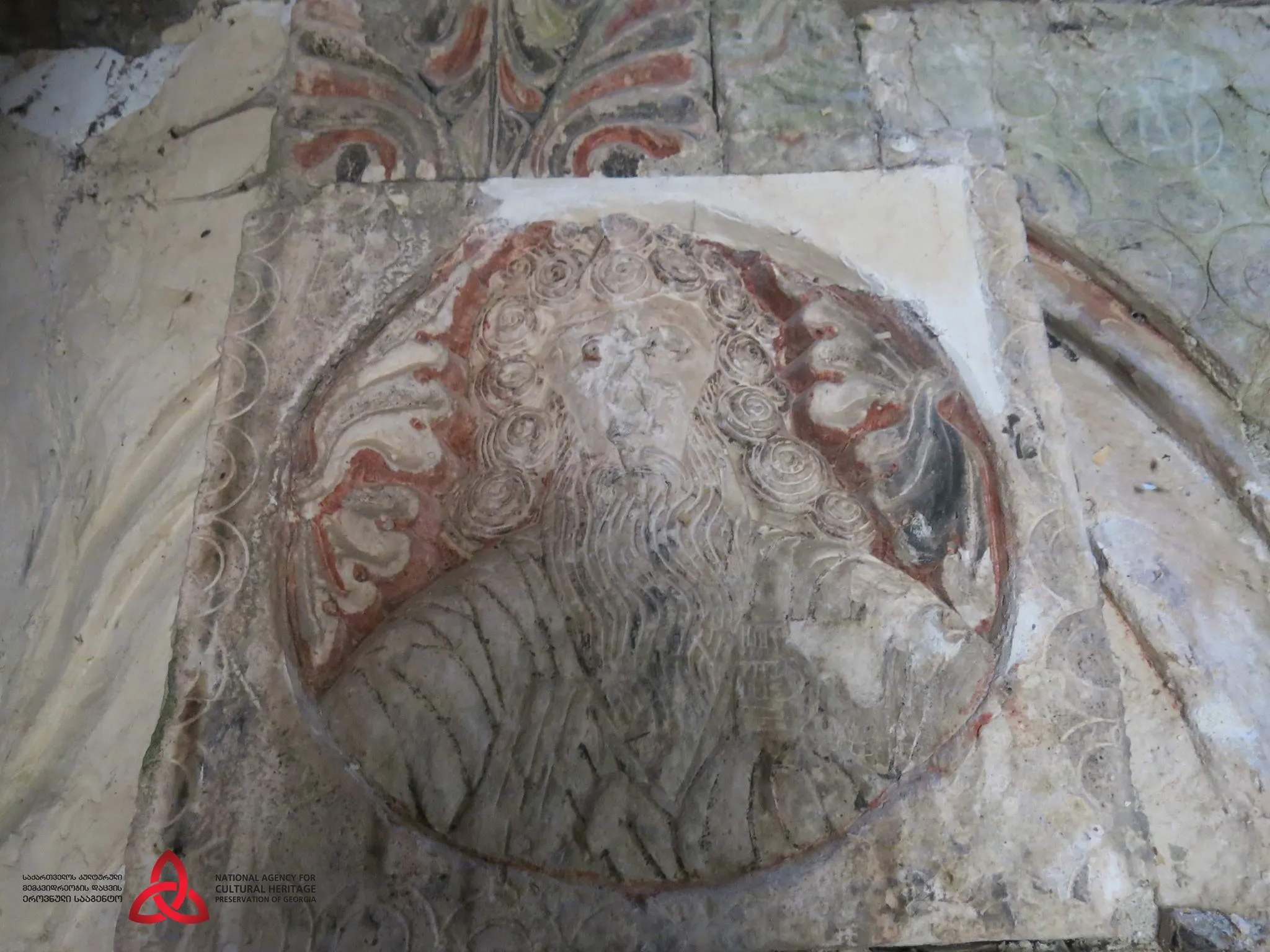
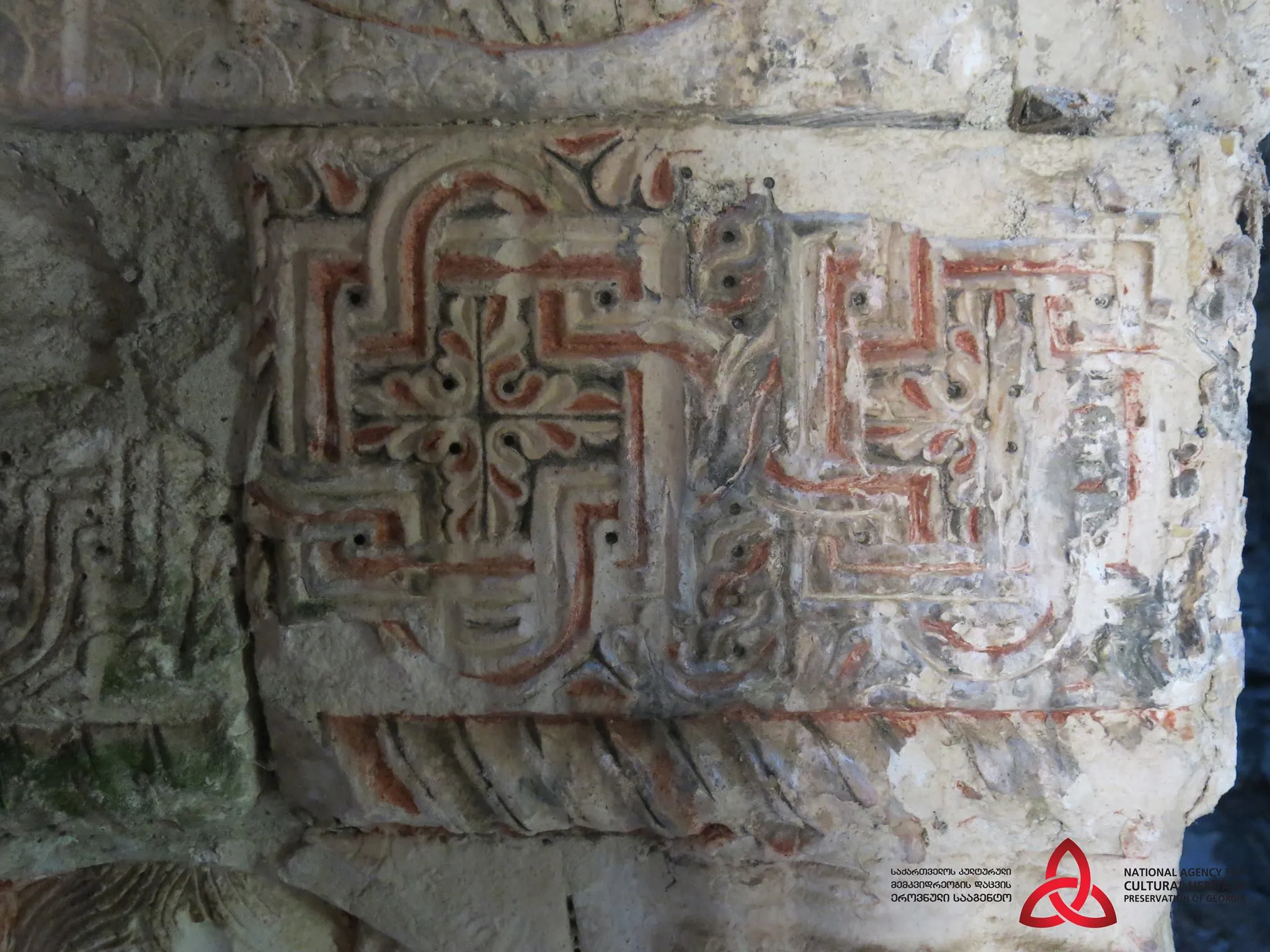
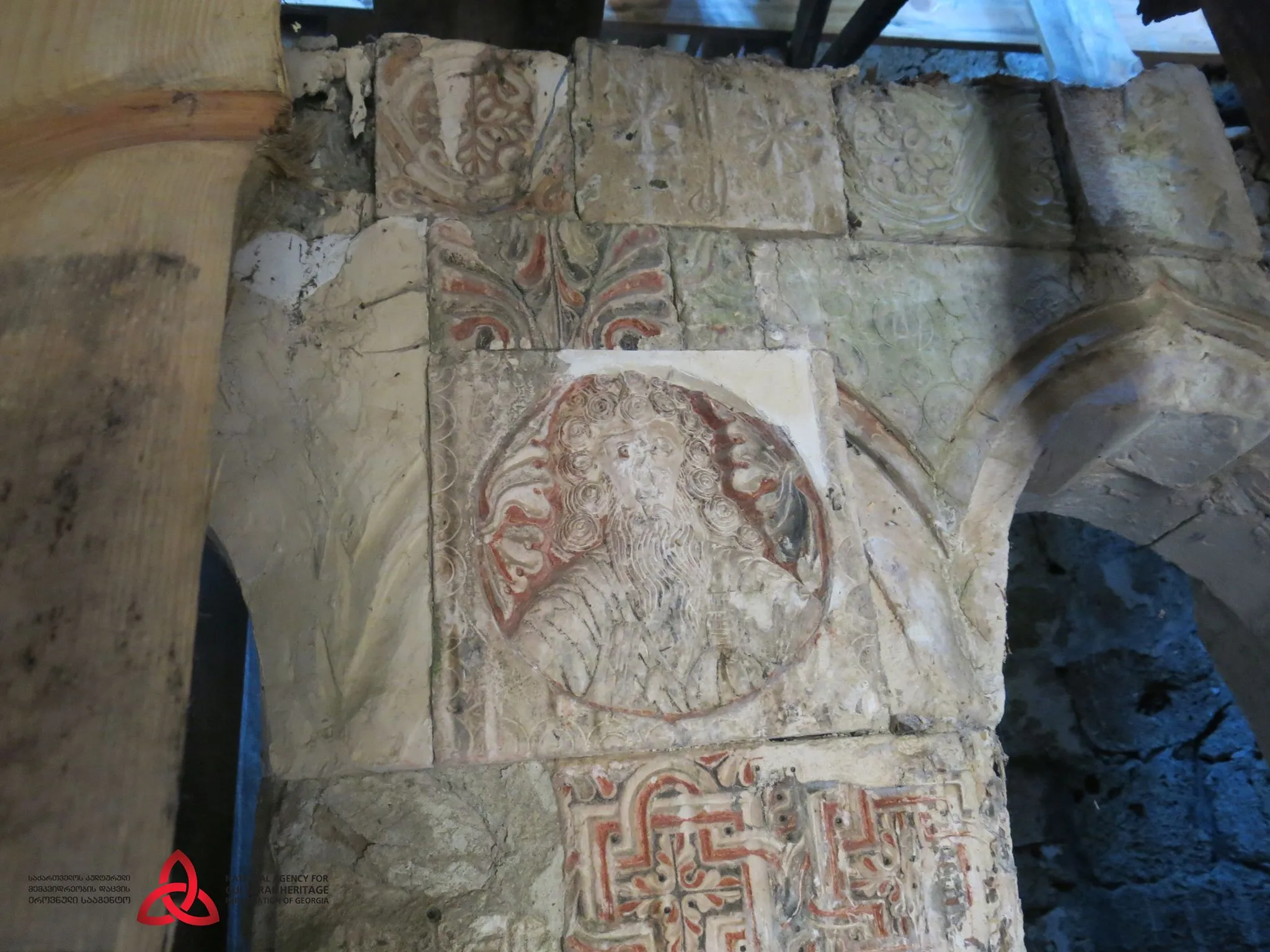
Is located in Lechkhumi, near the village of Orkhvi. It dates back to the 10th century. The church is a hall-shaped building with a semicircular apse to the east. The hall is covered with a vault. The triumphal arch rests on imposts decorated with balls. The temple is dimly lit with three windows. Fragments of plasterwork and painting have been preserved in the interior. The ossuary, decorated with carvings and reliefs, attracts special attention, and is distinguished by its abundant and sophisticated decoration. The ossuary contains ornaments, figures of the Great Romans and archangels, and an Asomtavruli inscription. The facade decor of the building is also interesting – the window sills decorated with crosses and geometric ornaments. A noteworthy architectural detail is the brackets on the southern facade, located below the cornice, protruding strongly from the wall. The church has two entrances – from the west and south. The western entrance is architrave from the outside, and from the inside – arched, and the southern door must have been the same. The temple is built of cleanly cut squares.
The church, which had been damaged over the course of time, has now been completely restored. In front of its eastern facade, in the place where Saint Nino first set foot in Georgia, a small memorial obelisk made of hewn stone has been erected.
View on map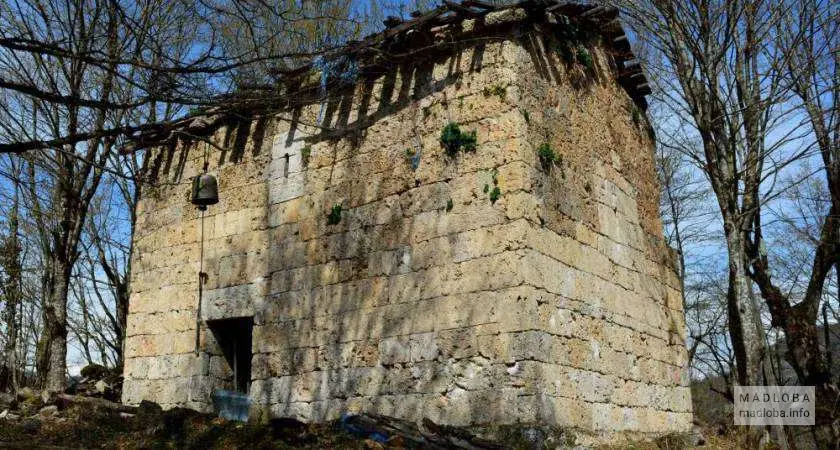
Rachkha Waterfall
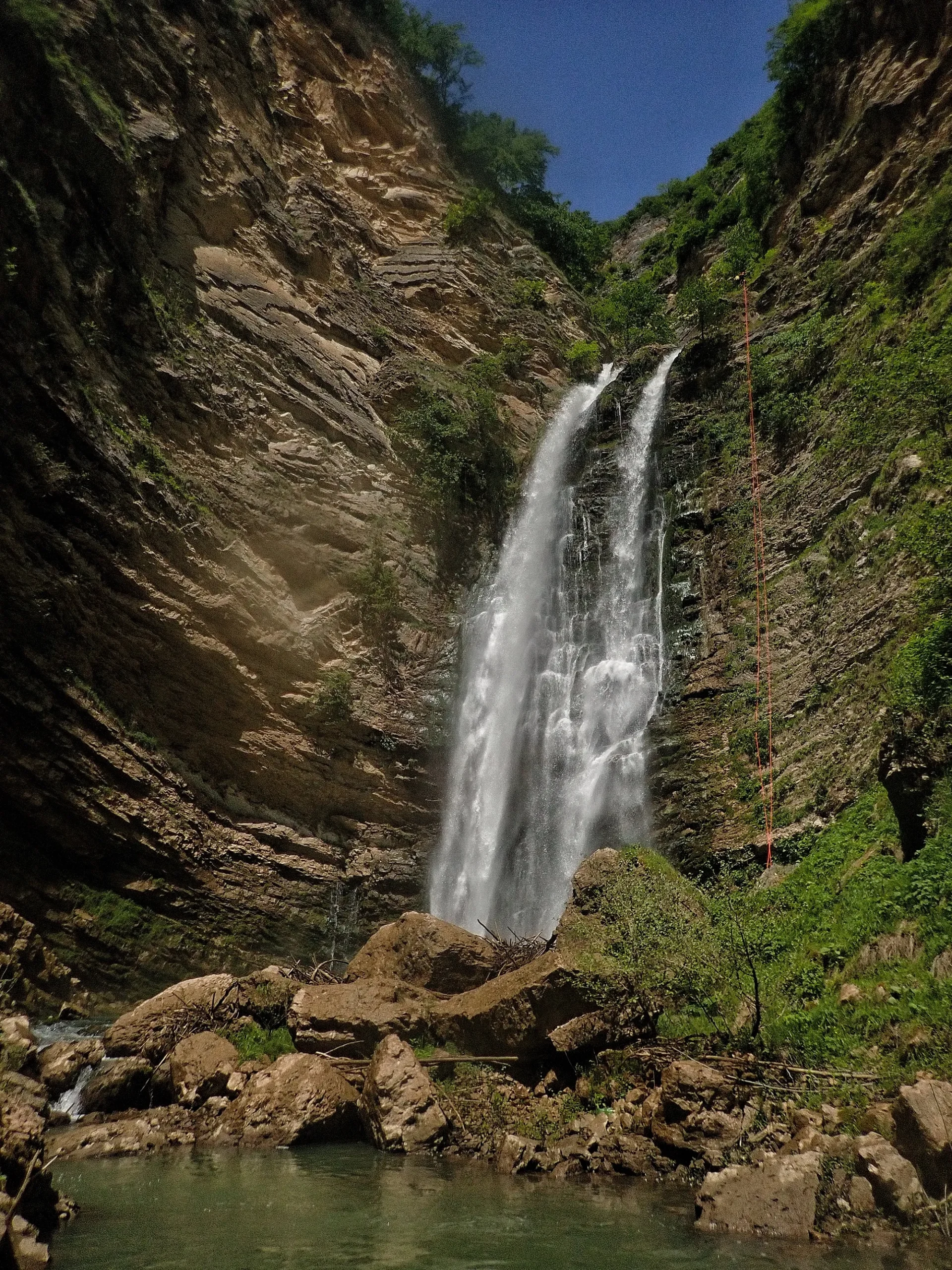
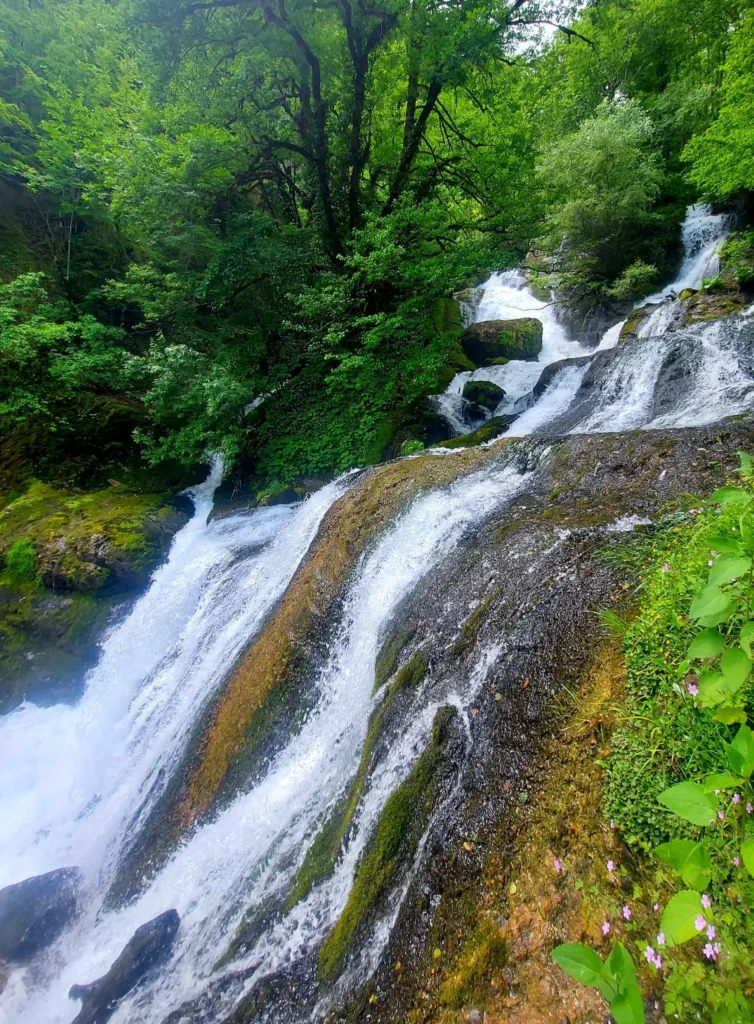
Rachkha Waterfall is located in Lechkhumi, on the Isunderi road, at an altitude of 550 meters above sea level. The waterfall, flowing over the rocks in the gorge, creates a very beautiful sight and attracts many nature lovers. It is surrounded by deciduous forest and is a wonderful sight, both in the spring and in the fall. The waterfall is located on the side of the road and is very convenient for picnics and relaxing in the peace of nature with family or friends.
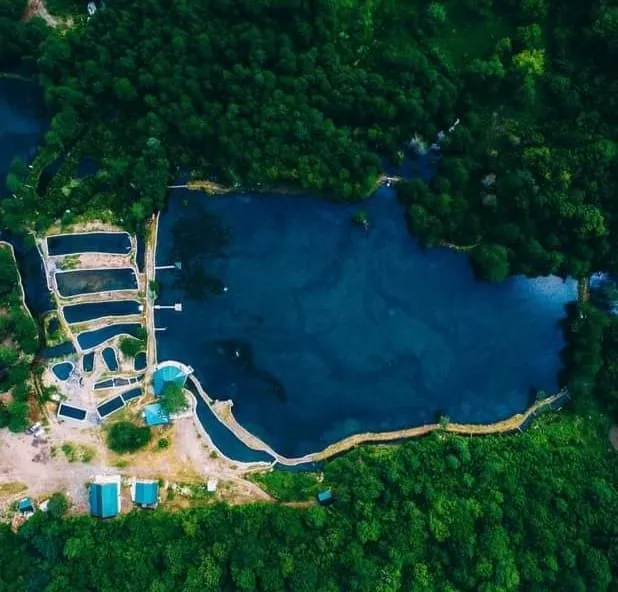
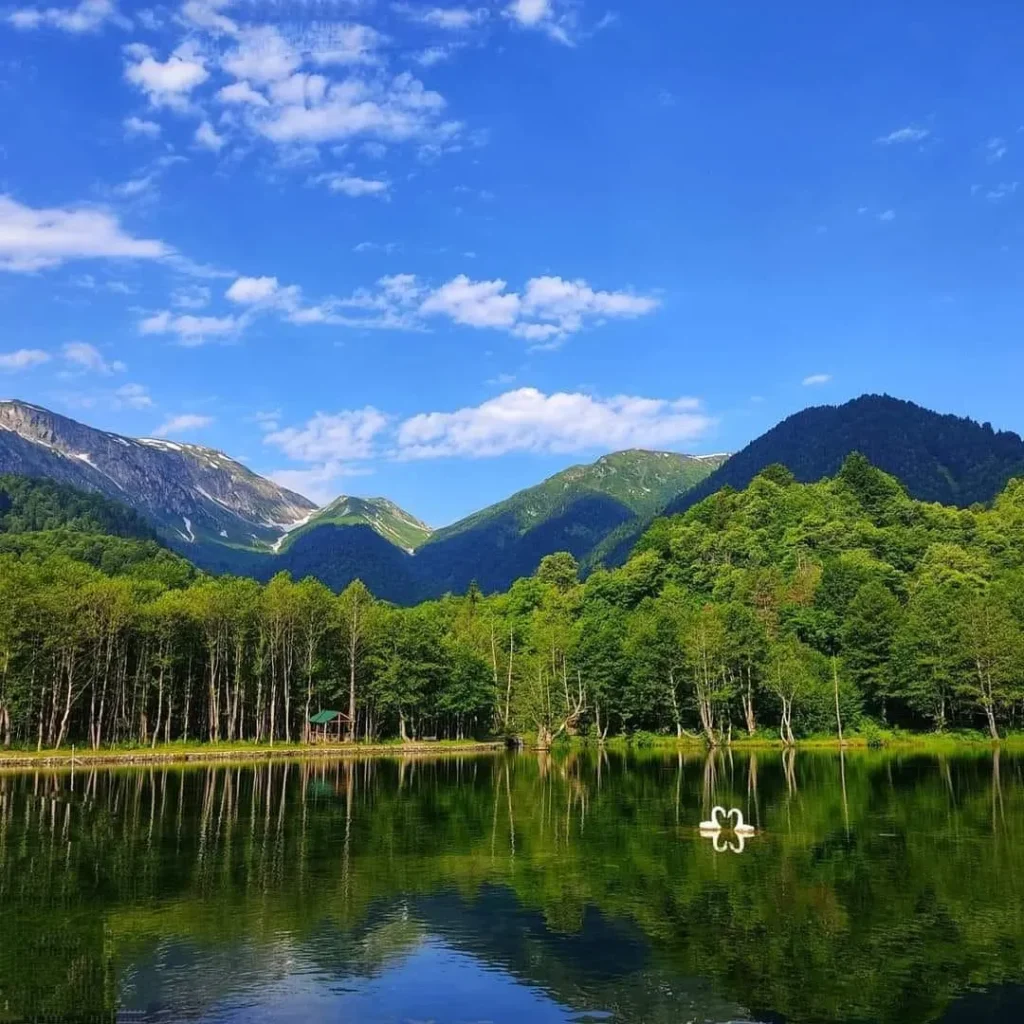
Kulbaki Lakes are located in the village of Kulbaki in Lechkhumi. There are two lakes here, approximately 500 meters apart – Mtsvane and Babushkino Lakes. Mtsvane Lake is located at 955 meters above sea level, and Babushkino Lake is at 990 meters above sea level. Forest-covered mountains, clean air, the tranquility of nature, and the floating lakes attract many visitors. The lakes can be reached by car, as well as interesting and diverse hiking routes can be planned, for example, the village of Zubi – Askhi massif – Kulbaki. If you are a fan of relaxing and traveling in nature and want to enjoy beautiful views, Kulbaki Lakes is a great place for this.
Lailashi
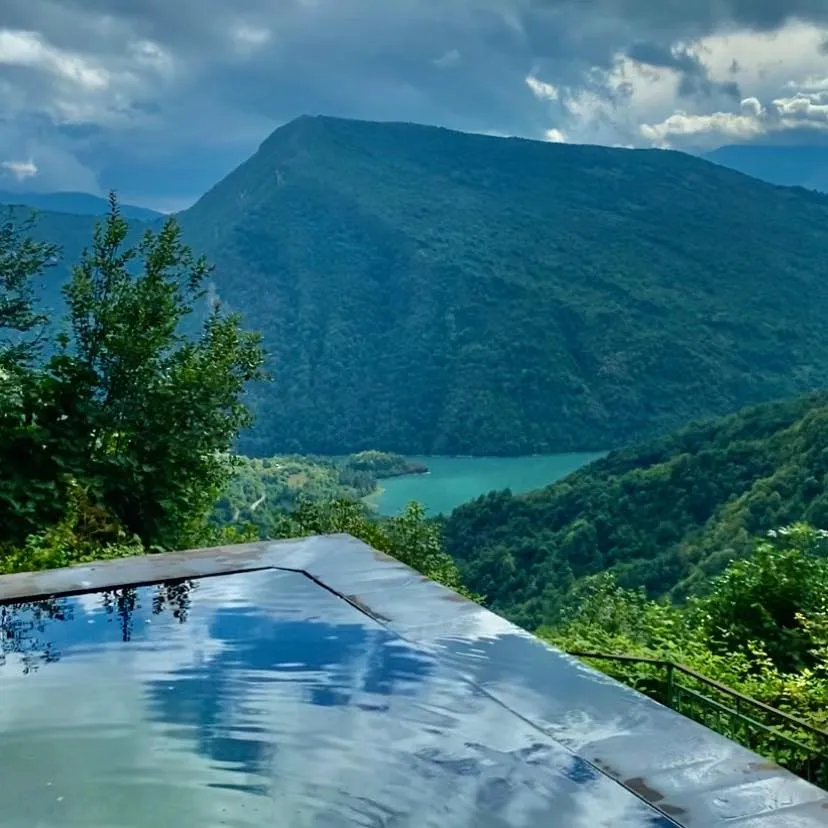
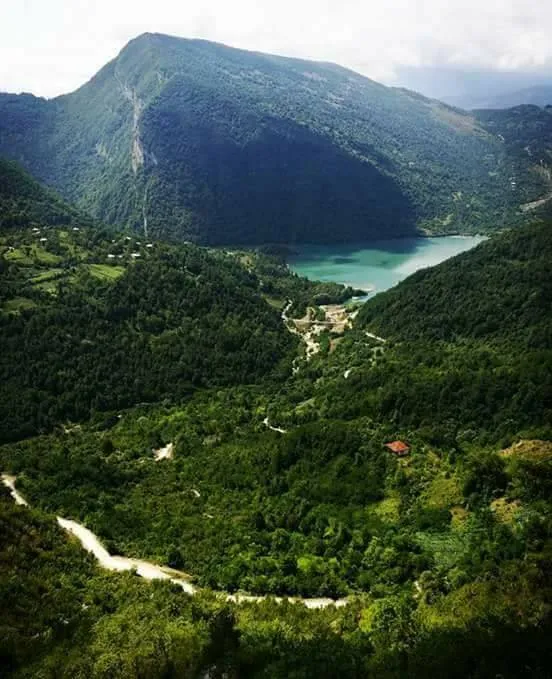
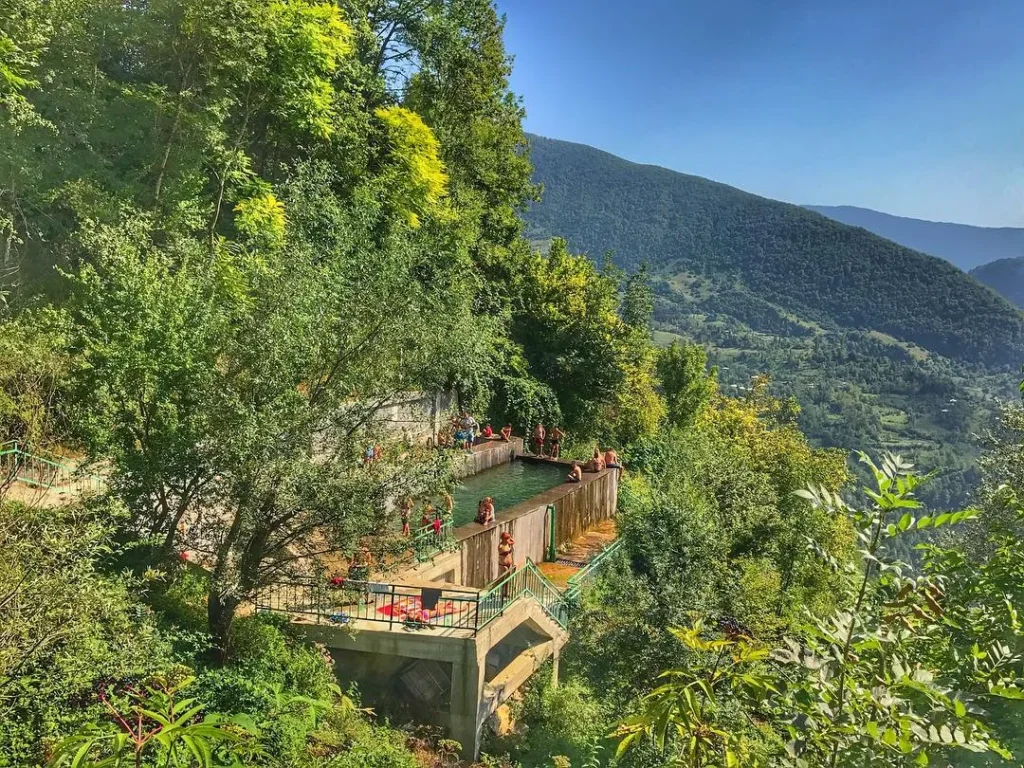
The village of Lailashi is located in Lechkhumi, approximately 850 meters above sea level, on the southwestern slope of the watershed of the Lajanuri and Askistskali rivers. The village is distinguished by its natural beauty and attracts many tourists. Lailashi is especially famous for its pond arranged on a mountain slope, from which magnificent views of the mountains and the Lajanuri reservoir open. The Lajanuri reservoir itself is also a beautiful sight, the flowing greenish-blue water between the green mountains creates a wonderful environment. Churches from the 19th century have survived in the village. The 10th century Lailashi Bible is known, which is currently kept at the Georgian Institute of Manuscripts. Lailashi was first mentioned in written sources in the 18th century, although the village has been inhabited since ancient times, even since the Bronze Age.
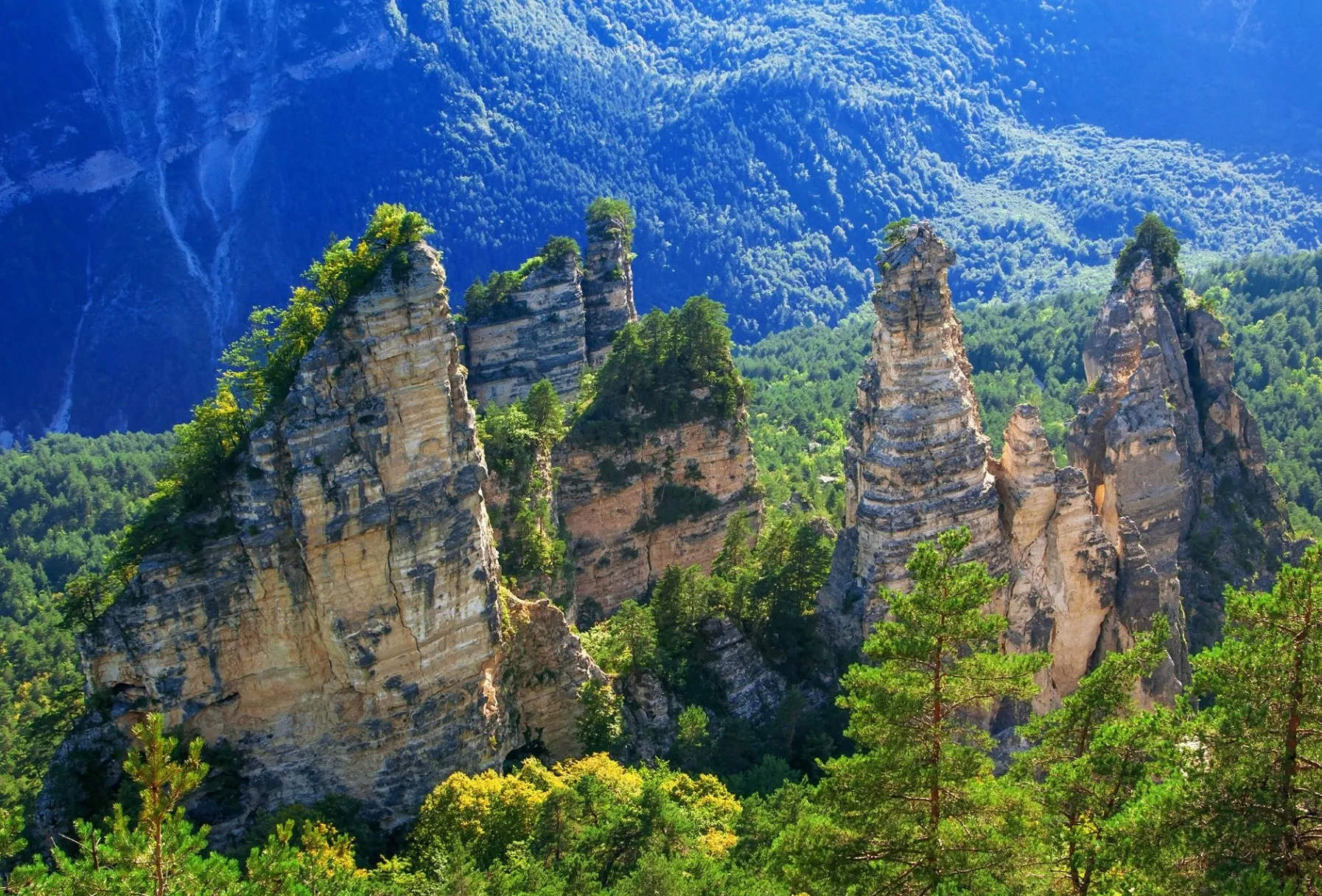
Sairme Pillars – The Sairme Desert is located between the villages of Alpana and Chrebalo near the village of Sairme, in the Tsageri municipality. From the pass on the right side of the Rioni River, where the road bends between ascent and descent, the Sairme Rocky Pillars can be seen to the east.
A hiking route “Sairme Pillars” has been arranged on the territory of the Sairme Desert, which is 3 km long. From the pass, the road turns into the forest, where 1 km can be covered by an off-road vehicle. Then the road continues on a narrow path that climbs uphill in the forest with serpentines. After passing the ascent, the road follows the mountain top, where you will encounter the ruins of the medieval Church of the Mother of God. After passing a few meters from the ruins, the trail climbs to the top of the mountain at an altitude of 680 meters above sea level, from where a beautiful view opens up to the Sairme Pillars.
View on map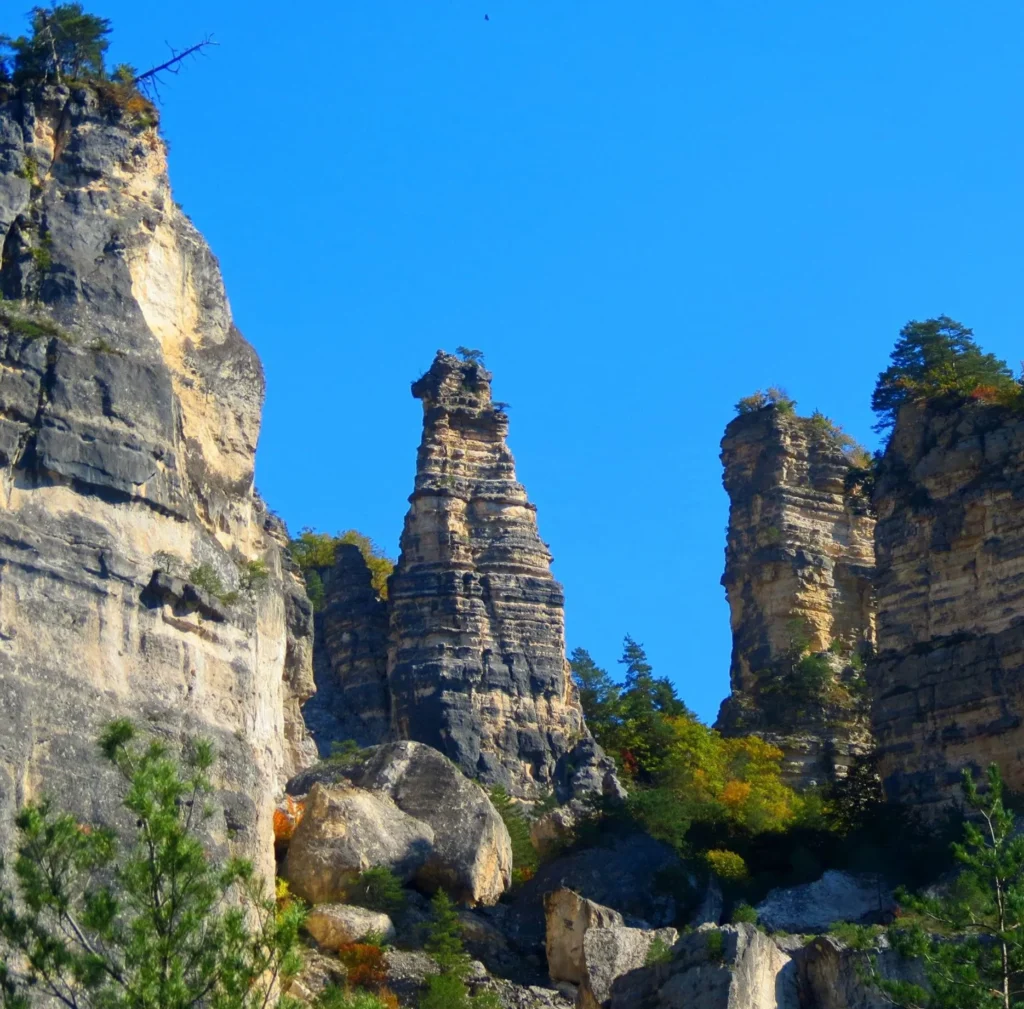
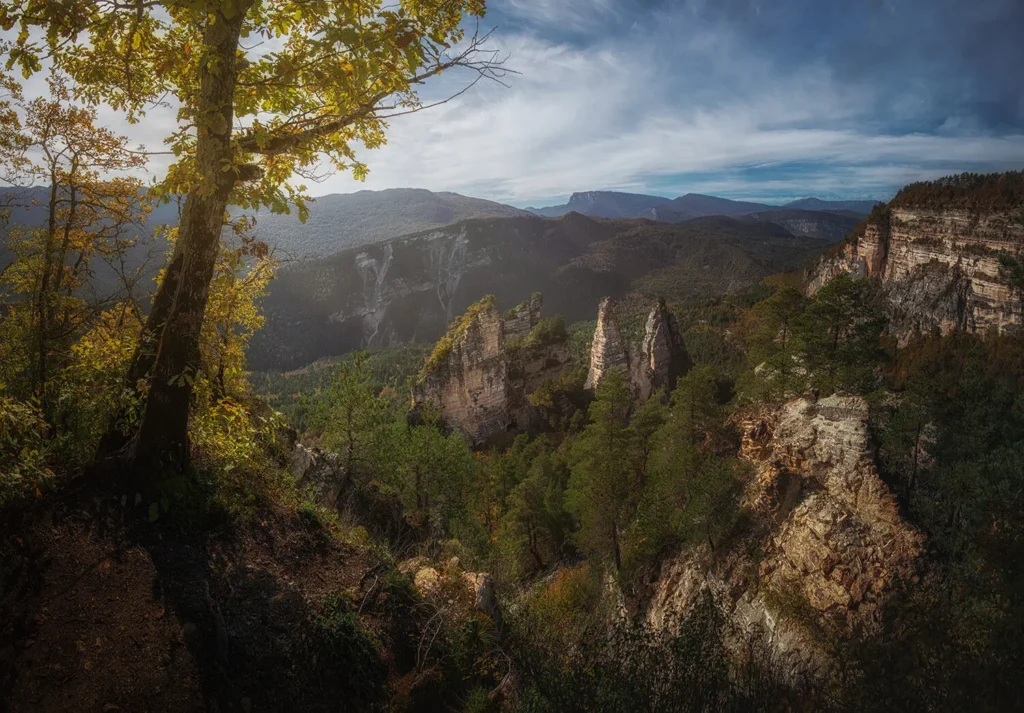

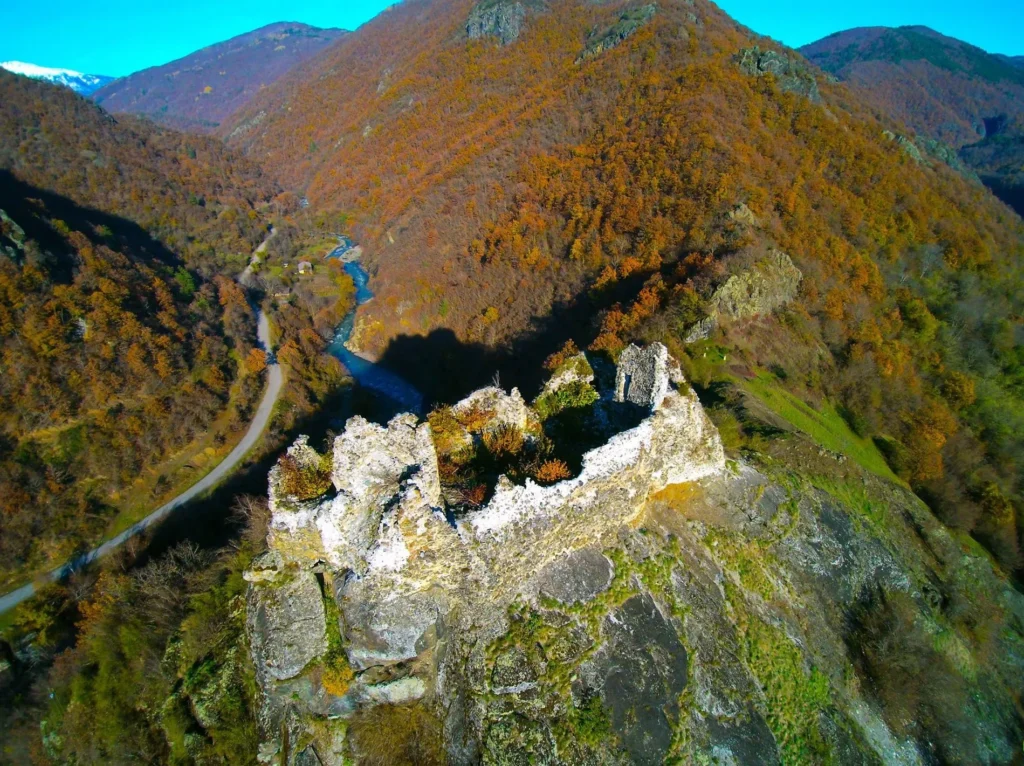
Orbeli Fortress Complex – a historical monument in Lechkhumi, Tsageri Municipality, in the village of Orbeli, in the Lajanuri Gorge. It dates back to the early Middle Ages, presumably the 16th-17th centuries.
The Orbeli Fortress and Church overlook the Lajanuri Gorge, and its walls show clear signs of being painted. There is a cemetery in the vicinity of the fortress, and the second fortress stands directly on the road. According to local historians, a small wooden church, which no longer exists, used to stand near the church, where the antiquities in the fortress were stored. There is also a water reservoir in the fortress.
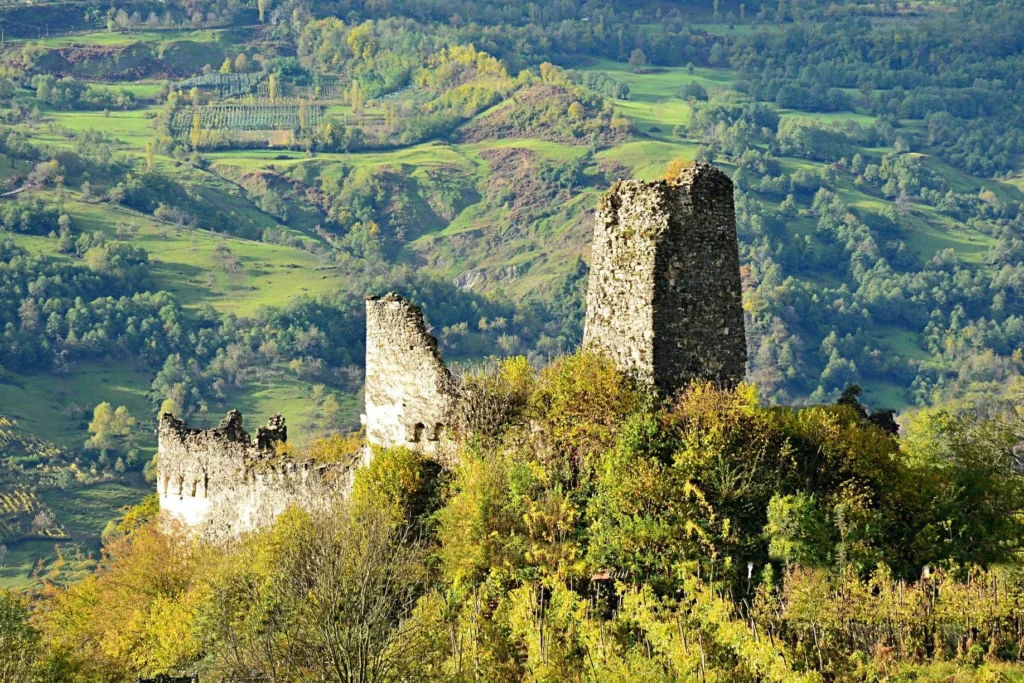
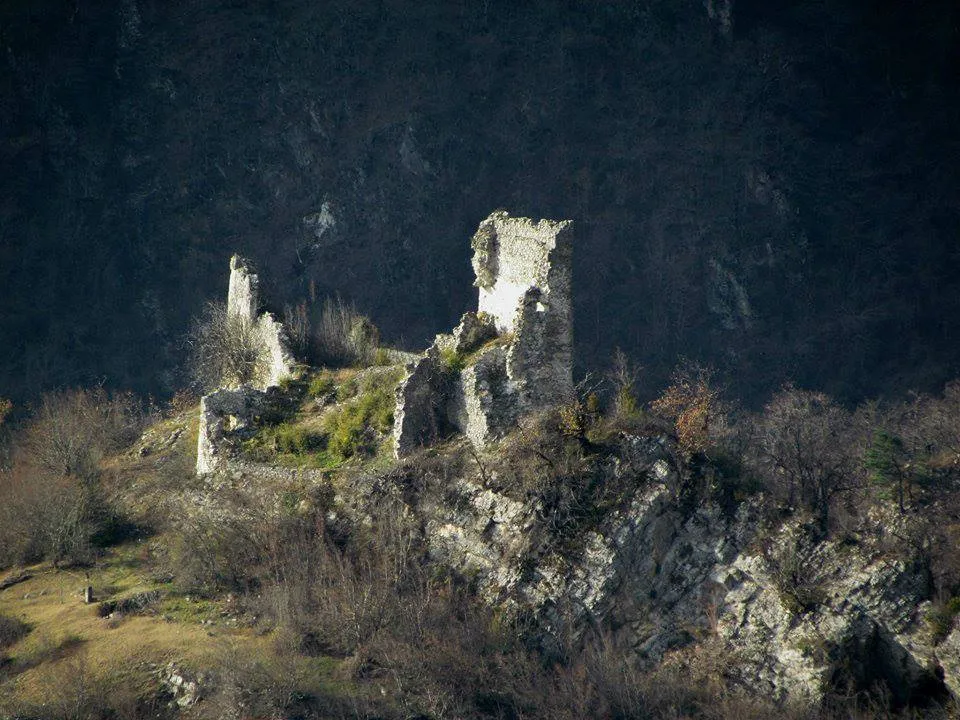
Muri Fortress is located in Lechkhumi, near the village of Doghurashi, on the border of Lechkhumi and Svaneti. It was built in the early Middle Ages and was in operation until the 19th century.
Muri Fortress is one of the most prominent monuments among the fortifications of Lechkhumi, with its strategic importance and functional load. It, along with the Ragvi Tower, located opposite it, on a rocky shore, blocked the roads leading from the Tskhenistskali Gorge to the plain. Ancient qvevri tombs, bronze, iron, ceramic and gold objects have been discovered on the territory of Muri Fortress. In the late Middle Ages, there was a Dadiani palace here.
In the construction layers of different periods, it is clear that the improvement of weapons was reflected in the overall design and details of the building.
Muri Fortress occupies the middle part of a high, rocky hill. To the east, a square tower guards the approach to the fortress, and to the west, on the edge of the ridge, there was a watchtower. At the foot of the mountain, one tower stands on both banks of the river. The fortress has the only entrance from the southwest. The eastern part of the complex is occupied by a rectangular four-story fortress-house. Three sides of this structure were built with double walls, the second wall was removed from the inside. The first floor of the fortress-house must have had an agricultural purpose. The doorway of the second floor has survived on the western side of the building. The window cut opposite the entrance was apparently used to watch the approaches to the fortress. Wide square openings can be found on the third floor. The top floor was a battlement and was finished with machicolations. Fragments of a rectangular storage room, which was attached to the castle house, have survived in the castle yard. The castle is bounded on the north side by a rampart built on a rock.
View on map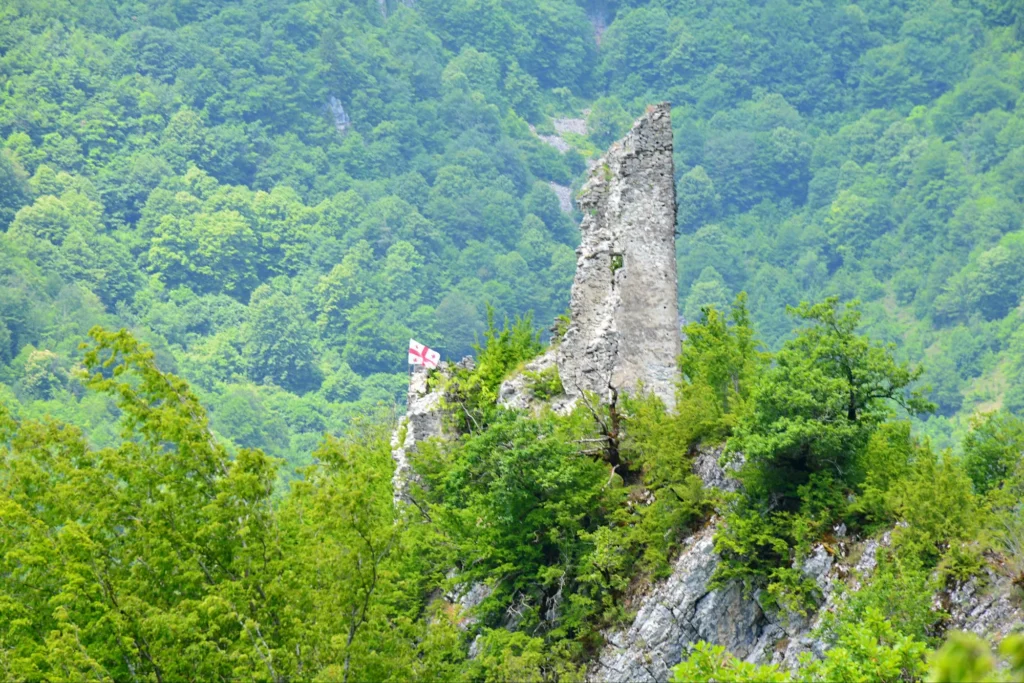
Ambrolauri Municipality
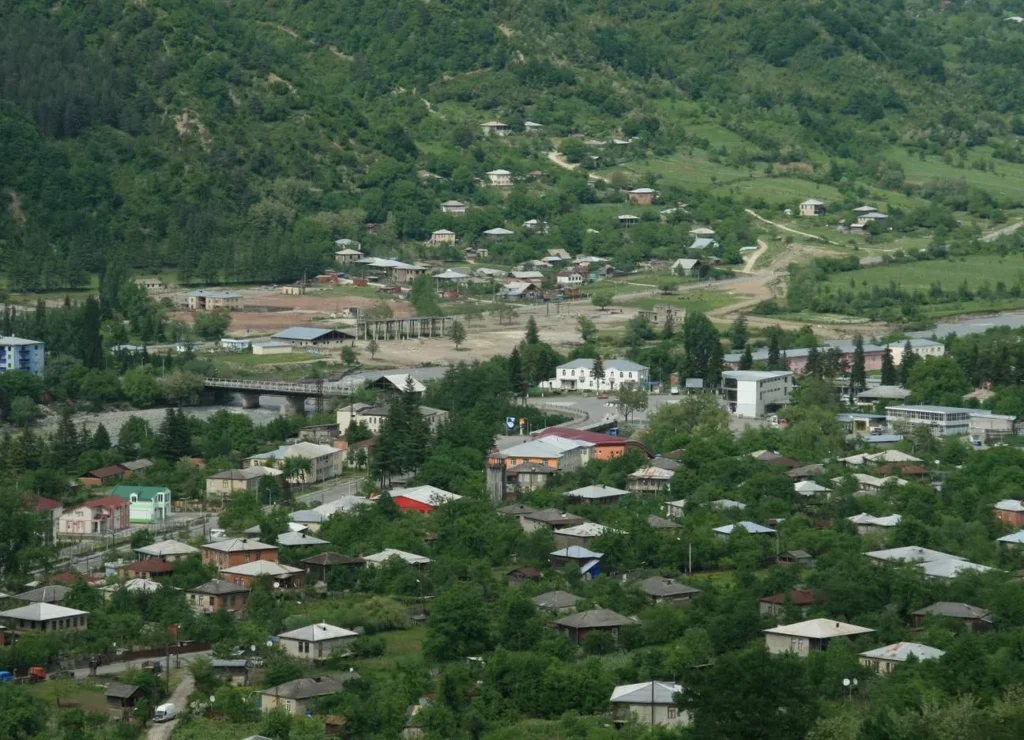
Ambrolauri is a municipality located in the Racha-Lechkhumi and Lower Svaneti regions. In the early Middle Ages, before the formation of the Principality of Racha, it was part of the historical and geographical unit of Takveri. It is believed that the name Ambrolauri is related to the Amarolidze family – Amrolisdze – Amorauli – Ambrolauri. Ambrolauri has been mentioned in written sources since the 17th century. It was one of the residences of the kings of Imereti. There was a royal palace in Ambrolauri, from the complex the ruins of a church and a tower known as the “Machabeli Tower” have survived. This region is rich in cultural monuments and natural beauty. There are many medieval fortresses and temples in Ambrolauri. Nikortsminda, famous for its highly artistic and skillfully crafted carvings, deserves special mention. The Shaori Reservoir, surrounded by forested mountains, is very beautiful and is one of the favorite places for visitors to Racha to relax, picnic, and enjoy nature.
A monument to “Khvanchkara” stands in one of the squares of Ambrolauri. Wine is an important drink for Georgians, and “Khvanchkara” and “Alexandrouli” are distinctive wines for Racha and its residents.
The Ambrolauri Museum of Fine Arts was established in 1965, and is located in the regional capital of Racha-Lechkhumi and Kvemo Svaneti in Ambrolauri. The museum houses a collection of paintings and drawings by well-known Georgian artists of the 20th century: Lado Gudiashvili, Elene Akhvlediani, David Kakabadze, Ucha Japaridze, Koba Guruli, Avto Varazi, Levan Tsutskiridze, Natela Iankoshvili, etc. There are 565 stored items.
The museum is open every day except Monday from 10:00 to 17:00.
The entrance fee applied
Ambrolauri Airport is a local airport in the city of Ambrolauri, at an altitude of 560 m above sea level. The length of the runway is 1,100 m, the width is 30 m, and the area of the airport terminal is 600 m². The airport can service aircraft with 30-50 passengers. In the future, the possibility of receiving larger aircraft and, in case of an increase in passenger traffic, the expansion of the terminal is envisaged. The construction of the airport began in August 2016, the construction of the runway was completed in December 2016, and the terminal in January 2017. Flights to Ambrolauri are carried out under visual flight rules and depend on the actual weather. Flights from Natakhtari Airport to Ambrolauri are operated and the cost of the trip is one way: adults 50 GEL; children (3-12) 35 GEL; infants (0-3) free.
Museum AirportNikortsminda Cathedral
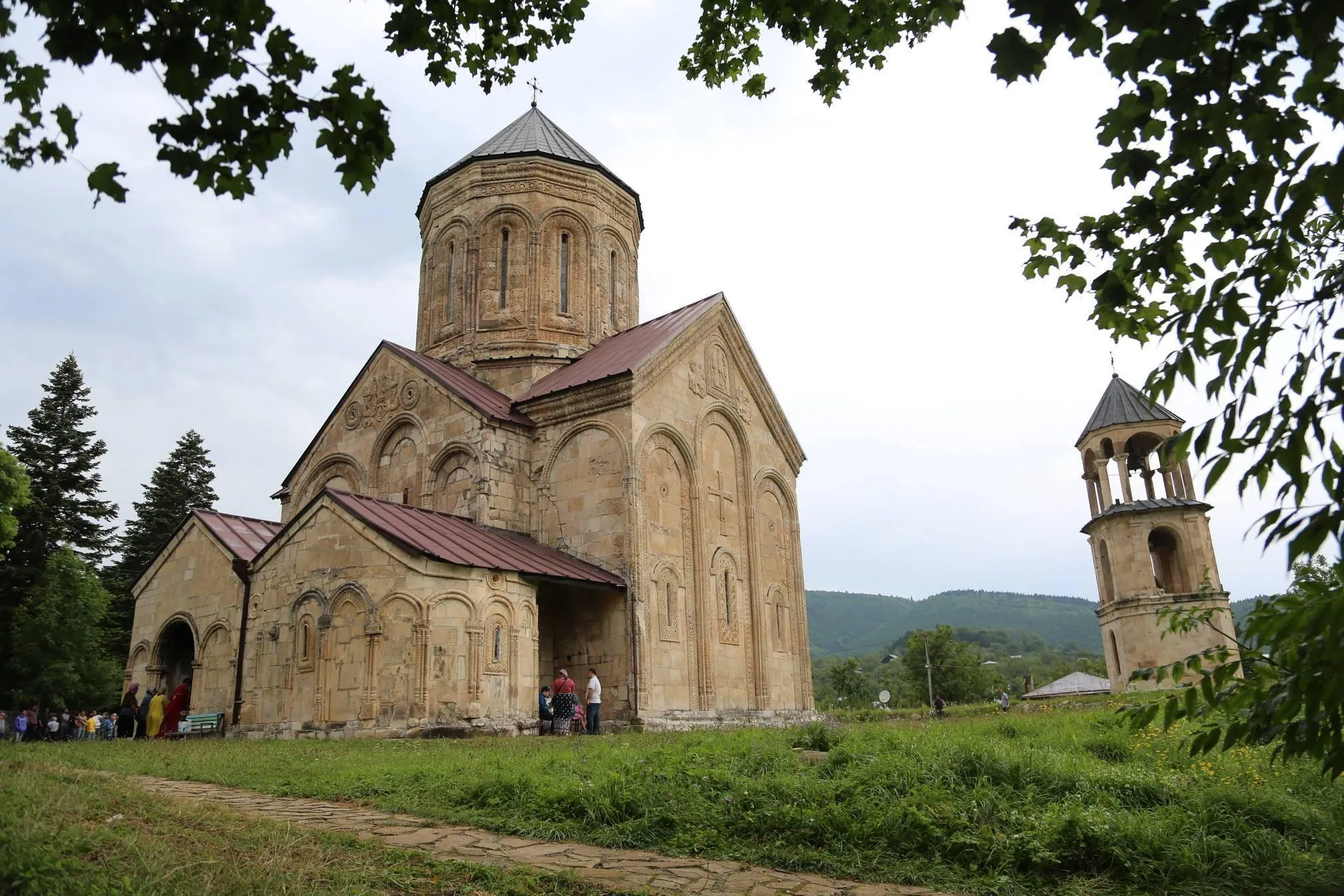
Nikortsminda — Cross-domed church in the Racha-Lechkhumi and Lower Svaneti regions, in the village of the same name in the Ambrolauri municipality.
After the creation of the Racha Principality at the end of the 10th century, by order of the first king of a unified feudal Georgia, Bagrat III, the foundation was laid for the construction of the Great Cathedral of St. Nicholas, which became the cultural center of this principality.
Since October 24, 2007, the Nikortsminda Monastery has been included in the UNESCO World Heritage Tentative List.
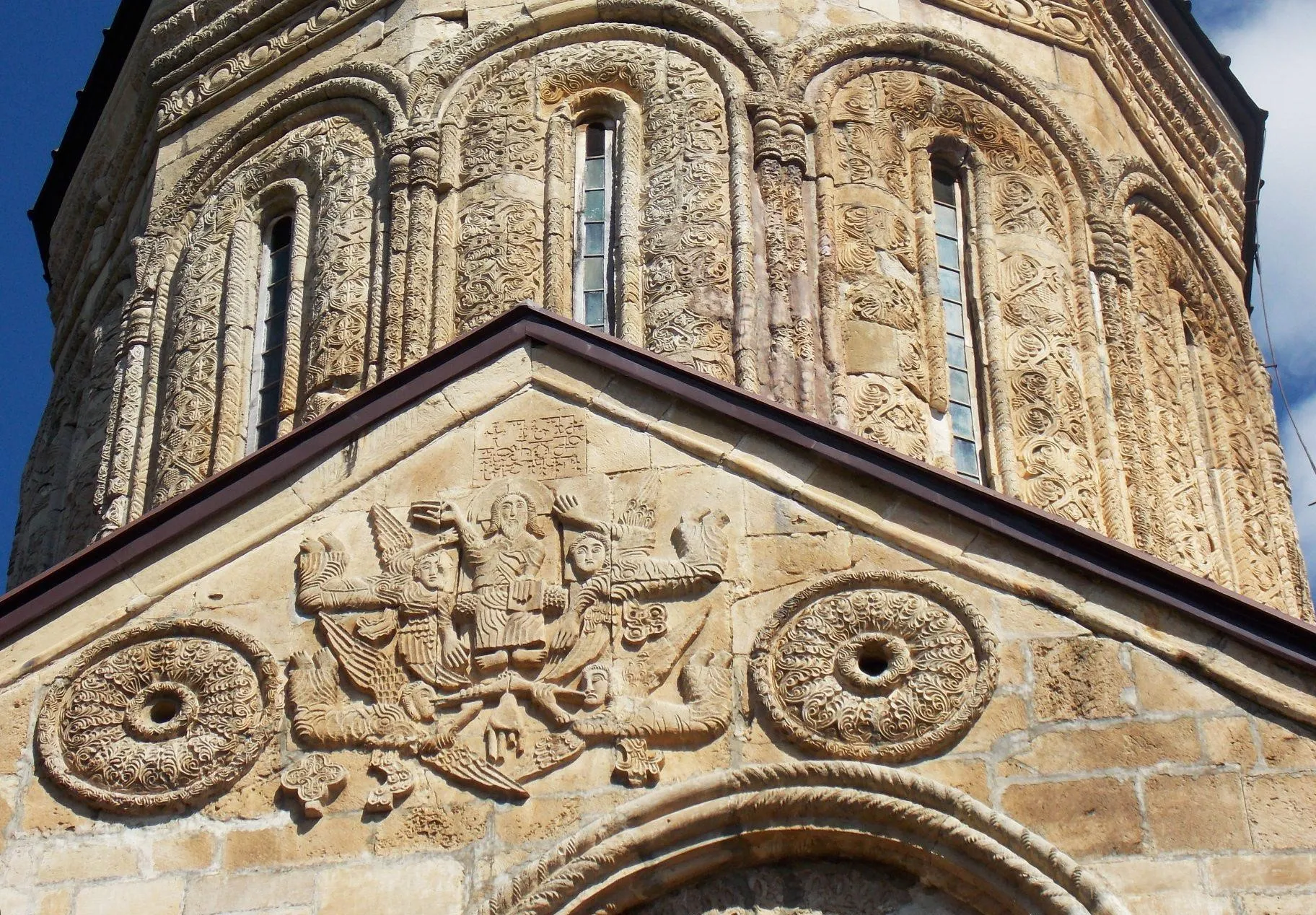
The Nikortsminda Cathedral is a masterpiece of national architecture. It was built at the beginning of the 11th century, in 1010-1014. This is the period when great attention was paid to the decoration of facades. The monument has not undergone major changes during its existence. This is a rare case. The dome of the temple has been preserved in its original form.
In the 16th century, Nikortsminda was renovated with the support of the King of Imereti, Bagrat III.
Nikortsminda has a massive dome and unbroken arcatures as its twelve windows, which are decorated with ornamented architraves.
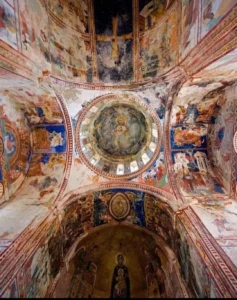
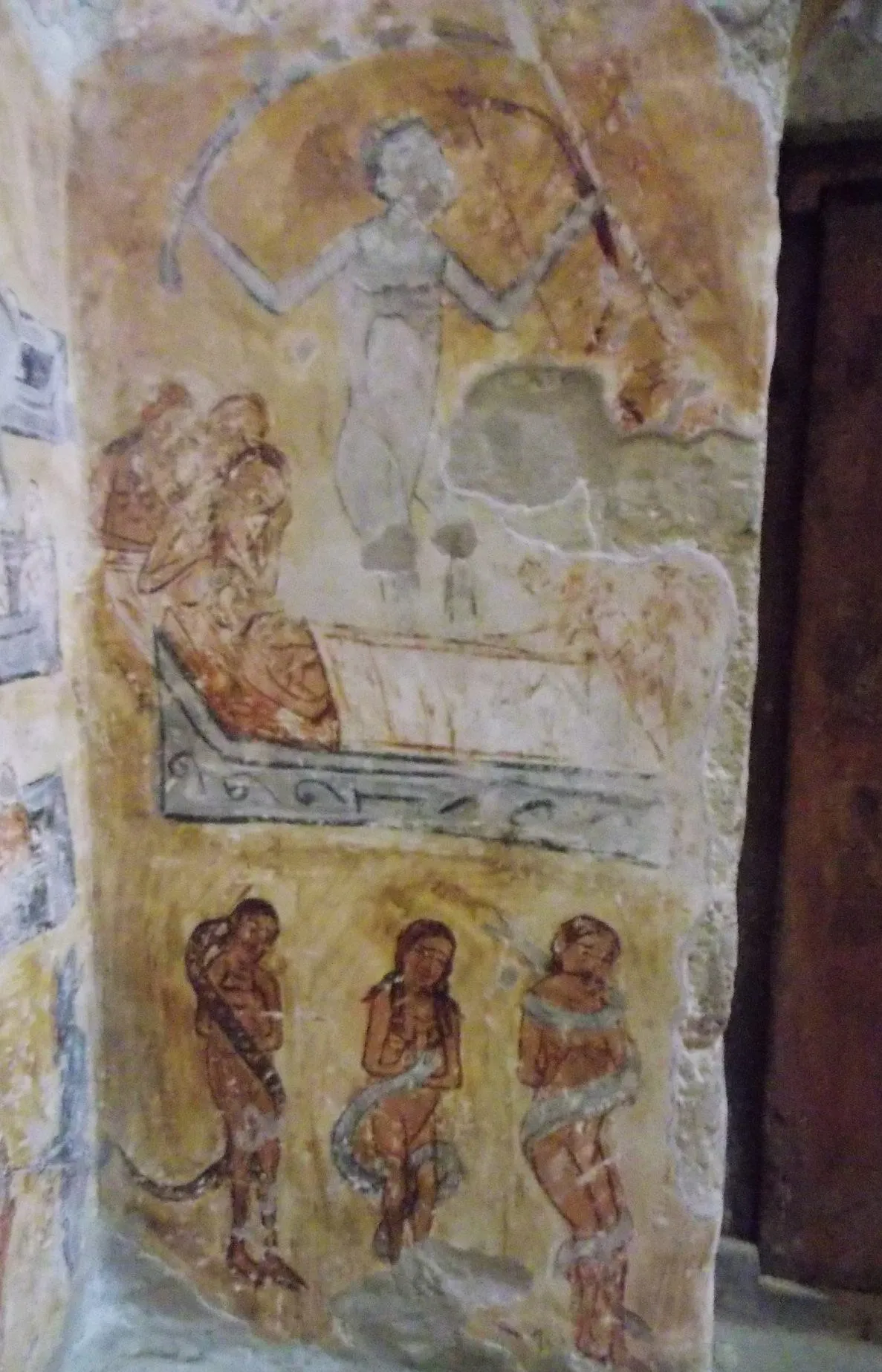
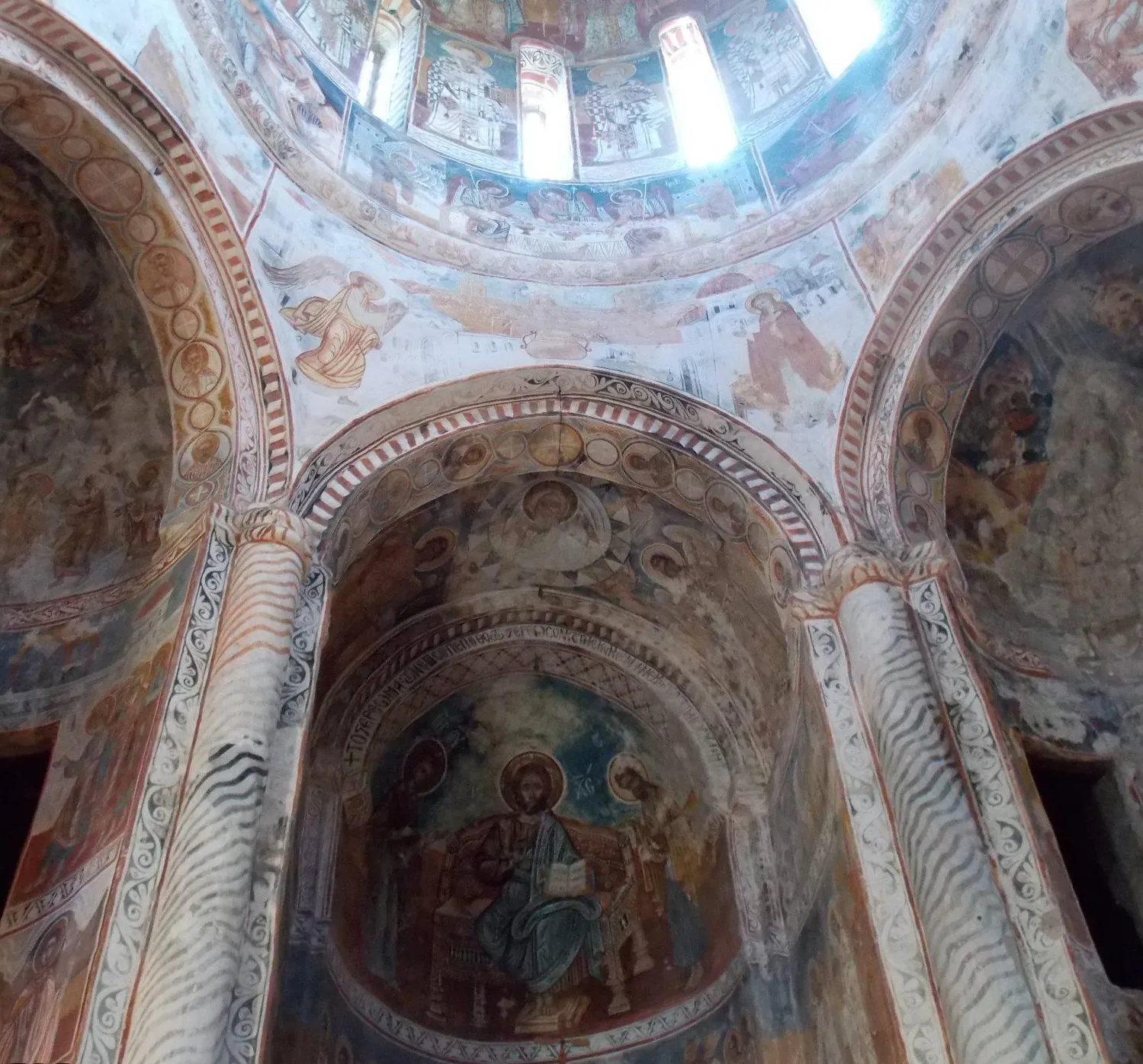
The cathedral is formed of five interior apses, from which rise the massive dome, resting upon half-pillar shaped apse projections. It is abundantly lit by the twelve windows of the drum. The transition from the hexahedron of the round drum to the dome circle is effected by means of spheric pendentives. The altar apse bema and the western passage enlarge the interior space. The interior is decorated with frescoes from the 17th century and ornamental sculptural reliefs, reflecting the mastery of the late-Medieval Georgian ecclesiastical art.

Sakinule
Sakinule is a natural cave in Racha, Ambrolauri Municipality, 3 km from the village of Nikortsminda, at an altitude of 1200 meters above sea level. It is formed in Lower Cretaceous limestone. The cave contains ice stalactites, stalagmites, centuries-old ice columns (some columns are 8 meters high and 20 meters in circumference), and cascades.
Sakinule is a deep cave cut into the rock, a natural well, where the temperature is zero degrees at any time of the year, and drops of water seeping from the rock turn into ice as soon as they hit the ground.
A dirt road leads from the village for 2.5 km, and the last half km is a hiking trail. There are signs on the way from Nikortsminda to Sakinule.
View on map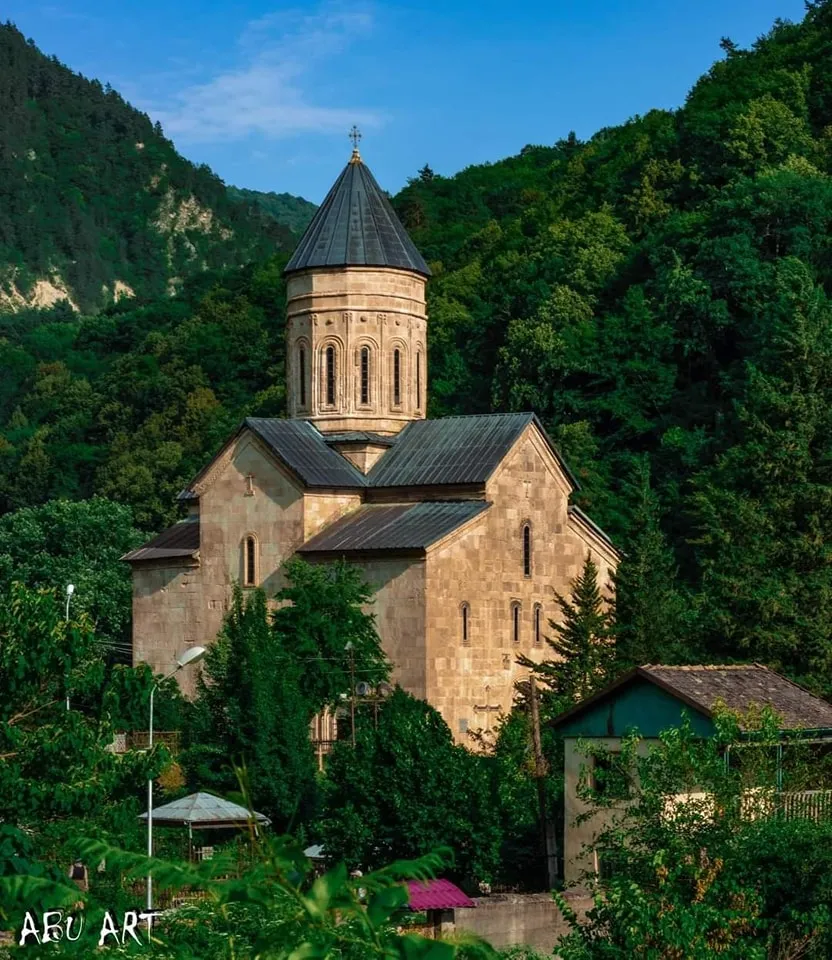
Barakoni Cathedral
Is one of the most important monuments of ancient Georgian domed architecture, located in Racha, Ambrolauri Municipality, near the village of Tsesi. Barakoni is located at the confluence of the rivers Lukhuni and Rioni, which is why it is compared to Svetitskhoveli.
To the northwest of Barakoni, there used to be a feudal church, which was built by the first Eristavi (duke) of Racha, Rati Liparit’s son, as his court church. The church was a single-nave basilica, built of tuff stone. The old church is now in ruins, only the foundation stones have survived. By order of the Eristavi of Racha Rostom, a new church was built in 1753 by master Avtandil Shulavreli.
The building is rectangular, without glass extensions. The dome rests on the corners of the altar and two pillars. It was built with stone brought from the village of Itsi and is richly decorated with carvings on the outside. Later, the dome was covered with zinc, and now it is covered with a copper roof. On the facades we find some ancient elements (oriental niches), the types of carvings are mostly traditional, but the decoration lacks integrity and cannot be organically connected with the architecture.
View on map


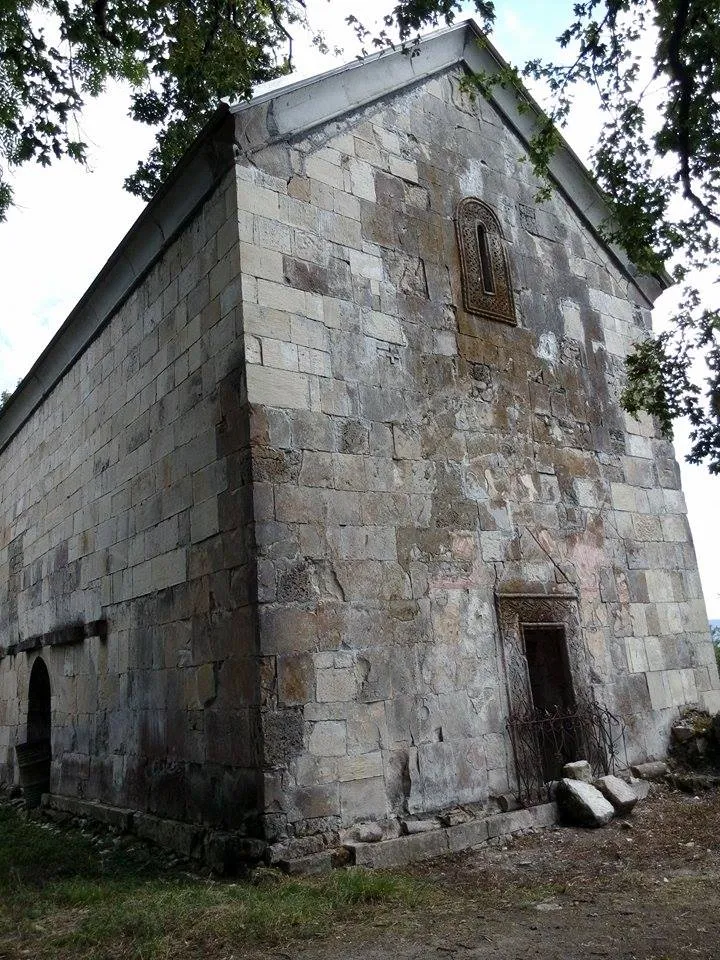
Labechini Church
The Church of the Archangels of Labechini is a monument of medieval Georgian architecture, a hall church. It is located in the village of Zeda Chkvishi, Ambrolauri municipality, on a high hill.
The monument is badly damaged. The eastern facade, divided into three parts by 2 triangular niches, is relatively better preserved than the walls. The monument is richly decorated with stone carvings, reliefs and Asomtavruli inscriptions. Fragments of painting have been preserved in the interior. The church, which was destroyed by an earthquake, was rebuilt and painted in the 13th-14th centuries under the leadership of Gabriel Labechini. Both earlier and later construction layers are distinguished in the building. Here, surrounded by century-old trees, stands a beautiful white building decorated with carvings, which is a rather modest, two-story building with a gable roof.
View on map
Minda Fortress
A medieval fortress in the Racha-Lechkhumi and Lower Svaneti regions, in the Ambrolauri municipality, at the confluence of the Rioni and Lukhuni rivers, on the left bank of the Lukhuni, near the village of Kuli. It belonged to the Racha eristavi. Minda Fortress was the main fortress of the Kakhaberisdze family.
The Minda Fortress complex has preserved a rampart and three towers, the western one is cylindrical, the northern and southeastern ones are rectangular. The entrance is from the south. It dates back to the early Middle Ages. It has been rebuilt several times. To the east of the fortress is a small, damaged church from the early Middle Ages.
The first Glamping cottage has appeared in the village of Krikhi in Racha, Ambrolauri Municipality, called Glamping Georgia Krikhi.
In Krikhi, you can relax in the most comfortable way, right in the middle of the forest, in the wild. Here you are at the same time incredibly close to nature, and incredibly close to a luxurious and comfortable vacation.
Inside the cottage there is a bathroom, a mini kitchen with a toaster and a refrigerator, a mini home cinema, free WIFI and a shower. All this is accompanied by a terrace with the most beautiful views of the mountains, and small balconies. In short, here there are all the conditions to feel like in a highly rated hotel.
1.8 km from the cottages there is “Shabati Market”, 2 km – the restaurant “Tavern Krikhula”;The Krikhula River is 0.1 km from the cottages
View on map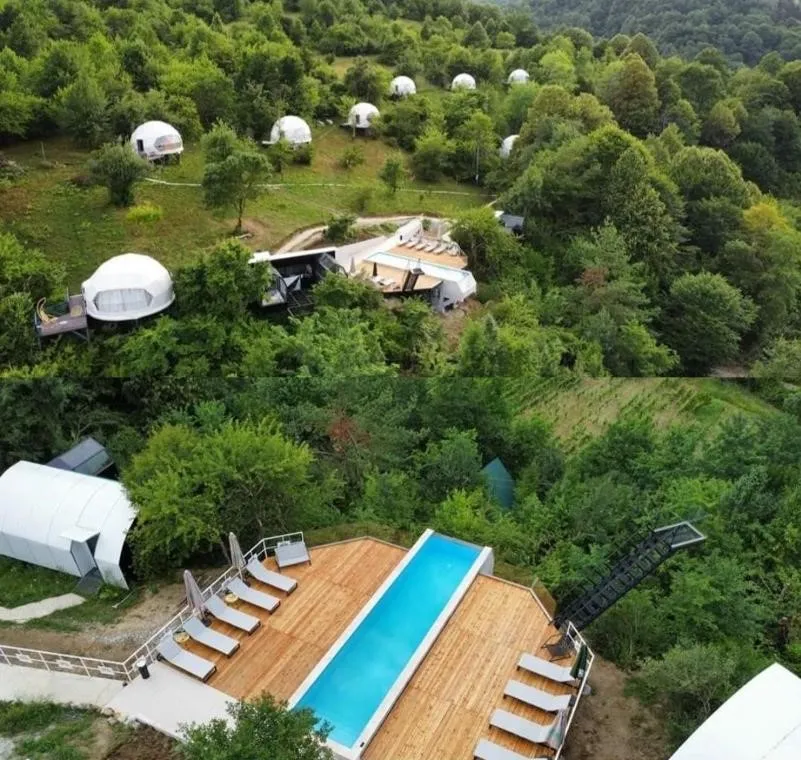
Oni Municipality
Oni is a municipality located in the Racha-Lechkhumi and Lower Svaneti region. It is distinguished by its long history and diverse, beautiful nature. Oni was first mentioned in written sources in the 15th-16th centuries. According to scientists, it was founded by the Iberian king Parnajom in the 2nd century BC. Bronze Age axes and a hoard of Colchian white gold, dating back to the 6th-3rd centuries BC, have been discovered on the territory of Oni. In the Middle Ages, the city of Oni was of great economic importance, as roads from the North Caucasus, Kartli, Imereti and Lower Racha converged here.
Oni is home to many medieval monuments, fortresses and interesting temples. Its nature leaves an indelible impression on any person who loves hiking and mountain recreation. With its huge, snow-capped mountains, rugged cliffs, cool forests and valleys, fields covered with flowers and alpine lakes stretching to the edge of the sky, it is impossible not to fall in love with this region.
Oni Local Lore Museum
The Oni Municipality Local Lore Museum traces its history back to July 1948. After four years of collection work, on October 12, 1952, the museum was solemnly opened with new exhibits.
The Oni Local Lore Museum is a repository of the antiquities of the two districts of Oni and Ambrolauri, where unique exhibits are preserved, the historical, cultural, and artistic value of which is immeasurably great not only for the past of Racha but also for the cultural heritage of the country.
Among them, several exhibits, for example, a buckle with the image of the astral sun, which has no analogues in the whole world, are preserved in our museum. It is worth noting the 10th century relief decoration of the window of the St. George Church in the village of Joysubani, the photos of which are included in the UNESCO catalog as one of the most important monuments of Christian culture. According to the observations of art historians, the window decoration confirms one of the earliest depictions of the Last Judgment scene in all of Georgia.
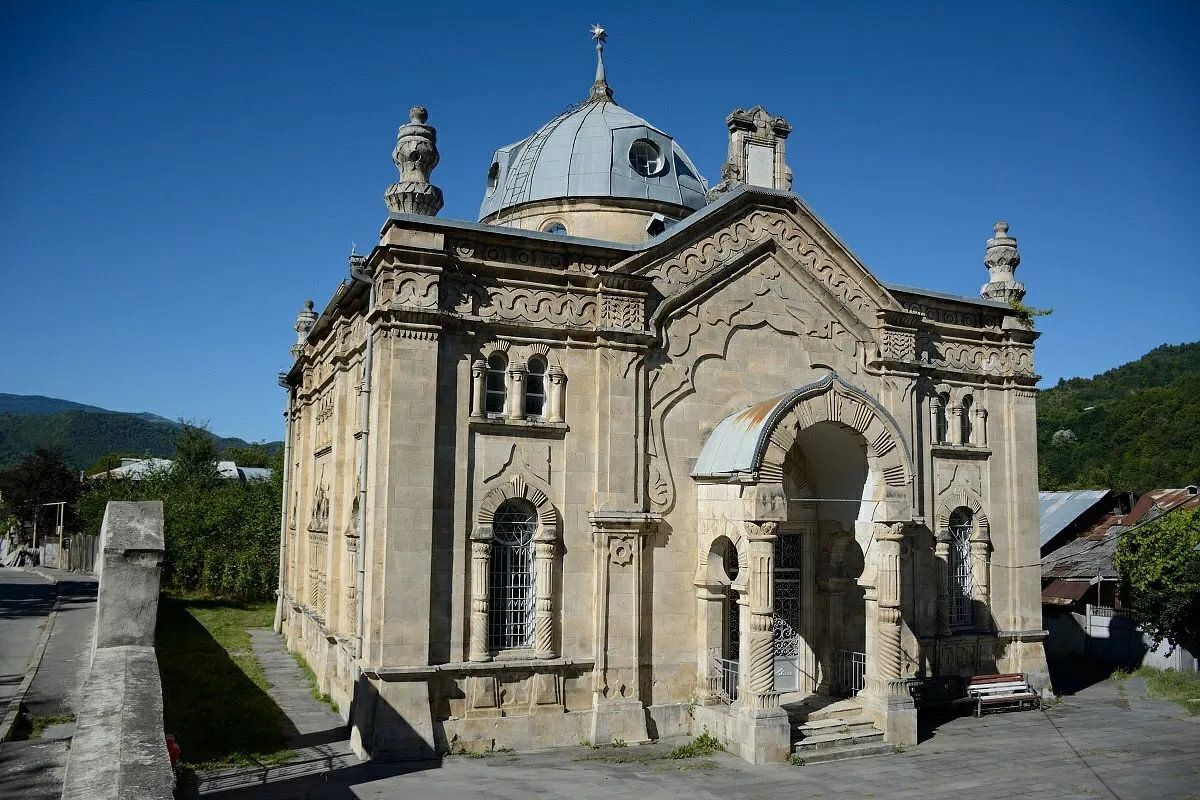
Oni Synagogue
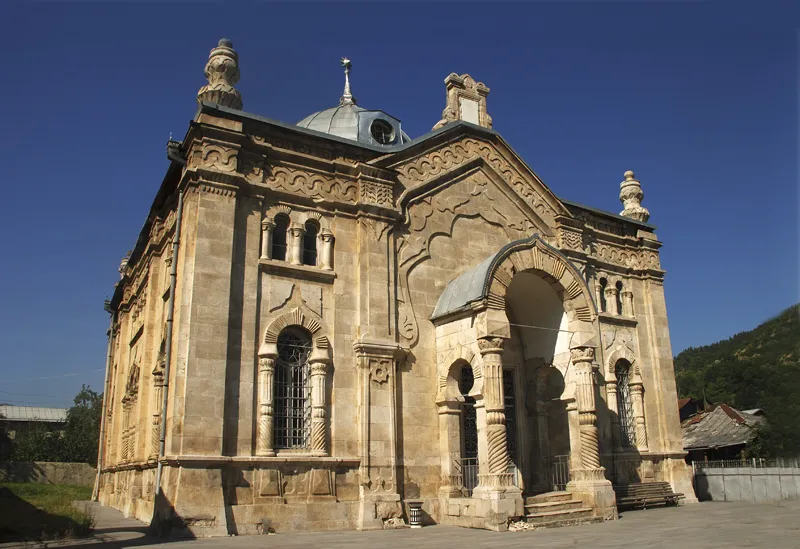
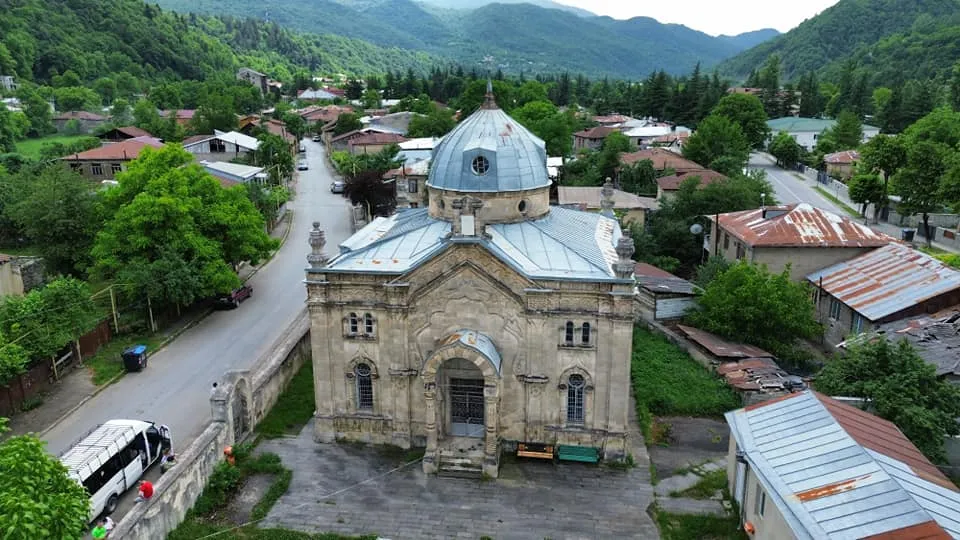
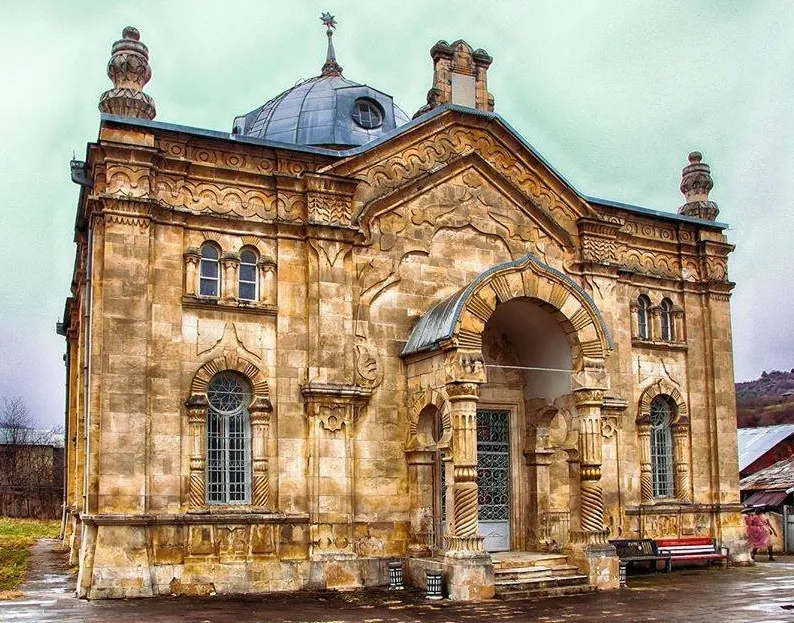
Oni Synagogue is located in the city center, on Vakhtang VI Street. It was built in 1895 in the eclectic style and is a quadrangular domed building. The synagogue has a gate on the east side. The dome rests on four columns and semicircular arches between them. The columns are topped with decorative capitals decorated with relief plant ornaments. The interior of the synagogue is divided by columns into three main sections, the central hall is larger than the northern and southern naves. In the interior, the walls are surrounded by semicircular and full arches on the semicolumns. The building has many windows and the interior is well lit. At the corners of the synagogue roof are decorative figures carved in stone decorated with ornaments. A marble slab is placed above the entrance, where a Hebrew inscription is engraved. Above the inscription, on the same slab, in the right and left corners, the Stars of David are depicted, and in the middle of them is the date of construction – “1895”. A marble slab is also found on the eastern wall, the slab depicts two symmetrically arranged clusters of hands, and below it is the “Ten Commandments” written in Hebrew. The synagogue is completely faced with limestone.
The Oni Synagogue ranks third in size among the synagogues in Georgia, after the synagogues in Tbilisi and Kutaisi.
On November 7, 2006, the synagogue was awarded the category of an immovable cultural monument of national importance by the decree of the President of Georgia.
Mravaldzali Church
Mravaldzali is an 11th century architectural monument in Racha. The St. George’s Hall Church is located in the vicinity of the village of Mravaldzali, Oni Municipality. The church is distinguished by its unique bas-reliefs. Several objects of historical importance were preserved in it (including the helmet of Jalal-ed-Din and the sword of Shah Abbas I). In 1894, the hall church was converted into a domed building and a bell tower was built on the western side. The earthquake that occurred in Racha on April 29, 1991 significantly damaged both the old and new parts of the church. In 2009, the restoration work of the temple was completed and the church regained its original appearance.
The construction of the Church of Many Powers is probably connected with the establishment of the Racha Saeristao in the 11th century. At that time, Racha was completely covered with newly built churches-monasteries, fortresses, and palaces. All the outstanding churches-monasteries in Racha were built then.
Initially, the Church of St. George was a typical medium-sized (10.75 X 6.75) single-nave hall church typical of Racha. It was famous for its beauty, sophisticated architectural forms, carvings, lapidary inscriptions, walls completely covered with paintings from the inside, arches, stone-carved bells, precious crosses-icons, church manuscripts, and rare secular items donated to the church.
In 2018, the Mravaldzali Church was awarded the category of an immovable cultural monument of national importance by the decree of the Government of Georgia
View on map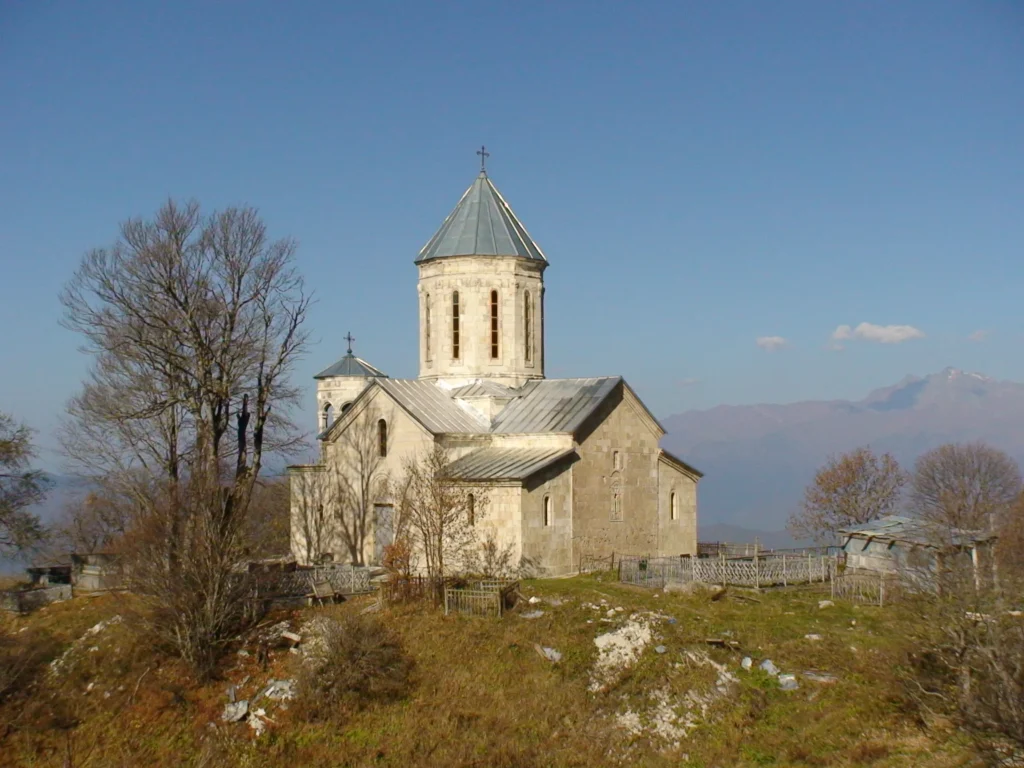
Lake of Love
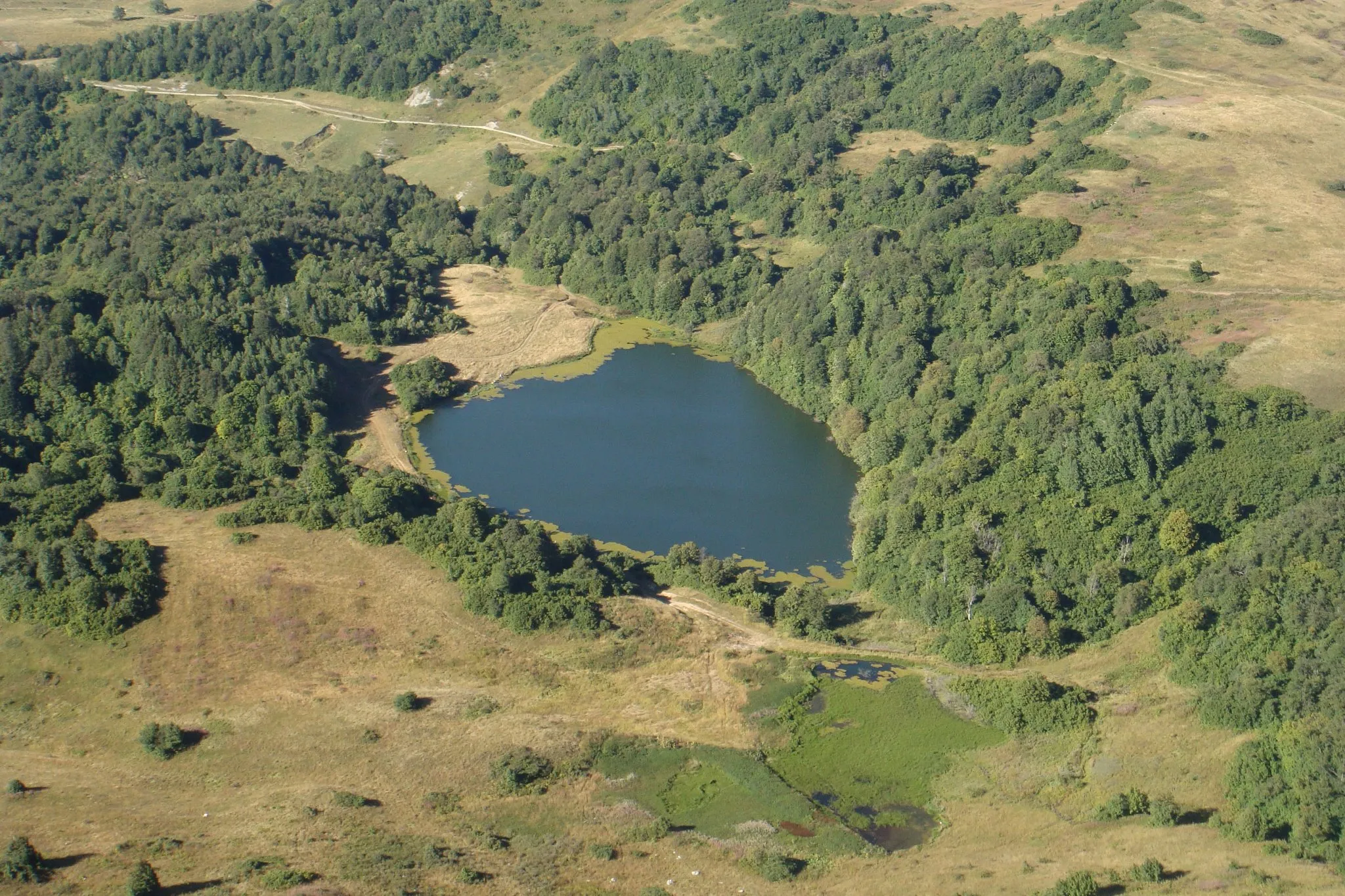
South of the village of Mravaldzali, the heart-shaped “Lake of Love” (Cholevi Lake) is one of the most popular tourist attractions. It is also called the Lake of Cups or Love (because it is heart-shaped). It is located three kilometers from the village of Mravaldzali, right at the foot of the Cholevi Rock. The Cholevi Rock is where, according to legend, the soldiers of the Turkish army fell due to the fog that covered the mountains, and then its leaders made a vow to the saint of the village of Mravaldzali to save him: “As far as the sound of your bell reaches, we will not harm anyone.”
View on mapThe Church of the Archangel of Gonaa
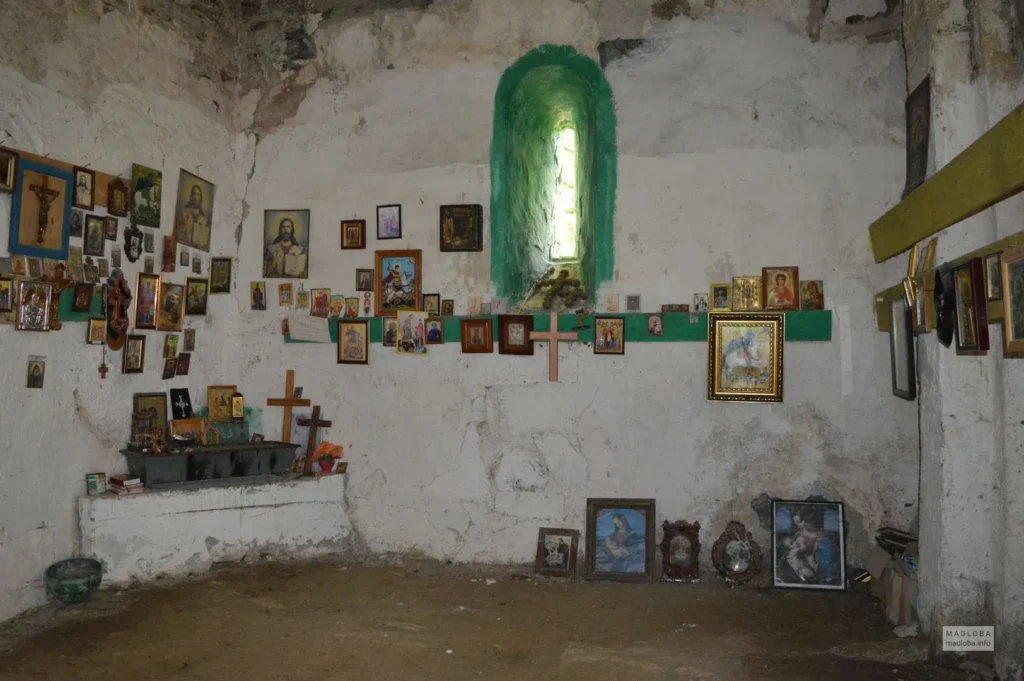
is located in the village of Gona, Oni Municipality, Racha. It dates back to the 9th-10th centuries. The church is a hall-like structure. Today, the eastern part of the interior is rectangular, however, the accounting document preserved in the database of the National Agency for the Protection of Cultural Heritage of Georgia shows that the church previously had a semicircular apse covered with a conch. The walls in the interior are divided by pilasters and wall arches. The hall was covered by a vault, of which only small arc-shaped sections of the pediment arches, carved into the stone and resting on the capitals of the pilasters, have survived. The church is lit by three windows, which are cut into the eastern, western and southern walls. The windows have frames made of triple shafts. There is one entrance – from the south. It is architrave on the interior side and arched on the exterior. The facades (except the northern one) are faced with cut squares.
View on map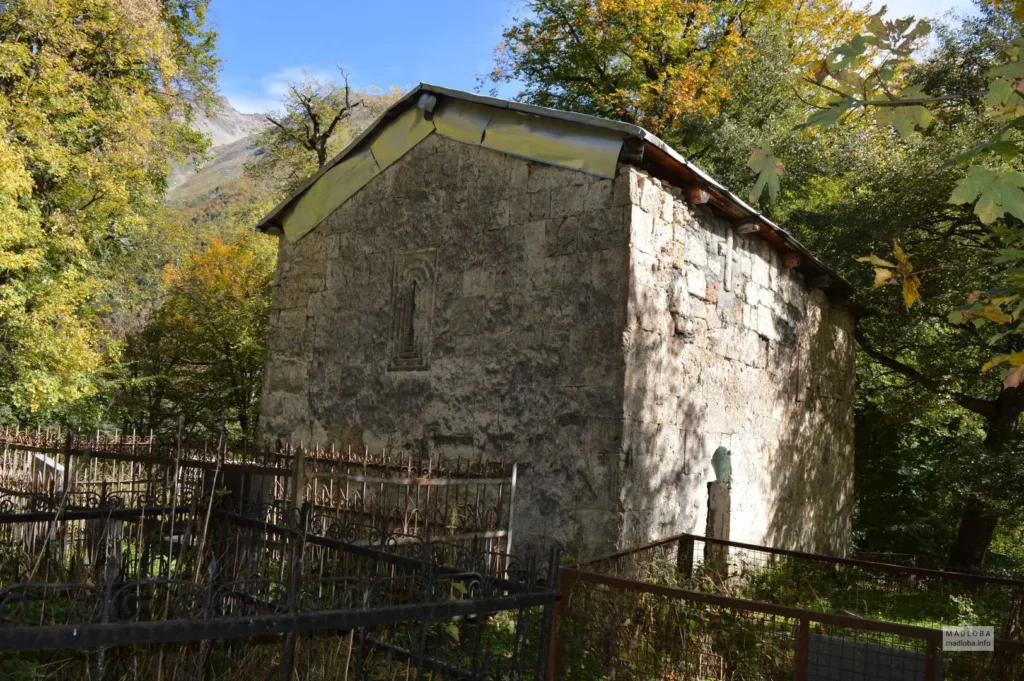
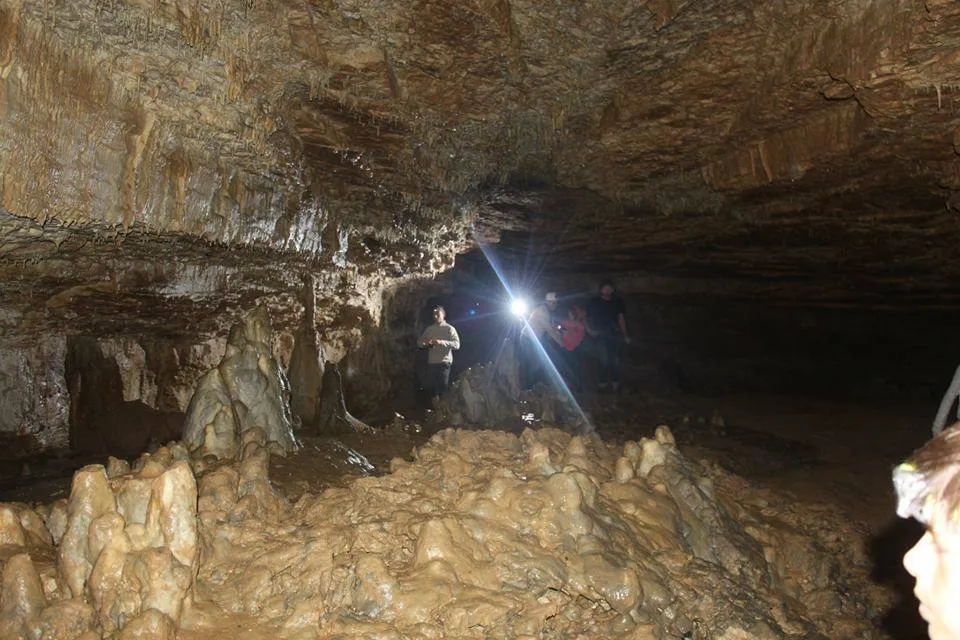
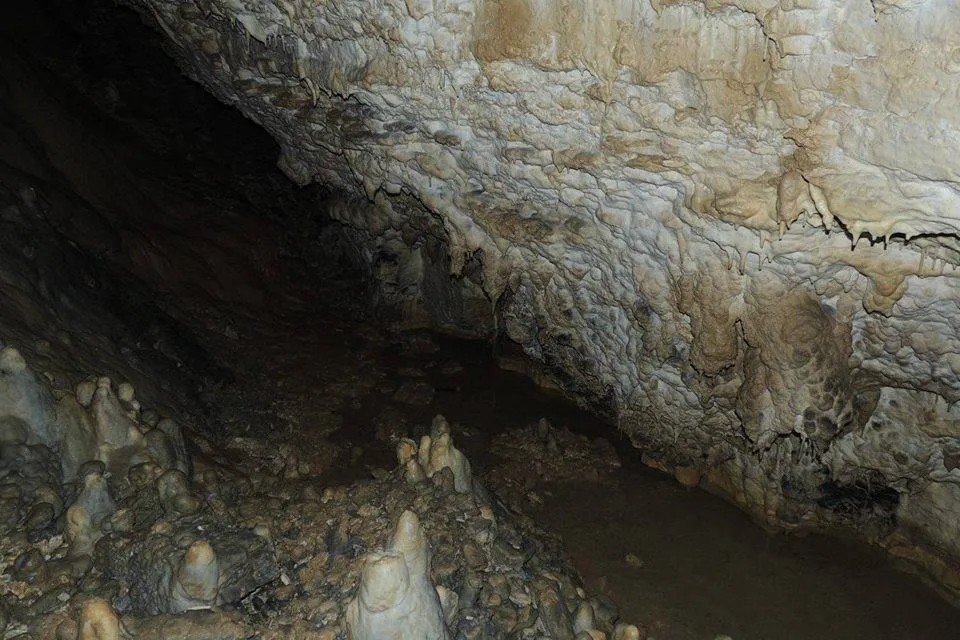
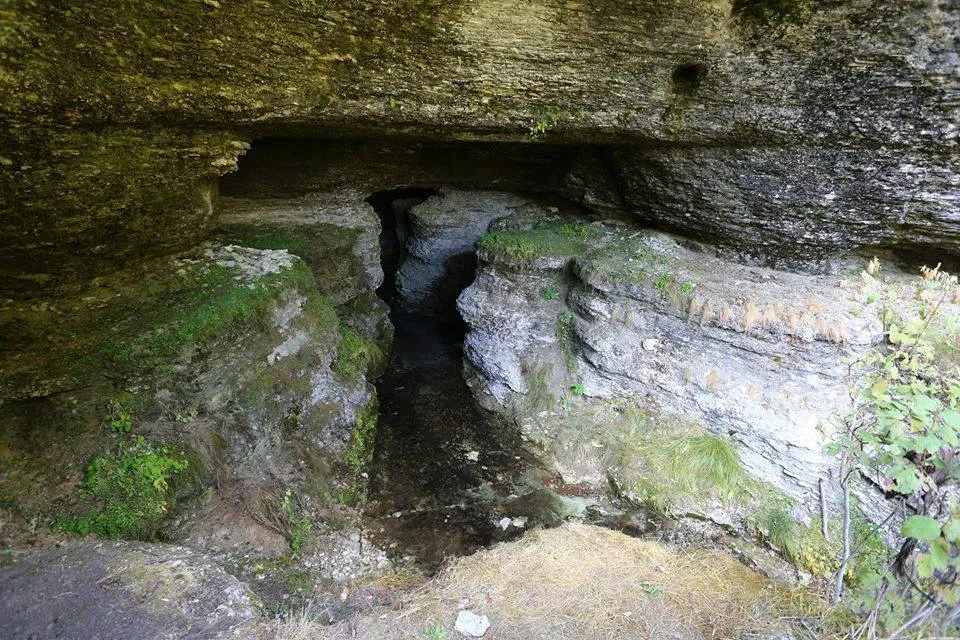
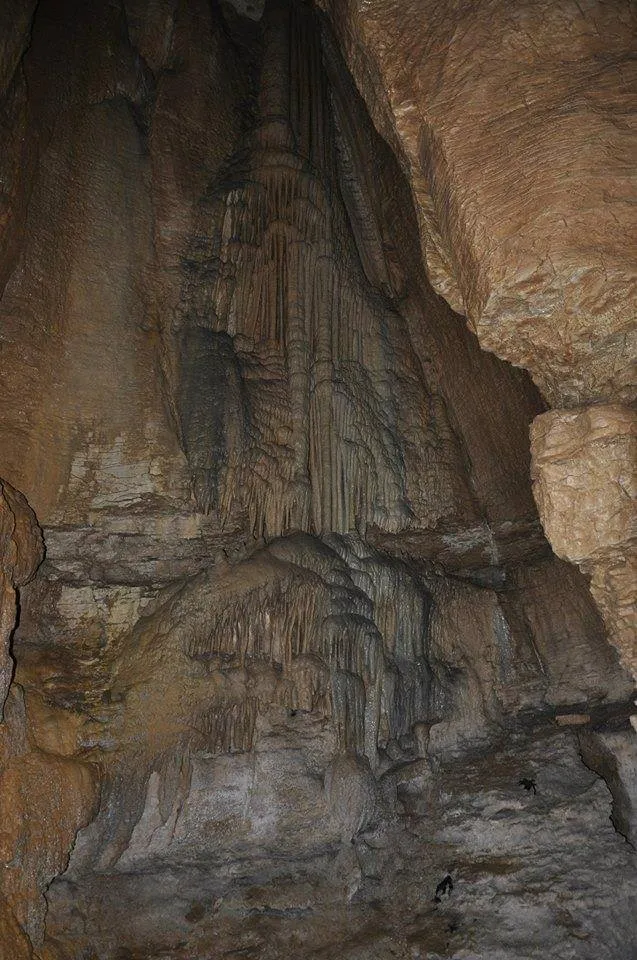
Ganjareuli Cave
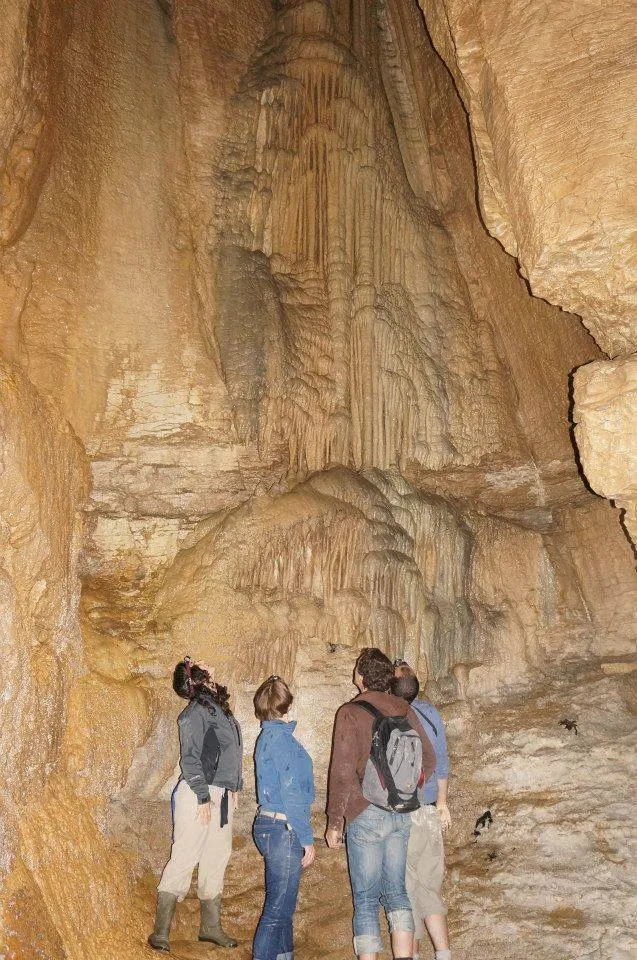
A karst cave in the village of Usholta, Shkmer administrative unit, which the locals call “Ganjareuli Cave”
Usholti Cave is located on the Racha ridge, in the Oni municipality, Shkmeri community, southwest of the village of Usholti, in the basin of the Belneturi River (left tributary of the Kheori River), 2.5 km from the village of Usholti,… 1840 m above sea level. It is mined in barren limestones, the total length is 2150 m. It is rich in chemical vents, especially the halls. A stream emerges from the cave.
View on map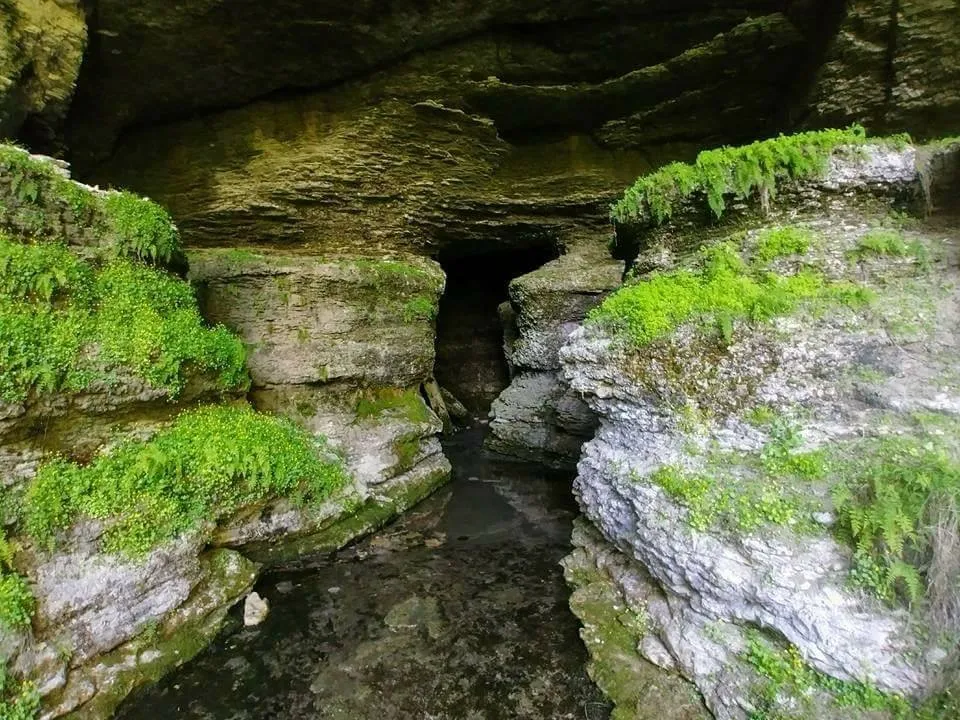
Resort Utsera
Located in Oni municipality, on the banks of the Rioni River. 1050 meters above sea level, 10 kilometers from Oni.
Utsera is a medium-altitude mountain climatic and balneological resort, with moderately cold winters (average January temperature -5 °C), and long warm summers (average August temperature 17 °C), precipitation 1400 mm per year. Healing factor: mountain climate and carbonic acid hydro-carbonate and iron-containing mineral water “Utsera”, medical indications: diseases of the digestive (liver, gastrointestinal tract) and urinary system. Diseases of the upper respiratory tract and anemia. Season – May-October.
View on map